

Maddy summaryThis bill modifies New Jersey's tax foreclosure process for properties that were the homeowner's primary residence. Currently, if a homeowner fails to pay taxes and a tax lien holder forecloses after two years, the homeowner loses the property and all equity. Under this bill, the court would order an online auction of the property instead of granting full ownership to the tax lien holder. Proceeds from the auction would first cover the tax lien holder's costs (including unpaid taxes, interest, and legal fees), then municipal liens, with any remaining funds returned to the homeowner to secure new housing. This change ensures homeowners retain funds after foreclosure to avoid homelessness, while still compensating the tax lien holder and municipality.
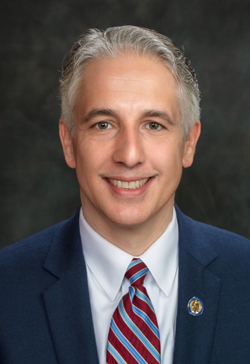
Asm. Chris DePhillips
Sponsored bills
Maddy summaryThis bill requires all operators and riders of low-speed electric bicycles and scooters in New Jersey to wear a properly fitted and fastened bicycle helmet meeting state safety standards. It directly affects anyone using these vehicles for transportation, including those riding in attached seats on e-bikes. Violations carry a $25 fine for a first offense and $100 for subsequent offenses. The law takes effect four months after enactment, aiming to reduce head injuries linked to e-bike/scooter crashes.
Maddy summaryThis bill appropriates $500,000 from New Jersey's Property Tax Relief Fund to the Borough of North Caldwell for the restoration of Walker's Family Home and Walker's Park property. The funds are specifically designated to restore a historic home located within a 17-acre park acquired by North Caldwell in 2016. The borough will determine how to use the restored property after the work is completed. This is a one-time funding allocation with no new regulatory requirements or broad policy changes.
Maddy summaryThis bill adds Bergen County to the list of counties eligible to participate in New Jersey's "Common Sense Shared Services Pilot Program." It directly affects Bergen County municipalities and tenured employees in specific roles like municipal clerks, chief financial officers, assessors, tax collectors, and treasurers. Under the program, participating municipalities can form shared services agreements for these roles without being blocked by tenure rights, allowing dismissal of unselected employees while guaranteeing rehiring and salary restoration if the agreement ends within two years. The change expands the pilot program from seven to eight counties (adding Bergen) to test cost-saving service-sharing models.
Maddy summaryThis bill requires municipalities to provide preliminary approval before the state can license cooperative sober living residences (CSLRs), which are homes specifically for people recovering from substance addiction. Applicants must obtain a written certificate from local officials confirming the residence meets all existing zoning and land use regulations before submitting a state license application. The Department of Community Affairs cannot issue a license without this municipal approval, adding a local review step to the licensing process. This directly affects CSLR operators seeking state licensure, municipal officials responsible for issuing approvals, and the state agency managing the licensing. The bill does not change the definition or operation of CSLRs, only the pre-licensing approval process.
Maddy summaryThis New Jersey bill requires public employees and officers to forfeit their pension benefits upon conviction of certain crimes related to their public duties, including theft, bribery, perjury, and sexual assault. It specifies that pension forfeiture applies to 24 listed crimes and any first or second degree crime involving public office or employment. The bill also allows pensions to be garnished to pay restitution for misuse of public funds. Public employees would receive a refund of their pension contributions (with or without interest, at the board's discretion) but would lose their earned pension benefits.
Maddy summaryThis bill appropriates $500,000 from New Jersey's General Fund to the Department of Environmental Protection (DEP) specifically for dredging and restoring the Peckman River. The funds will be distributed to the Townships of Cedar Grove, Little Falls, and Verona, and the Borough of Woodland Park, which are directly affected by the river's condition. Municipalities must submit a joint plan to the DEP for approval, and the DEP will waive permit fees for dredging, cleaning, and restoration activities consistent with an existing statewide general permit. The project aims to improve river health and flood management in these communities.
Maddy summaryThis bill allocates $500,000 in supplemental funding from the state General Fund to the Department of Environmental Protection (DEP) for the Township of Fairfield in Essex County. The funds are specifically designated for dredging, restoration, cleaning, and desnagging of the Passaic River within the township's boundaries, as outlined in a plan submitted to the DEP. The DEP is required to waive permit fees for activities consistent with the Statewide general permit for this river restoration project. The funding is supplemental to the regular 2024 budget and must be used exclusively for the Township of Fairfield's Passaic River project.
Maddy summaryAJR 155 establishes the "Autism and Developmental Disabilities Study Commission" to examine how hospitals, law enforcement, prosecutors' offices, and courts train staff to identify and interact with people with autism, Down syndrome, and other developmental disabilities. The commission, composed of seven members appointed by state officials, will study current training practices and submit a report to the governor and legislature within one year of its formation. The commission will dissolve 30 days after submitting its report, which may include recommendations for legislative or regulatory changes. This resolution does not create new laws but directs a specific study to improve service interactions for affected individuals.
Maddy summaryAJR 154 designates April of each year as "Autism Acceptance Month" in New Jersey. The resolution requests the Governor issue an annual proclamation encouraging public officials and citizens to observe the month with awareness activities. It specifically recognizes New Jersey's status as having the highest autism rate in the nation, citing statistics on challenges like bullying, safety risks, and lifetime care costs. This is a ceremonial resolution with no new programs or funding, solely aimed at raising public awareness about autism spectrum disorders.