

Maddy summaryThis bill exempts New Jersey disabled veterans from admission fees at state parks and forests and removes fees for motor vehicle access to park beaches for fishing. It specifically covers veterans honorably discharged with a service-connected disability (any degree) verified by the U.S. Department of Veterans Affairs. Current law already provided free entry to seniors (62+), totally disabled residents, and National Guard members with training completion, but did not include disabled veterans for beach access fees. The bill extends both free entry and free beach access to all qualifying disabled veterans, regardless of disability severity.
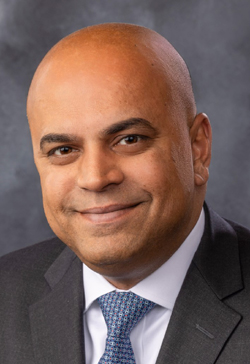
Asm. Al Barlas
Sponsored bills
Maddy summaryThis bill upgrades motor vehicle theft to a first-degree crime if, during the theft, the vehicle is operated in a way that creates a risk of injury to people or damage to property. It directly affects individuals who steal vehicles and drive recklessly while doing so, such as through high-speed chases or dangerous maneuvers. The key provision increases penalties to up to 20 years in prison or a $200,000 fine for this specific reckless conduct. The law takes effect immediately upon enactment.
Maddy summaryThis bill creates a new Office of River Maintenance within New Jersey's Department of Environmental Protection (DEP) to oversee all stream cleaning and bank restoration projects statewide. The office will replace the previous system under P.L.1993, c.376, and must follow strict environmental rules - including protecting "Category one waters" (like trout streams and park-adjacent waters) and coordinating with agencies for endangered species or wetlands. Projects must avoid altering stream beds beyond historical levels, preserve shading vegetation, and comply with existing wetlands and flood control laws. The bill directly affects DEP operations and any entities conducting stream or bank work, requiring all such projects to be managed through this new office.
Maddy summaryThis bill provides $500,000 in additional state funding from the General Fund to the Department of Environmental Protection (DEP) for the Township of Fairfield in Essex County to dredge and restore a section of the Passaic River. The funds will cover specific river cleanup activities like dredging, restoration, cleaning, and removing debris, as outlined in a plan the township must submit to the DEP. The DEP must waive permit fees for any work consistent with the approved plan and the Statewide general permit for river restoration. This directly affects Fairfield Township’s river management efforts and requires specific project planning before funds are allocated.
Maddy summaryThis bill (A 226) establishes a process for New Jersey municipalities to be exempt from certain affordable housing obligations if designated as "extensively flood-prone" by the housing council. It allows municipalities to avoid fulfilling fair share housing requirements - including past obligations - when flood risk would jeopardize development or preservation efforts. The exemption applies when flood-prone areas prevent feasible housing development, alongside existing adjustment factors like historic preservation or infrastructure constraints. The bill amends existing law (P.L.1985, c.222) to formalize this flood-risk exemption as a specific pathway for municipalities. The bill was introduced on January 13, 2026, and referred to the Assembly Housing Committee.
Maddy summaryThis bill creates the "Cop 2 Cop Sustainability Fund" and appropriates $500,000 annually from the General Fund starting in fiscal year 2025 to support New Jersey's 24-hour confidential Cop 2 Cop hotline program for law enforcement officers and sheriff's officers. The program provides immediate crisis intervention, referrals to counseling services, and maintains strict confidentiality for callers experiencing psychological distress, trauma, or stress related to their work. Currently funded by up to $400,000 yearly from Body Armor Replacement Funds, this bill adds a dedicated, non-lapsing funding source to ensure the program's long-term stability. The hotline remains operated by Rutgers University Behavioral Health Care and does not alter existing services or eligibility.
Maddy summaryThis bill (A 3691) would exempt income earned in the form of tips from New Jersey's state gross income tax. It directly affects service industry workers (such as servers, bartenders, and hair stylists) who receive tips as part of their earnings. The key provision amends New Jersey's tax code to remove "tips" from the list of taxable income categories under the definition of "gross income." As a result, tips would no longer be subject to state income tax, reducing the tax burden for affected workers. The bill is currently pending in the Assembly Labor Committee.
Maddy summaryBill A3276 prohibits New Jersey's Motor Vehicle Commission and other state agencies from sharing New Jersey drivers' personal information (such as name, address, license number, or photo) with other states. It specifically blocks disclosure for out-of-state enforcement of speed camera or red light camera violations captured in those states. The bill defines "personal information" broadly and applies to violations recorded by automated systems like speed control devices or traffic signal monitoring systems. This directly affects New Jersey drivers who might otherwise face fines from other states using camera enforcement, without their personal data being shared. The bill takes effect immediately upon enactment.
Maddy summaryThis New Jersey bill requires municipalities to reserve at least 50% of affordable housing units in new developments for veterans who served in time of war or other emergency, as defined by state law. It mandates that veterans applying within the first 90 days of a project's marketing period receive priority for these units, with remaining units then open to the general public. After the initial 120-day marketing period, veterans are placed on a special waiting list to maintain the 50% reservation as units become available. The bill adds this veterans' preference to existing affordable housing requirements without altering the overall fair share obligations for low and moderate income housing.
Maddy summaryThis bill exempts volunteer fire companies in New Jersey from paying the annual registration fee required under the state's Charitable Registration Act. Currently, non-profits pay fees ranging from $30 to $250 yearly based on revenue, but volunteer fire companies must register and pay this fee like other organizations. The bill specifically removes the fee obligation while maintaining their requirement to register as charitable entities. It does not change existing registration procedures or eliminate other compliance duties. The exemption applies immediately upon enactment.