

Maddy summaryThis bill establishes minimum nurse-to-patient staffing ratios for hospitals, ambulatory surgery centers, and state developmental/psychiatric facilities in New Jersey. It requires specific ratios (such as 1 nurse for every 4 medical/surgical patients, 1 nurse for every 2 critical care patients, and 1 unlicensed personnel for every 7 daytime patients) while mandating hospitals to implement an acuity-based staffing system to ensure adequate staffing levels. Hospitals found in violation may face civil penalties that increase with repeat offenses, with penalty revenue funding a dedicated "Patient Protection and Staffing Fund" to support nursing recruitment, retention, education, and inspector staffing. The bill also requires the Commissioner of Human Services to review staffing standards in developmental centers and psychiatric hospitals to align with these new requirements.
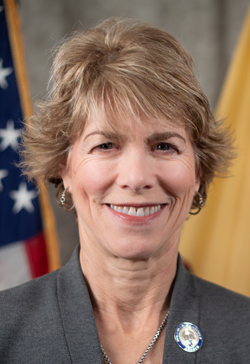
Asm. Lisa Swain
Sponsored bills
Maddy summaryACR 110 proposes a constitutional amendment allowing New Jersey municipalities to offer up to a 15% property tax exemption on the assessed value of a volunteer first responder’s primary residence. The exemption would apply to active members of volunteer fire departments, first aid, or rescue squads serving that municipality, provided their home is located within the municipality and serves as their primary residence. If approved by voters, the amendment would require the state legislature to pass enabling legislation, but municipalities would decide whether to implement the exemption and the exact percentage (up to 15%) via local ordinance. This change directly affects volunteer first responders and local governments, not the state government or all homeowners.
Maddy summaryACR 71 is a New Jersey legislative resolution urging Congress and the President to increase federal subsidies for the National Flood Insurance Program (NFIP). It specifically targets homeowners in flood-prone areas - particularly those affected by Hurricane Sandy - who face potential premium hikes of 500% or more due to federal policy changes. The resolution requests legislative action to lower costs for residents who have repeatedly suffered flood damage and experienced delayed federal relief. It does not create new law but formally asks the federal government to adjust NFIP subsidies.
Maddy summaryThis bill establishes New Jersey's "Menstrual Hygiene Products Program" to provide free tampons and sanitary napkins to low-income residents through participating food pantries. The Department of Agriculture will award annual grants (up to $10,000 per pantry) to food pantries for purchasing these products, and must list participating pantries with operating hours on its website. The program requires coordination with pharmacies and health departments to improve product access, and includes funding for educational materials about menstrual hygiene. It appropriates $200,000 from the General Fund to support the initiative, which must be implemented within six months of the bill's effective date.
Maddy summaryThis bill requires New Jersey's Department of Environmental Protection (DEP) to create a program encouraging owners or operators of closed landfills to convert these sites into habitats supporting pollinators like bees, butterflies, and bats using native plants. The DEP must develop guidelines for establishing and maintaining these habitats within six months of the law taking effect, and seek corporate or nonprofit partnerships to fund the effort. It directly affects landfill operators by providing a framework to repurpose closed landfill sites for ecological benefit. The bill defines "closed landfill" as legacy or closed sanitary landfills and "animal pollinator" as any species known to pollinate plants, such as bees, butterflies, or bats.
Maddy summaryThis bill would enter New Jersey into the Counseling Compact, an agreement allowing licensed professional counselors from New Jersey to practice in other member states without obtaining multiple licenses. The compact establishes a national commission to manage the agreement, share disciplinary information between states, and ensure counselors follow the laws of the state where their client is located. It would particularly benefit military personnel and their spouses who relocate frequently between states, as well as improve access to counseling services across state lines. Currently, 16 states have joined this compact, and New Jersey's participation would allow its licensed counselors to provide services in those states through a single license.
Maddy summaryNew Jersey's Assembly Bill A2241 prohibits courts from making custody or visitation decisions based solely on a parent's disability, age, health status, sexual orientation, gender identity, race, or ethnicity. If a court considers any of these factors for an otherwise fit parent, it must provide detailed written findings explaining why the factor was relevant to the child's best interests. The bill does not prevent courts from considering these factors alongside other relevant issues but explicitly bars them from being the sole basis for rulings. This applies to all child custody cases in New Jersey courts, directly affecting parents and judicial decisions involving custody arrangements.
Maddy summaryThis bill updates New Jersey's domestic violence law to explicitly include psychological abuse and economic abuse in the legal definition of domestic violence. Psychological abuse is defined as behavior causing fear, serious alarm, or distress that substantially disrupts daily activities, while economic abuse is defined as actions hindering a person's ability to manage money, property, or access essential goods and services. The change ensures victims experiencing these non-physical forms of abuse can access the same legal protections, restraining orders, and support services as those facing physical violence under the Prevention of Domestic Violence Act. It directly affects all individuals protected by the act, including current or former intimate partners, family members, and those in dating relationships who face these specific abuses.
Maddy summaryThis bill requires New Jersey's Environmental Protection Commissioner (with the Agriculture Secretary) to create standards and a "pollinator-friendly" label for plants. It mandates that plants sold with this label must be native, non-invasive, and not treated with pesticides or chemicals harmful to pollinators like bees, butterflies, or hummingbirds. Retailers and distributors may only use the label if plants meet these standards, which prohibit harmful chemical treatments. The label applies specifically to plants marketed as safe for pollinators, defining "pollinator-friendly" based on these requirements.
Maddy summaryThis bill (A2802) requires New Jersey's Commissioner of Human Services to seek federal Medicaid waivers to secure funding for new graduate medical education training spots focused on behavioral health care. If approved, it would create a process for medical training programs to apply for Medicaid funds to add these specialized slots. The bill directly affects graduate medical education programs in New Jersey, enabling them to expand training in behavioral health care through existing Medicaid funding mechanisms. It does not create new state spending but leverages federal Medicaid resources to address a specific training gap.