

Maddy summaryThis bill establishes legal protections for patients and healthcare providers accessing or providing reproductive and gender-affirming health care services in New Jersey. It creates a new crime for interfering with these services (including physical obstruction, intimidation, or damaging property), with penalties ranging from a disorderly persons offense to a fourth-degree crime. The bill also prevents New Jersey from extraditing people for legally protected health care activities, prohibits licensing boards from penalizing providers for services that are legal in New Jersey but illegal in other states, and protects patient privacy related to these services. It specifically ensures that a fertilized egg, embryo, or fetus has no independent legal rights under New Jersey law.
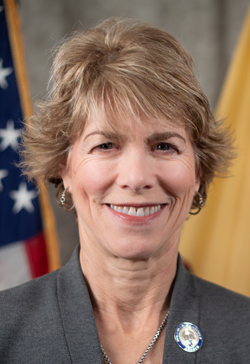
Asm. Lisa Swain
Sponsored bills
Maddy summaryThe New Jersey Works Act provides tax credits to businesses that fund pre-employment training programs with educational institutions or nonprofits. Businesses can receive a tax credit equal to 100% of the financial assistance they provide for approved programs that offer at least 12 weeks of paid training at minimum wage to low- and moderate-income individuals. These programs must include training in basic skills, communication, critical thinking, and job readiness. The bill appropriates $3 million from the General Fund to implement the program and requires a two-year evaluation of its effectiveness, excluding construction businesses from participation.
Maddy summaryThis bill requires sellers or their representatives (like real estate brokers) to inform buyers about local rent control or rent leveling ordinances during residential real estate transactions in New Jersey. Specifically, the notice must be included in the property condition disclosure statement and state: "Buyers are advised to consult local municipal ordinances and regulations regarding rent control or rent leveling that may affect the property." The notice must be provided in hard copy or electronically with buyer acknowledgment. It directly affects buyers purchasing residential properties who may later rent them out, ensuring they are aware of potential municipal restrictions. The bill does not change existing rent control laws but mandates this disclosure at the time of sale.
Maddy summaryThis bill would create a tax credit program allowing New Jersey taxpayers to receive a 75% credit against their state income tax for donations to approved scholarship organizations. It directly affects nonpublic school students who meet income criteria (household income ≤2.6x the federal reduced-price lunch threshold) attending schools complying with anti-discrimination and anti-bullying laws. The key mechanism requires scholarship organizations to spend 95% of donations on student aid, limit administrative costs to 5%, and adhere to strict eligibility rules. The program would have been capped at $37.5 million annually (adjusted for inflation), but the bill was withdrawn from consideration on June 13, 2024, and never became law.
Maddy summaryThis bill amends New Jersey's bias intimidation law to specifically include Sikhism as a protected class, making it illegal to commit hate crimes against Sikhs based on their religious identity. It appropriates $100,000 annually for three years to fund Sikh awareness educational initiatives, including law enforcement training on Sikh identity features like turbans and religious symbols to prevent misclassification of hate incidents. The bill requires the Office of Attorney General to develop public awareness campaigns and educational programs about Sikhism for public schools, and mandates that all public entities incorporate anti-Sikh hate into their bias intimidation policies and diversity programs. These changes directly affect Sikhs in New Jersey (who are the second-most targeted religious group for hate crimes) and all public institutions across the state.
Maddy summaryThis bill (A3532) creates a New Jersey gross income tax credit for active, unpaid members of volunteer fire departments, ambulance squads, or rescue organizations. It allows eligible members to claim a credit based on miles driven using their personal vehicle during emergency duty, calculated at the IRS business mileage rate, capped at $500 per individual or $1,000 for joint filers. To qualify, members must meet specific service requirements (e.g., 60% attendance at calls/meetings for non-duty-hour volunteers, or 400+ duty hours for those with duty-hour responsibilities) and be in good standing with their organization. The credit is refundable, meaning it can be paid even if the member owes no income tax, and organizations must certify qualifying members annually to the tax division.
Maddy summaryThis bill requires New Jersey health insurers, including commercial plans, health maintenance organizations, and state programs, to cover mammograms starting at age 35 rather than 40 for routine screening. It mandates annual mammograms for women 35 and older, while also requiring coverage for women under 35 with family history of breast cancer or other risk factors. The bill also requires coverage for additional breast imaging tests like ultrasounds or MRIs when mammograms show dense breast tissue or abnormalities. This applies to all health insurance plans in New Jersey, including the State Health Benefits Program and School Employees' Health Benefits Program. The policy change lowers the age threshold for routine screening to improve early breast cancer detection.
Maddy summaryThis bill establishes a Deep Fake Technology Unit within New Jersey's Department of Law and Public Safety to address the growing threat of AI-generated deepfakes. The unit will provide technical training, evidence analysis, and expert support to state and local law enforcement, prosecutors, and courts for detecting and investigating deceptive audio or visual media. It requires annual reports on deepfake technology trends, legal developments, and collaboration efforts, and appropriates $2 million from the state general fund to cover operational costs. The unit directly affects law enforcement agencies, courts, and state prosecutors by enhancing their capacity to handle deepfake-related cases.
Maddy summaryThis bill allows 16- and 17-year-old New Jersey residents who are U.S. citizens and live in a school district for at least 30 days to vote only in local school board elections. It requires the Secretary of State to create a registration process and ballot design mirroring existing voter systems for this age group. The bill specifically limits voting rights to school board elections - 16- and 17-year-olds cannot vote in state or federal elections. It does not require school boards or municipalities to take action to implement the change.
Maddy summaryThis bill requires New Jersey's Director of the Division of Purchase and Property to review all state purchasing for menstrual products and develop a centralized contract to reduce costs for state agencies. It mandates that the director award a single contract for menstrual products (including pads, tampons, and cups) upon request by any state department, making it available to all executive branch entities and cooperative purchasing groups. Non-profit organizations may also purchase under this contract with director approval, subject to reporting requirements on expenditures. The bill directly affects state departments, agencies, and eligible non-profits using state procurement systems.