

Maddy summaryThis New Jersey bill (A-3753) requires crisis pregnancy centers to clearly disclose two key facts in English and Spanish: (1) that they are not licensed health care facilities, and (2) whether they employ a physician to supervise pregnancy-related services on-site. Centers must display this information conspicuously in waiting areas, exam rooms, and during client consultations, and include it in all advertisements (online, print, radio, etc.). Violations could trigger penalties under New Jersey's Consumer Fraud Act. The bill applies to all crisis pregnancy centers operating in New Jersey that provide non-medical pregnancy counseling and referrals.
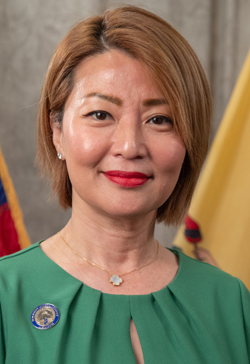
Asm. Ellen Park
Sponsored bills
Maddy summaryThis bill establishes a competitive grant program to fund organizations recruiting teachers for underserved New Jersey school districts. It appropriates $6 million from the General Fund to provide grants equal to private contributions raised by eligible organizations (up to $1 million annually per organization for three years). Eligible organizations must be tax-exempt, place new teachers in underserved districts, and commit to long-term teacher retention. An "underserved district" is defined as one where at least 40% of students qualify for free/reduced meals and faces a teacher shortage, as determined by the Commissioner of Education.
Maddy summaryThis bill requires New Jersey's Attorney General to study how law enforcement agencies currently use facial recognition technology and issue a report with recommendations for statewide policy within six months. The report must assess the technology's accuracy, summarize existing law enforcement usage (including for police reports), and propose guidelines for its future use. It applies to all state and local police departments. The study does not create new laws but aims to inform potential future policy decisions.
Maddy summaryThis New Jersey bill (A 1404) makes contracts void where individuals or private companies conceal, alter, or destroy physical evidence to help a criminal avoid arrest - such as hiding a weapon or falsifying records in exchange for money or other compensation. It directly affects crime victims, who can now file civil lawsuits against those who made such agreements, independent of other legal remedies. The law allows victims to sue within five years of discovering the evidence concealment. It does not change criminal penalties for the original crime but creates a new civil right for victims to seek damages.
Maddy summaryThis New Jersey bill requires all colleges and universities to install automatic external defibrillators (AEDs) in unlocked, clearly marked locations within every athletic facility and student center. The AEDs must be accessible during facility operating hours and within reasonable distance of athletic fields. Institutions must also ensure at least two staff members trained in CPR and AED use are present during operations, and that all AEDs are regularly tested/maintained with emergency services notified of their location and type. The bill grants immunity from civil liability to institutions and staff using AEDs as required.
Maddy summaryNew Jersey's ACR 106 is a formal statement condemning President Trump's 2025 decision to end federal protections preventing immigration enforcement in sensitive locations like schools, hospitals, places of worship, and shelters. The resolution states this policy reversal - reversing Biden-era guidance that had barred ICE actions in these areas - undermines community trust and deters immigrants from accessing essential services. It does not change laws but sends a formal disapproval to the White House, Homeland Security, and New Jersey's congressional delegation. The resolution reaffirms New Jersey's commitment to equal access to healthcare, education, and community resources for all residents, regardless of immigration status.
Maddy summaryThis bill changes the official title for members of the New Jersey General Assembly from "Assemblyman" or "Assemblywoman" to "Assembly Member" to use gender-neutral language. It amends multiple state laws to replace gendered terms with "Assembly Member" in all references, including appointments to commissions and the Governor's line of succession. The change applies to all current and future General Assembly members, affecting how they are addressed in official documents and proceedings. The bill does not alter legislative duties, voting powers, or policy responsibilities.
Maddy summaryThis bill requires New Jersey's Attorney General to review and update statewide policies for investigating human trafficking. It directs the AG to specifically consider: whether recording undercover investigations protects victims and investigation integrity, strict rules for sharing such recordings, and involving county prosecutors early in cases. The policy review must address these points to better protect victims and support law enforcement. The bill responds to a 2024 commission report on human trafficking in New Jersey's massage industry and applies directly to county/municipal law enforcement and victims of trafficking.
Maddy summaryThis bill requires New Jersey county clerks to provide accessible mail-in ballots to voters with disabilities who request them. It mandates that these ballots include specific accessibility features, such as electronic delivery, audio prompts for blind voters, compatibility with braille displays, and the ability to mark selections electronically. Voters who qualify as "electronic return eligible" (due to blindness, visual impairment, or physical disability preventing ballot handling) may return completed ballots electronically. The bill ensures voters can independently complete, verify, and submit their ballots, with printed materials provided unless electronic return is used, and sets uniform guidelines for election officials.
Maddy summaryThis bill creates a $1 million annual "Census Complete Count Trust Fund" within New Jersey's Department of State, funded by the State General Fund. The fund will be invested, with all interest earnings added back to support efforts to ensure every resident is counted during each federal decennial census. It directly affects New Jersey's population counting process, which determines federal funding for schools, infrastructure, and services. The Department of State will use these funds to support state, local, and community organizations working to achieve a full census count.