

Maddy summaryThis bill establishes a central registry for newborns diagnosed with sickle cell trait in New Jersey, requiring laboratories to report positive screening results to the registry and notify the child's physician. Physicians must then provide parents with information about genetic counseling, including risks of passing the trait to future children and potential health complications. The registry will enable the Department of Health to send targeted follow-up notifications to parents during early adolescence (about athletic risks) and later adolescence (about reproductive implications), and to 18-year-olds about available resources. All registry data is kept confidential, with strict penalties for unauthorized disclosure, including fines or up to six months in jail per violation.
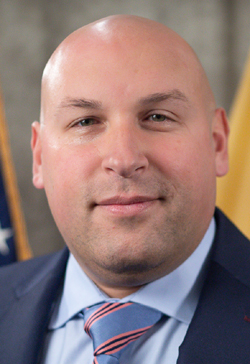
Asm. Mike Venezia
Sponsored bills
Maddy summaryThis bill requires all New Jersey State correctional facilities to install air conditioning systems. Existing facilities must retrofit with AC within three years of the bill's effective date, and new facilities must include AC during construction. The air conditioning must maintain a heat index (how hot it feels, combining temperature and humidity) below 85 degrees. Facilities must also record and publicly report daily maximum indoor temperatures in annual department reports.
Maddy summaryThis bill establishes the Council of Women in Higher Education within New Jersey's Department of State, composed of 39 members appointed by public, independent, and county colleges. The council will review and recommend improvements to women-focused programs at colleges, compile data on women's employment and course offerings, and create K-12 outreach initiatives to advance women's opportunities in higher education. It must publish an annual report detailing its goals, progress, and recommendations to state education leaders like the Secretary of Higher Education. The council directly affects all New Jersey colleges and universities by addressing gaps in women's representation and programming.
Maddy summaryThis New Jersey bill establishes a two-year pilot program requiring selected law enforcement agencies to coordinate with school districts to identify and support at-risk youth under 18. At-risk youth are defined as students involved in police-related incidents like arrests, being reported missing, exposure to violence, truancy, or mental health/substance abuse issues. Participating agencies must develop individual action plans connecting each youth to resources such as counseling, school support staff, diversion programs, and community services. The program will be evaluated after 12 months and at the end of the pilot to assess its impact on reducing juvenile recidivism and inform future decisions.
Maddy summaryThis bill requires New Jersey school districts to follow specific steps when a student's meal bill is unpaid. Districts must first try to enroll students in free or reduced-price meal programs before notifying parents, and include meal program applications with any notice. It prohibits schools from shaming students (e.g., making them wait in line) or threatening child protective services over unpaid bills. Districts must report twice a year on how many students are denied meals due to unpaid bills.
Maddy summaryThis bill requires New Jersey's Department of Education to annually report how federal pandemic relief funds were distributed to school districts and used. The Department must submit detailed reports by December 31 each year, covering total funds received from the CARES Act, CRRSA Act, and American Rescue Plan Act, amounts distributed to schools, and specific purposes for which funds were spent. A final report is also required within six months after all funds are fully expended. These reports ensure transparency about how pandemic-related education funding was utilized across the state.
Maddy summaryThis bill creates a 10-member task force to examine New Jersey's current professional development requirements for public school teachers and school leaders. The task force, including representatives from teacher unions, school boards, administrators, and the public, will study existing rules, evaluate their scope (such as required topics, hours, and frequency), and recommend potential changes. It must issue a final report to the Governor and Legislature within 12 months, focusing on whether requirements are necessary, relevant, or overly burdensome. The bill directly affects all public school teachers and school leaders subject to these state-mandated professional development rules.
Maddy summaryThis bill requires New Jersey public school districts to incorporate age-appropriate instruction on racial discrimination and social justice into middle school Social Studies classes as part of their existing New Jersey Student Learning Standards implementation. It directly affects all middle school students and school districts across the state. The key mechanism mandates the Commissioner of Education, in consultation with the Amistad Commission, to provide school districts with sample learning activities and resources to support this instruction. The requirement takes effect immediately for the first full school year after enactment.
Maddy summaryThis bill prohibits New Jersey law enforcement agencies from hiring applicants who were removed from a previous law enforcement position for police misconduct or violation of agency rules. It requires agencies to request and share internal affairs and personnel files of applicants with prior employment at other New Jersey law enforcement agencies, but explicitly bans hiring those with a prior termination for misconduct. The law makes it unlawful for agencies to appoint such applicants, directly affecting individuals with disciplinary removals and shaping hiring practices across the state. This amendment to existing law (P.L.2020, c.52) strengthens accountability by preventing agencies from rehiring officers disciplined by other departments.
Maddy summaryThe Mental Health Access Act (A2500) requires New Jersey's Medicaid program to reimburse providers for specific outpatient behavioral health services at rates no lower than Medicare's rates. This directly affects licensed mental health professionals and facilities that provide evidence-based counseling (such as individual or group therapy for mental health, addiction, or emotional disorders) to Medicaid patients. The bill defines "evidence-based" as treatments meeting state criteria set by health officials and mandates that services must be delivered in outpatient settings. It also directs state agencies to seek federal approval for funding adjustments to cover the increased costs, with implementation beginning four months after enactment.