

Maddy summaryThis bill establishes a three-year pilot program in New Jersey's Department of Education to provide assistive technology to elementary and middle school students with dyslexia or related conditions. It requires the Commissioner of Education to award grants to seven selected school districts (representing diverse urban, suburban, and rural areas across different county classifications) to cover the cost of assistive technology devices, services, and teacher training. The technology must help students access grade-level reading materials through text-to-speech tools or complete written assignments more effectively. Participating districts must submit detailed applications showing student needs, technology plans, and how the program will improve academic outcomes. At the program's conclusion, the Commissioner must report to the Governor and Legislature on participation, impacts, and recommendations for potential statewide implementation.
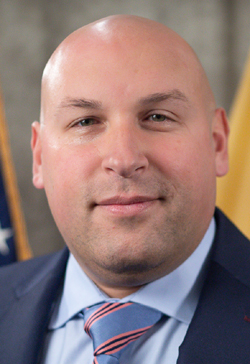
Asm. Mike Venezia
Sponsored bills
Maddy summaryThis bill requires school bus drivers in New Jersey with a school bus endorsement to retake both a knowledge test and a skills test every five years to maintain their endorsement. Drivers aged 70 or older must retake these tests annually instead of every five years. The requirement specifically applies to school bus endorsements on commercial driver licenses and does not affect other commercial driving requirements. This amendment updates existing law to establish these periodic testing intervals for school bus drivers.
Maddy summaryThis bill requires developers of affordable housing in New Jersey to reserve at least 50% of low- and moderate-income units for veterans of the U.S. Armed Forces, National Guard, or Reserve Components, regardless of war service. It establishes a special waiting list for veterans and mandates outreach by the Department of Military and Veterans Affairs to connect eligible veterans with housing opportunities. Municipalities that provide such housing receive one standard housing credit plus a half-credit for each veteran-occupied unit toward their affordable housing obligations. The policy directly affects veterans seeking housing, developers building affordable units, and municipalities meeting state housing requirements.
Maddy summaryThis bill (A885) requires New Jersey's State Chief Diversity Officer to study whether disabled veteran-owned businesses are being adequately utilized in state procurement contracts. The study must determine if disparities exist between the availability of these businesses and their actual use by state agencies. Within 12 months of enactment, the officer must submit a report with findings and recommendations to the Governor and Legislature, with potential follow-up reports tracking implementation of prior recommendations. The bill directly affects disabled veteran-owned businesses and state agencies managing procurement contracts.
Maddy summaryThis bill requires all New Jersey public and nonpublic schools to have at least one FDA-registered portable anti-choking device (a suction device for clearing airway blockages) placed in accessible locations like cafeterias and nurse offices during school hours and events. Schools must display clear signage marking device locations and develop policies requiring staff training in airway management and device use. The state Department of Education will reimburse schools for device costs and provide annual training opportunities for school nurses and staff. The law takes effect 180 days after enactment.
Maddy summaryThe New Jersey Disability Savings Act (A115) creates a state tax deduction for contributions to New Jersey ABLE accounts (disability savings accounts) and offers a one-time $750 matching grant for new accounts opened by residents with gross income of $150,000 or less. It directly affects New Jersey residents with disabilities or their families who use these accounts for qualifying disability-related expenses like housing, education, or medical costs. The bill allows a full state tax deduction on contributions (similar to NJ’s 529 education savings plan) and provides the matching grant as an incentive to save, though funding for the grant depends on annual state appropriations. The deduction and grant apply only to New Jersey ABLE accounts, not accounts from other states.
Maddy summaryThis bill requires school districts and contracted bus services to maintain at least one school bus aide for every 15 special needs students during all bus transportation. It applies when transporting students with special needs, including when mixed with general education students. The bill defines "special needs" as students eligible for special education (excluding those classified solely for specific learning disabilities under federal law). The rule takes effect immediately for the first full school year after enactment.
Maddy summaryThis bill would change New Jersey's voter registration deadline from 21 days to 14 days before an election, allowing eligible voters to register and vote in elections they previously would have missed. The bill directly affects voters who need to register closer to Election Day, particularly those who learn about elections later or need to update their registration information. The key provision amends multiple sections of election law that currently require registration 21 days before an election to instead allow registration up to 14 days before. This change would not affect the existing requirement that voters must reside in a county for 30 days prior to an election to be eligible to vote. The bill would take effect January 1 following enactment.
Maddy summaryThis bill creates a four-year "New Jersey STEM Scholars Grant Pilot Program" within the Department of Education to provide funding for schools. It directly affects public school districts, charter schools, and "renaissance schools" (a New Jersey term for publicly funded alternative schools) seeking to expand STEM (science, technology, engineering, math) education. The program awards competitive grants for three specific areas: project-based learning (student-led STEM projects), afterschool STEM (after-class programs like clubs), and out-of-school STEM (non-classroom activities like workshops). Grants must supplement, not replace, existing STEM funding, and schools must submit detailed plans for program design, student recruitment, teacher support, and long-term sustainability. Funding comes from annual state appropriations and private donations, administered through a new "STEM Scholars Grant Fund."
Maddy summaryThis bill establishes a three-year pilot program called the "Community Response Initiative to Strengthen Emergency Systems" (C.R.I.S.E.S.) within New Jersey's Department of Health, appropriating $2 million to fund community organizations that provide non-law enforcement emergency response alternatives. The program targets vulnerable populations - such as people of color, the elderly, individuals with disabilities, and those experiencing mental health crises - and prioritizes communities with high rates of police use of force or civilian complaints. Grantees must use funds for activities like community engagement, staffing, training, and operational costs to prevent violence, de-escalate situations, and reduce reliance on law enforcement for non-emergency calls. A 13-member advisory committee, including public members and agency representatives, will oversee grant approvals and program evaluation, with a final report required to assess program outcomes and cost savings.