

Maddy summaryThis bill legalizes for New Jersey residents aged 21 or older the personal cultivation and possession of marijuana plants for recreational use, allowing up to six plants per person (with a household maximum of 12 plants). It also permits qualifying medical patients (21+) or their designated caregivers to grow and possess up to 10 plants for medical use, again with a household limit of 12 plants. The bill removes criminal penalties for these activities, making them non-criminal under state law. The Cannabis Regulatory Commission must establish implementing rules within 90 days of the bill's effective date.
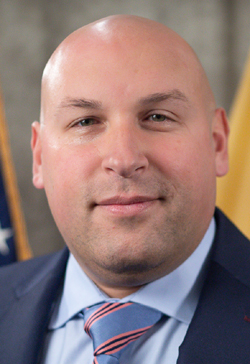
Asm. Mike Venezia
Sponsored bills
Maddy summaryAJR 153 designates May of each year as "Youth Smoking Prevention and Awareness Month" in New Jersey. The resolution requests the Governor to issue an annual proclamation encouraging public officials and citizens to observe the month with activities focused on preventing youth smoking and raising awareness about its health risks among middle and high school students. This procedural resolution does not create new laws but aims to promote existing tobacco prevention efforts through annual public recognition.
Maddy summaryThis bill establishes the New Jersey Community Learning Program within the Department of Education to fund comprehensive after-school programs in school districts located in "impact zones" - areas historically affected by cannabis-related enforcement, high unemployment, and poverty. It dedicates a portion of annual state cannabis tax revenue (from recreational sales) to cover all program costs for eligible districts. Impact districts must develop and submit detailed program plans - including service descriptions, staffing, locations, and costs - to the Commissioner for approval, and must provide transportation for students. The program aims to close achievement gaps by offering academic support and enrichment during non-school hours, including summer, with funding contingent on annual cannabis tax revenue deposits.
Maddy summaryThis bill would protect New Jersey residents from losing their homes due to unpaid medical bills. It creates a homestead exemption allowing any person aged 18+ living in the state to shield one primary residence (real property, condo, cooperative, or manufactured home with land) from being seized or sold to satisfy a court judgment for medical debt. The exemption applies specifically to medical debt judgments, not other debts, and limits each person to one exempt property at a time. The law would take effect 90 days after enactment.
Maddy summaryThis bill extends New Jersey's tuition benefits at public colleges and universities to residents serving in reserve components of the U.S. Armed Forces (including Army, Navy, Marine, Air Force, and Coast Guard Reserves), as well as to their eligible children and surviving spouses if the service member died in the line of duty. Eligible members must complete required training, be enrolled full-time in good academic standing, and apply for all available federal and state financial aid before state tuition coverage applies. The state will reimburse public institutions for tuition costs not covered by federal benefits like the Post-9/11 GI Bill, and prohibits charging non-resident tuition rates to qualifying reserve members. The policy takes effect immediately for the next academic year.
Maddy summaryThis bill changes the limit on annual property tax increases for New Jersey counties by revising how the maximum allowable tax levy is calculated. Currently, counties must ensure their tax levy does not exceed the lower of two calculations; the bill updates this to require counties to not exceed the greater of the two calculations. This directly affects all New Jersey counties in their annual budgeting process for property taxes. The change does not alter the underlying formulas but shifts the ceiling from the lower to the higher of the two amounts. The bill takes effect immediately and is retroactive to January 1, 2024.
Maddy summaryThis bill extends the deadline for implementing fire sprinkler systems in new townhouses from 7 to 25 months after the original law's enactment. It requires construction permit applications for new townhouses (defined as attached single-family homes with yard/public access on two sides) to include sprinkler system plans before being approved, unless the project had certain pre-existing approvals. Key exemptions include developments with prior municipal zoning approvals, affordable housing agreements, or building permits submitted before the new deadline. The bill also delays the timeline for the state to adopt sprinkler design rules from 5 to 13 months after this bill's enactment.
Maddy summaryThis bill requires New Jersey employers to provide specific accommodations for employees who are breastfeeding their infants. It mandates employers to offer reasonable break time during work hours (paid at the employee's regular rate), job restructuring, and modified work schedules for breastfeeding needs. Employers must also provide a private, non-restroom space for expressing breast milk, free from intrusion by other employees or customers. These accommodations must be provided for as long as the employee desires, and employers cannot penalize employees for requesting or using these accommodations. The bill clarifies these protections as part of New Jersey's Law Against Discrimination.
Maddy summaryNew Jersey Assembly Bill A513 would provide tuition-free classroom training for eligible apprentices in registered apprenticeship programs. It directly affects low-income individuals whose household income is below New Jersey's median (determined by U.S. Census data), who are enrolled in apprenticeships and meet specific criteria: their employer doesn't cover tuition, they've exhausted federal aid, and they maintain active apprenticeship employment with good academic standing. The bill requires public colleges and vocational schools to waive tuition for these courses, funded through existing state workforce development funds or Wagner-Peyser Act dollars. This policy change aims to reduce financial barriers for apprentices pursuing vocational training.
Maddy summaryThis bill expands New Jersey's municipal court conditional dismissal program to include defendants charged with certain minor drug offenses (previously excluded under Chapter 35/36 of Title 2C). It requires eligible defendants to complete court-directed programs like substance abuse treatment, mental health services, job training, or housing assistance over a one-year probation period. If they successfully complete these requirements without new offenses, the court dismisses the charges with no conviction record. The program applies to first-time offenders who meet standard eligibility criteria, such as no prior convictions for similar offenses. This change aligns with existing conditional dismissal rules for non-drug offenses but specifically adds drug-related cases to the program.