

Maddy summaryThis bill requires the New Jersey Motor Vehicle Commission (MVC) to conduct unscheduled surprise inspections of school buses in addition to existing scheduled inspections. Specifically, it mandates a minimum of two annual inspections per school bus operator, with one being a surprise visit, to ensure ongoing safety compliance. School bus operators (owners or day-to-day managers) must provide access to buses and required maintenance/employment records during these inspections, with fines of $50-$500 per violation for non-compliance. The bill updates New Jersey’s School Bus Enhanced Safety Inspection Act to strengthen safety checks through unpredictable inspections, using collected fines to fund the program itself.
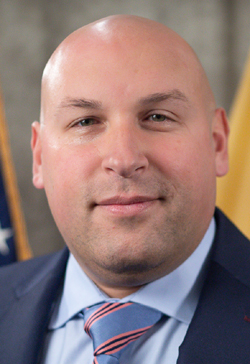
Asm. Mike Venezia
Sponsored bills
Maddy summaryNew Jersey's S 3620 requires electric and gas utilities using smart meters to establish an "Energy Bill Watch" program for smart meter customers. The program mandates utilities to notify customers when their daily usage exceeds the previous billing cycle's average (on the 10th and 20th days of each cycle), offer customizable dollar-value alerts, and include average monthly usage costs and kilowatt/therm amounts in notifications. Utilities must automatically enroll smart meter customers, provide opt-out options, advertise the program through multiple channels, and include specific billing details in all customer bills (previous cycle amount, current cycle amount, and the difference between them). This bill directly affects smart meter customers of New Jersey's electric and gas utilities.
Maddy summaryThis bill lowers the cost threshold for public works projects that may include project labor agreements (PLAs) from $5 million to $3 million. It applies to projects requiring prevailing wages under New Jersey's Prevailing Wage Act, such as construction, renovation, or demolition work by public entities like state agencies, counties, or school districts. By reducing the threshold, more projects will be eligible to use PLAs - pre-hire agreements between labor organizations and contractors that set wages, benefits, and work rules for a specific project. The change takes effect immediately upon enactment.
Maddy summaryAJR 217 is a commemorative resolution designating April 9 of each year as "Paul Robeson Day" in New Jersey. It honors Paul Robeson, a Rutgers University scholar, athlete, actor, singer, and civil rights activist born in Princeton, NJ, who broke racial barriers in the 1920s-1930s and advocated for global justice. The resolution requests the Governor issue an annual proclamation encouraging public observance of the day through activities and programs. As a procedural resolution, it does not create new laws or affect specific groups but formally commemorates Robeson's legacy.
Maddy summaryThis bill creates the New Jersey-Haiti Commission within the Department of State to strengthen economic and cultural ties between New Jersey and Haiti. The 13-member commission (including the Secretary of State as chair and 12 appointed public members) will study historical connections, analyze data on New Jersey's Haitian-American community (which has the 4th largest Haitian population in the U.S.), and identify economic collaboration opportunities like trade and cultural exchanges. The commission must hold quarterly public hearings, conduct research, and submit annual reports with recommendations to the Governor and Legislature within one year of its first meeting. It directly affects New Jersey's Haitian-American residents and the state's relationship with Haiti by focusing on concrete policy recommendations for economic development and partnership.
Maddy summaryThis bill prohibits electric utilities from raising residential rates during summer (June 1-August 31) and gas utilities from raising rates during winter (January 1-March 31). It directly affects residential electricity and gas customers in New Jersey. The key provisions require utilities to delay rate increases during these seasons and provide at least 30 days' written or electronic notice before any approved rate change takes effect. The law applies to all electric and gas public utilities serving residential customers.
Maddy summaryThis bill requires New Jersey public utilities to include a clear, bilingual (English/Spanish) bill insert for customers affected by any rate increase approved by the Board of Public Utilities. The insert must itemize specific rate changes and explain the reasoning behind them, using 12-point plain language. It applies directly to all customers receiving utility bills with new or adjusted rates. The law takes effect immediately upon passage.
Maddy summaryThis bill limits annual rate increases for residential electricity and gas utility customers in New Jersey to no more than 5% unless "extraordinary circumstances" occur. It directly affects residential customers by preventing most utility rate hikes, with exceptions for major disasters like hurricanes, earthquakes, or widespread grid failures declared by state or federal authorities. The law prohibits utilities from raising rates above this 5% cap during any single year without such approval. The bill takes immediate effect upon passage.
Maddy summaryNew Jersey Assembly Bill A5513 (introduced March 2025) requires the Board of Public Utilities (BPU) to create a public information campaign about utility meter inspections and calibration. The campaign must inform electric, gas, and water utility customers - directly affecting all residential and business customers - about meter testing requirements, how often meters must be checked, and procedures for disputing billing errors. It mandates clear details on independent meter accuracy verification, dispute timelines, and available resources, delivered through BPU and utility websites, multilingual printed materials (English/Spanish), and a toll-free hotline. The bill focuses on transparency in billing processes without altering utility rates or regulations.
Maddy summaryThis bill (A5509) appropriates $67.9 million to ensure New Jersey school districts do not experience a reduction in state school aid during the 2025-2026 school year compared to the 2024-2025 school year. It directly affects approximately 200 school districts identified as facing aid cuts based on the February 2025 state aid notice. The law requires districts receiving less state aid in 2025-2026 than in 2024-2025 to receive additional funds to match their prior year's total aid amount. This provision supplements existing tax levy cap rules, which generally limit property tax increases to the greater of the Consumer Price Index or 2%.