

Maddy summaryThis bill requires New Jersey to create a statewide database tracking habitability violations in rental properties, including court-verified issues (like unsafe conditions), municipal citations (e.g., for fire safety or utilities), and defect categories (e.g., hazardous or persistent problems). Landlords who fail to comply face penalties: $500 for a first violation and $1,000 for subsequent offenses, plus potential tenant lawsuits seeking the same penalties plus attorney fees. Tenants gain new legal recourse by filing lawsuits in local courts to recover these penalties, and landlords must include specific lease clauses about attorney fee recovery if they seek fees from tenants. The database will be accessible in court cases, with its contents treated as evidence.
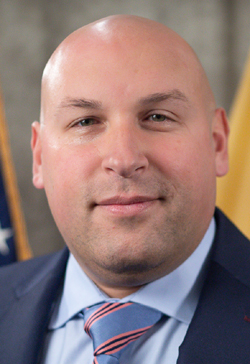
Asm. Mike Venezia
Sponsored bills
Maddy summaryThis proposed bill establishes the New Jersey Student Teacher Scholarship Program to reduce financial barriers for future teachers. It provides eligible students up to $7,200 per semester for full-time clinical practice (the final teaching internship) in approved teacher preparation programs at New Jersey institutions. To qualify, students must be NJ residents enrolled full-time in an approved program and complete required steps for clinical practice. The program requires annual data collection on participants' demographics and program experiences, with funding to be appropriated annually by the legislature. The bill is currently pending before the Assembly Education Committee.
Maddy summaryThis bill creates a 10-member task force to review New Jersey's current professional development requirements for public school teachers and school leaders. The task force includes the Commissioner of Education, six members appointed by the Governor (with input from education stakeholders like teachers' unions and school boards), and three public members with relevant expertise. It must study existing rules, evaluate their scope (including topics covered, frequency, and hours), and recommend improvements to make requirements more relevant and less burdensome. The task force must submit a final report to the Governor and Legislature within 12 months, but the bill itself does not change current requirements.
Maddy summaryThis bill requires public community water systems (like municipal water utilities) to test water quality quarterly for secondary drinking water standards, including sampling from at least 10% of customer taps. It mandates that water system operators submit test results to the state environmental agency, local municipalities, and customers annually and quarterly. If tests exceed standards, operators must create a compliance plan within 30 days to fix issues within 30 days (or sooner if needed for health risks), followed by a maintenance plan to prevent future violations. These rules aim to ensure ongoing water quality for communities served by public water systems.
Maddy summaryThis bill creates a 9-member Red Tape Review Task Force within New Jersey's Department of the Treasury to evaluate state regulations. The task force, chaired by the Lieutenant Governor and including agency heads and legislative leaders, will review state rules to eliminate unnecessary burdens on businesses, non-profits, workers, and local governments. It will collect public input, analyze regulations, and submit a report with recommendations to the Governor and Legislature within three years. The task force's report is advisory only and cannot create legal rights or be used in court challenges against state agencies.
Maddy summaryThis bill establishes a three-year pilot program in New Jersey public schools to provide assistive technology (like text-to-speech software and digital tools) to elementary and middle school students with dyslexia or related reading/writing challenges. It directly affects students identified with dyslexia who do not require formal special education classification, helping them access grade-level materials and complete assignments more effectively. The program will provide grants to seven selected school districts (chosen across urban, suburban, rural areas and different county sizes) to cover the cost of technology, related services, and teacher training. Districts must apply with student data and plans showing how the tools will improve academic outcomes, with the Commissioner of Education overseeing implementation.
Maddy summaryThis New Jersey bill expands healthcare access by allowing general pediatricians (not specialists) to treat children with low-acuity behavioral or developmental issues like anxiety, as defined by the State Board of Medical Examiners. It also updates rules for advanced practice nurses, enabling them to prescribe medications and manage care in more settings under specific collaborative protocols with physicians, including annual protocol reviews and additional pharmacology training for controlled substances. Both changes aim to increase provider capacity for pediatric behavioral health while requiring physician collaboration and documentation. The bill directly affects pediatricians and advanced practice nurses in New Jersey, particularly in community and primary care settings.
Maddy summaryThis bill requires all New Jersey public and nonpublic schools to place at least one FDA-registered portable anti-choking device (using manual suction to clear airway blockages) in accessible locations like cafeterias, school nurse offices, and other similar areas during school hours and events. Schools must also develop policies requiring training for nurses and staff in airway management and device use, with annual educational opportunities provided by the state. The Department of Education will reimburse schools for device costs through a specified application process. The law takes effect 180 days after enactment.
Maddy summaryThis bill exempts common oral care products like toothbrushes, toothpaste, mouthwash, dental floss, and oral irrigators from New Jersey's sales and use tax. It specifically covers items designed to maintain oral health, including powered toothbrushes and interdental brushes, regardless of whether they qualify as over-the-counter drugs. The exemption does not apply to food, dietary supplements, or durable medical equipment. This change aligns with a multistate tax agreement to standardize definitions for tax-exempt products.
Maddy summaryThis bill requires the New Jersey Economic Development Authority (EDA) to add social media development services to its existing Small Business E-commerce Support Program. The program currently provides e-commerce and digital marketing consulting to eligible small businesses (like restaurants, retail stores, and personal care businesses in commercial locations), and this bill mandates that social media platform development assistance be included alongside current offerings like website and digital marketing support. It applies only to this specific pilot program under the Main Street Recovery Finance Program, established by the 2020 Economic Recovery Act. The change would take effect immediately upon enactment, but the requirement ends when the pilot program terminates.