

Maddy summaryThis bill establishes a three-year grant program (the "UNITY Grant Program") administered by New Jersey's Commissioner of Education. It provides grants to school district employees facing adverse situations (as defined by the commissioner) to cover free or low-cost preschool or higher education costs for their dependents. Employees must apply through the commissioner, who determines grant amounts and may offer multi-year awards. The program requires a final report to the governor and legislature detailing implementation, participant numbers, and recommendations for future use. Funding comes from the state General Fund.
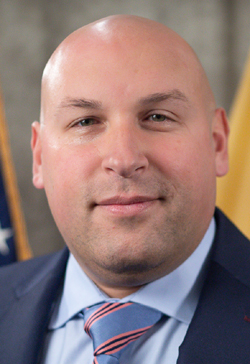
Asm. Mike Venezia
Sponsored bills
Maddy summaryThis is a ceremonial resolution, not a policy bill. It formally expresses the New Jersey General Assembly's appreciation to all its staff members - including the Chief Clerk, committee staff, administrative personnel, and others - for their dedication and service during legislative sessions. The resolution commends their "outstanding dedication, cooperation, and excellent work" in supporting the Assembly's operations. It requires the Clerk to send copies of the resolution to every staff member. As a procedural measure, it has no legal effect or policy changes.
Maddy summaryThis bill requires the Passaic Valley Sewerage Commissioners to maintain and submit certified minutes of all meetings and public hearings to the Governor. The Governor has 15 days to approve or veto the minutes; any action taken by the commissioners cannot take effect until this period ends (or until approval is granted), unless the Governor approves the minutes sooner. The bill also ensures that bondholder rights and existing financial obligations remain unaffected by this process.
Maddy summaryThis bill establishes the New Jersey Center for the Study and Prevention of Suicide at Rutgers School of Public Health. It requires the center to research suicide causes, prevention strategies, and treatment options at individual and societal levels, while collaborating with state agencies like the Department of Health. The bill appropriates $500,000 from the General Fund to launch the center and mandates annual reports to the Governor and Legislature on its research, funding, and grant programs. The center may also accept additional grants or donations for suicide-related research.
Maddy summaryNew Jersey's proposed Bill A 3444 requires all correctional police officers in state prisons to wear body cameras during most duties, with limited exceptions (such as restroom use, medical appointments, or strip searches). It also mandates security camera systems in correctional facilities. Recordings must be retained for a minimum of 180 days, with extended retention (up to three years) if a complaint is filed, an officer requests it for evidentiary value, or the footage relates to an investigation. The bill applies directly to correctional officers and facilities, aiming to document officer activities and incidents like use of force or disciplinary actions.
Maddy summaryThis bill establishes a 17-member "Police Body Camera Implementation Task Force" to study and recommend best practices for body cameras used by law enforcement in New Jersey. The task force, including representatives from police unions, civil rights groups, prosecutors, and law enforcement officers, will examine implementation requirements and rules for accessing body camera recordings. It must submit findings and recommendations to the Governor and Legislature by December 30, 2021. The bill does not mandate body cameras but aims to inform future policy decisions affecting law enforcement agencies and public safety practices.
Maddy summaryThis bill (A 1332) requires New Jersey's Board of Public Utilities (BPU) to create a public information campaign about utility meter calibration and billing. It directly affects all electric, gas, and water utility customers in the state by mandating clear information on: how often meters are tested, who can calibrate them, how to dispute readings or bills, and how to get independent meter accuracy verification. The campaign must provide materials in English and Spanish via websites, printed guides, and a toll-free phone line. The BPU will implement this without changing existing calibration rules or billing procedures.
Maddy summaryThis bill directs the State Health Benefits Program (SHBP) and School Employees' Health Benefits Program (SEHBP) commissions to use $78 million from a 2025 False Claims Act settlement with Horizon Blue Cross Blue Shield to reduce health care contribution costs for public employees. Specifically, it requires these funds to lower the amounts paid by state and school employees (and their dependents) for health coverage under their respective programs. The settlement requires Horizon to pay $100 million to the state, with $78 million allocated directly to the SHBP and SEHBP commissions for this purpose. The policy change takes effect immediately upon enactment.
Maddy summaryAJR 74 designates August 10 of each year as "Ecuador Day" in New Jersey to honor Ecuador's independence (commemorating the Battle of Pichincha on August 10, 1822) and recognize the state's strong historical and cultural ties with Ecuador. It directly affects New Jersey residents, particularly the state's large Ecuadorian immigrant community (237,532 people, or nearly 3% of the population), and calls for annual observance through proclamations by the Governor. The resolution is ceremonial, with no new legal requirements or policy changes.
Maddy summaryThis bill requires physicians in New Jersey to complete one continuing medical education credit on communication and treatment for deaf or hard of hearing patients as part of their biennial license renewal. It also mandates that general hospital emergency departments develop specific training protocols for staff interacting with deaf or hard of hearing patients, in consultation with the Division of Deaf and Hard of Hearing. The Division will create a dedicated training unit to develop and administer these programs. The law affects licensed physicians, hospital emergency staff, and the patients they serve, with implementation beginning 90 days after enactment.