

Maddy summaryThis New Jersey bill (A 449) requires all colleges and universities to place automatic external defibrillators (AEDs) in unlocked locations within athletic facilities and student centers, accessible during normal operating hours. It also mandates that institutions maintain a supply of naloxone nasal spray near each AED for opioid overdose emergencies, with designated staff trained to use both devices. Institutions must ensure at least two staff members are CPR- and AED-trained during facility hours and regularly test/maintain equipment, while also designating a campus medical professional to oversee naloxone use. The bill provides liability protection for institutions and staff acting in good faith when implementing these requirements.
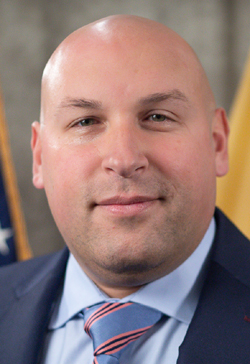
Asm. Mike Venezia
Sponsored bills
Maddy summaryThis bill prohibits pharmacies and businesses with on-site pharmacies in New Jersey from selling tobacco products (including cigarettes and smokeless tobacco) or electronic smoking devices (like vapes and e-cigarettes) and their components. It directly affects pharmacy owners and retail businesses operating with pharmacies, such as grocery stores with in-house pharmacies. Exceptions include FDA-approved smoking cessation products and medical cannabis dispensaries serving registered patients. Violations carry escalating civil penalties starting at $250 for the first offense, with potential disciplinary action from the Board of Pharmacy.
Maddy summaryBill A-1658 establishes the Veterans State Government Fellowship program at Rutgers' Eagleton Institute of Politics, creating a paid fellowship for eligible New Jersey veterans. The program selects up to eight veterans (within 10 years of honorable discharge, at or below E-9/O-5 rank) to work for one year - four in legislative offices (Senate/Assembly majority/minority offices) and four in state departments or agencies. Each fellow receives a stipend comparable to other Rutgers fellowships, funded by an annual $600,000 state appropriation. The program aims to provide veterans with hands-on training in legislative and executive government processes.
Maddy summaryThis bill requires all New Jersey employers (including public entities and private businesses) to provide eligible pregnant employees with 20 hours of paid leave annually for prenatal health care appointments. Employees may take this leave in one-hour increments and receive regular pay for the time taken, covering activities like doctor visits, tests, and discussions with health providers related to pregnancy. Employers cannot retaliate against or discriminate against employees who use this leave, though unused leave does not carry over upon job separation. The law takes effect January 1, 2026.
Maddy summaryThis bill raises the minimum age to obtain a firearms purchaser identification card in New Jersey from 18 to 21 years. It directly affects individuals under 21 who wish to purchase rifles or shotguns (excluding antique models), as they would no longer be eligible for the required card. The key provision amends New Jersey Statute 2C:58-3(c)(4) to increase the age threshold for this specific permit. The change applies only to rifles and shotguns, not handguns (which already require a 21+ age for permits). The bill is currently pending in the Assembly Judiciary Committee.
Maddy summaryThis bill increases Medicaid reimbursement rates for certain mental health services to at least the Medicare rate. It directly affects Medicaid-eligible patients (adults and children) and providers like licensed substance abuse treatment centers or mental health professionals offering evidence-based outpatient counseling. The key provision requires that services must be proven effective (listed in federal registries or approved by state officials) and limited to individual/group therapy in outpatient settings. This policy change aims to improve payment for specific behavioral health treatments under New Jersey's Medicaid program.
Maddy summaryThis bill expands New Jersey's Tuition Aid Grant Program to cover eligible workforce training programs, directly affecting students seeking non-degree credentials in high-demand fields. To qualify, programs must require 150+ classroom hours, offer industry-valued credentials, and maintain 70%+ completion and job placement rates. The Higher Education Student Assistance Authority will designate eligible programs and set participation rules, while institutions must report program success metrics. This change allows workforce training participants to access state aid previously limited to degree-granting programs.
Maddy summaryThis bill requires health insurers, the State Health Benefits Program (SHBP), and the State Employees Health Benefits Program (SEHBP) to cover specific mammogram screenings. It mandates one baseline mammogram for women aged 35 and annual screenings for women 35 and older, while also requiring coverage for women under 35 with breast cancer risk factors (like family history) as determined by their provider. Additional tests like ultrasounds or MRIs are covered if needed due to dense breast tissue, abnormal results, or other risk factors. The law applies to all health insurance plans in New Jersey, ensuring these screenings are covered without additional out-of-pocket costs for eligible individuals.
Maddy summaryThis bill requires all health insurance plans in New Jersey (including individual, group, and small employer plans) to cover comprehensive neuropsychological testing for suspected dyslexia. It mandates that insurers cannot exclude this coverage, ensuring testing for diagnosis and related psychological/emotional assessments is provided at the same level as other medical conditions. The law applies to all covered health insurance contracts issued or renewed in New Jersey after its effective date, directly affecting patients seeking dyslexia evaluations and insurers offering these plans. It does not create new funding but requires existing insurance policies to include this specific service. The bill is currently pending before the Assembly Financial Institutions and Insurance Committee.
Maddy summaryThis bill requires New Jersey's State Chief Diversity Officer to study whether disabled veteran-owned businesses are being used fairly in state government contracts. The study must determine if there's a gap between how many such businesses are available and how many actually receive state contracts, and it must be completed within 12 months. The officer will then submit a report with findings and recommendations to the Governor and Legislature, and may later provide follow-up reports tracking progress on implementing those recommendations.