

Maddy summaryThis bill reinstates automatic cost-of-living adjustments (COLAs) for retirement benefits of certain retired police and firefighters in New Jersey's Police and Firemen's Retirement System (PFRS). It applies specifically to members who have been retired and receiving benefits for at least 10 years, excluding those hired after the bill's effective date, those in deferred retirement, and those with 20-24 years of service. The COLAs are tied to the Consumer Price Index for Urban Wage Earners, with benefits up to $75,000 receiving full adjustment, while higher benefits are capped at a 1% annual increase. The $75,000 threshold will adjust annually based on inflation, and the bill requires the Legislature to appropriate funds to cover both state and local costs for these adjustments.
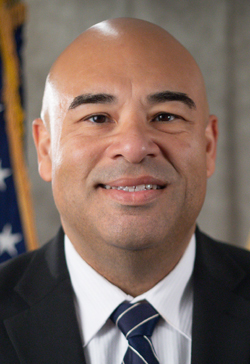
Asm. Julio Marenco
Sponsored bills
Maddy summaryThis bill requires New Jersey financial institutions (including banks, credit unions, and mortgage servicers) to allow mortgage borrowers to choose biweekly payments (every two weeks), bimonthly payments (twice monthly), and extra payments toward their mortgage principal without penalties. It directly affects homeowners with mortgages secured by residential properties (1-6 units) in New Jersey. The key provision mandates that any overpayment in biweekly plans must reduce the principal balance, while bimonthly payments must equal half the monthly amount. The law applies to all new mortgage agreements signed six months after enactment.
Maddy summaryThis bill requires campus police officers at New Jersey colleges and universities to wear body cameras that record audio and video during official duties. It specifies that cameras must be activated during public encounters and interactions, with exceptions for undercover work, non-emergency civilian requests, or specific situations like school environments. The bill also establishes minimum recording retention periods (180 days minimum, longer for incidents involving complaints or use of force) and prohibits using recordings for commercial purposes. Campus police officers are the primary group directly affected, as this legislation specifically expands the body camera requirement to include them under state law.
Maddy summary# Summary of New Jersey Unemployment Insurance Bill This legislative bill amends New Jersey's unemployment insurance (UI) laws to make several significant changes: 1. **Expanded Dependent Coverage**: Adds disabled, unmarried adult children of UI claimants (whose disability began before age 22) to the dependents counted when calculating weekly benefit amounts. 2. **Student Eligibility**: Removes the current requirement that claimants must have earned sufficient wages while enrolled in full-time education. Eligible individuals who are students in full-time attendance or on vacation from an educational institution are no longer deemed ineligible for UI benefits, provided they remain available for work. 3. **Training Program Eligibility**: Shifts provisions allowing UI benefits for participants in department-approved training programs from being an exception to being a standard eligibility circumstance, with participation required to align with existing provisions. 4. **Electronic Communication**: Allows claimants to request electronic notification of their initial benefit determination. 5. **Appeal Process**: Clarifies that benefits paid pending appeal are based on the initial determination until the appeal tribunal makes a decision, after which benefits are paid according to the appeal tribunal's decision. 6. **Overpayment Rules**: Removes the requirement that employers be charged for overpayments before appeal resolution. It also revises overpayment repayment rules to provide full waiver if the overpayment was caused by department or employer error (without claimant misrepresentation), or if the claimant is deceased, disabled, or recovery would be contrary to equity and good conscience. 7. **Average Weekly Wage Calculation**: Changes how average weekly wage is calculated to be based on wages with all base year employers (not just the most recent employer), with the total number of base weeks limited to 52. 8. **Extended Benefits**: Modifies requirements for claimants disqualified due to misconduct or failure to accept suitable work, requiring only completion of regular UI disqualification period rather than earning four times the weekly benefit rate. The bill also requires the Department of Labor to develop electronic access for claimants to view their benefit payment status and history. Sections 4 and 6 of the bill apply retroactively to July 31, 2023, effectively making it as if the provisions they replace (added by P.L.2022, c.120) never took effect.
Maddy summaryThis bill would expand eligibility for New Jersey veterans' benefits by removing specific time periods and locations that veterans must have served in to qualify for certain civil service and pension benefits. Instead of requiring service during particular wars or in specific conflict zones, the bill would allow veterans who have served in federal active duty in any branch of the U.S. Armed Forces or Reserve component to qualify. This change would impact civil service preferences, retirement benefits through the Teachers' Pension and Annuity Fund and Public Employees' Retirement System, and the ability to purchase military service credit for retirement. It would make it easier for veterans of more recent conflicts to access these benefits.
Maddy summaryThis bill delays New Jersey's implementation of Advanced Clean Trucks (ACT) regulations until January 1, 2027 - pushing back the current 2025 deadline. It directly affects vehicle manufacturers of medium- and heavy-duty trucks, requiring them to sell increasing percentages of zero-emission vehicles (capping at 40-75% of annual sales by 2035). The bill modifies New Jersey’s adoption of California’s 2021 ACT regulations, which mandate phased EV sales targets, by prohibiting the Department of Environmental Protection (DEP) from enforcing these rules before 2027. The delay gives manufacturers more time to adapt to the requirements while maintaining the state’s alignment with California’s emissions program.
Maddy summaryThis bill prohibits New Jersey public utilities (like gas, water, or electric companies) from including certain administrative costs in the rates they charge customers. It specifically blocks recovery of costs such as salaries, IT expenses, office supplies, and legal fees through customer rates, defining these as "administrative costs" distinct from capital expenses. Utilities must absorb these costs themselves rather than passing them to ratepayers. The law takes effect immediately upon enactment.
Maddy summaryThis bill excludes certain military compensation from New Jersey's gross income tax for residents who serve outside the state. Specifically, it applies to New Jersey residents stationed or deployed out-of-state for at least six months during a taxable year. The exclusion covers pay from the U.S. Armed Forces, including mustering-out payments and housing allowances, but only for service performed outside New Jersey. It directly affects New Jersey military members stationed or deployed out-of-state, reducing their state tax burden on that income.
Maddy summaryThis bill increases penalties for assaulting law enforcement officers, making it a second-degree crime when bodily injury occurs (previously a third-degree crime). It expands protection to include firefighters and emergency medical personnel who are assaulted while performing their duties. The bill requires offenders to provide a blood or biological sample for testing for communicable diseases, with any positive results shared with the victim. It also prohibits plea bargains for assault on law enforcement officers and prevents convictions from merging with other offenses. The bill takes effect immediately.
Maddy summaryThis bill establishes public-private partnerships to develop artificial intelligence (AI) job training programs in New Jersey. It allows private entities to design and deliver AI-related training for two groups: displaced workers (those losing jobs due to AI adoption) and current workers seeking to upgrade their skills. Under the bill, private partners assume full financial and administrative responsibility for these programs while being exempt from standard state procurement rules and prevailing wage requirements. The Department of Labor will review training proposals, require annual progress reports from an advisory council, and ensure programs are publicly advertised. The goal is to strengthen the state's workforce competitiveness in the AI sector through targeted training.