

Maddy summaryThis bill (A1098) exempts New Jersey disabled veterans from admission fees at state parks and forests, and also removes fees for motor vehicle access to park beaches for fishing. It directly affects disabled veterans who are New Jersey residents and have been honorably discharged with a service-connected disability certified by the U.S. Department of Veterans Affairs. The bill amends existing law to add "disabled veteran" as a qualifying category for free admission (currently covering residents 62+, totally disabled individuals, and National Guard members with training completion) and specifically exempts this group from beach access fees. The policy change takes effect immediately upon enactment.
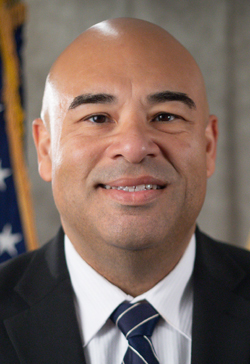
Asm. Julio Marenco
Sponsored bills
Maddy summaryThis bill allows each New Jersey county's Surrogate (probate court official) to create electronic systems that accept digital signatures for specific probate documents. It covers forms like applications for probate, executor qualifications, surety bonds, and asset affidavits, but explicitly excludes wills. The Surrogate must establish these systems to replace paper-based processes for these designated forms. The Supreme Court may issue rules to support implementation, and the law takes effect immediately.
Maddy summaryThis bill (A1416) requires New Jersey's Department of the Treasury to conduct a comprehensive stress test analysis every three years. It examines the state's ability to maintain essential services and assist residents during economic shifts, directly affecting all state-funded programs and residents. The analysis must project tax and federal revenue trends, compare them to historical data, assess changing spending needs, account for state reserves (including the Surplus Revenue Fund), and identify recession-response strategies. The results must be published online and included in the Governor's annual budget message for public transparency.
Maddy summaryThis bill (A3285) helps veterans who served in the National Guard or Reserves during specific military operations (after 9/11/2001) but couldn't complete police or firefighter hiring requirements due to their service. It requires that if a veteran passed the civil service exam but was delayed by at least 30 days of continuous active duty, their name must be placed on the next eligible list for the same job in order of their exam score. The bill also waives age requirements if the veteran met the age limit by the original exam closing date. This applies to veterans called to duty between 9/11/2001 and the end of designated operations.
Maddy summaryThis bill raises New Jersey's compulsory school attendance age from 16 to 18 years for students who have not yet graduated from high school. It directly affects students aged 16-18 who are still enrolled in school, requiring parents/guardians to ensure their continued attendance until graduation or age 18. The bill amends key education statutes (N.J.S.18A:38-25, 38-27, 38-28, and 38-31) to update age ranges in attendance requirements and penalties for non-compliance. Students who entered ninth grade before the bill's effective date are exempt from this change. The policy aligns with New Jersey's constitutional mandate for education through age 18.
Maddy summaryThis bill creates a New Jersey Cold War medal to honor veterans who served honorably during the Cold War period (September 2, 1945-December 26, 1991). It directly affects New Jersey residents or former residents who completed at least 180 days of service in the military or organized militia during that time and were honorably discharged. The medal will be awarded by the Governor upon application to the Department of Military and Veterans Affairs, which requires proof of service (like a DD-214 form) and verifies eligibility. A special fund will cover the medal’s design, manufacturing, and distribution.
Maddy summaryACR 58 proposes a constitutional amendment to increase New Jersey's veterans' property tax deduction from $250 to $2,500 over four years. It would raise the annual deduction to $1,000 in 2024, $1,500 in 2025, $2,000 in 2026, and $2,500 starting in 2027, with the amount remaining at $2,500 annually thereafter. This change directly affects honorably discharged veterans and their surviving spouses, who qualify for the deduction on real and personal property taxes. The amendment requires voter approval after legislative passage to take effect.
Maddy summaryThis bill would allow New Jersey teachers in public or nonpublic elementary and secondary schools to deduct up to $1,000 of unreimbursed classroom supply expenses from their state income tax. Classroom supplies include items like books, pencils, computers, and lab equipment used for daily teaching. The deduction applies only to expenses not covered by the school, and teachers must meet the definition of "eligible educator" under the bill. The policy would take effect for tax years beginning the year after the bill is enacted.
Maddy summaryThis bill creates a competitive grant program to fund organizations recruiting teachers for underserved school districts in New Jersey. It appropriates $6 million from the state budget to match private contributions raised by eligible organizations (up to $1 million per organization annually for three years), with grants awarded to at least two organizations. To qualify, organizations must be tax-exempt and place teachers in districts where at least 40% of students are eligible for free/reduced-price meals and face teacher shortages. The Commissioner of Education will select grantees based on program quality, potential to improve student outcomes, and strategies for long-term teacher retention.
Maddy summaryThis bill establishes the "State House Flag Program," allowing New Jersey legislators to request that a New Jersey State flag be flown over the State House to honor an individual, group, or organization. For each request, the State Capitol Joint Management Commission’s Building Management office will provide a certificate detailing the date and recipient, then mail the flag and certificate to the honoree. The program is funded through a one-time appropriation from the General Fund, with the Director of Public Information required to publicize the program to the Legislature and public.