

Maddy summaryThis bill creates a School Connectivity Grant Program within New Jersey's Department of Education to help schools provide online learning tools for economically disadvantaged students. It requires grant recipients (school districts, charter schools, and renaissance schools) to purchase and maintain one connected device (like a laptop or tablet) and one Wi-Fi hotspot for every 12 enrolled students, with priority given to schools serving the most students without internet access. The program is funded by a $2 million state appropriation from the General Fund, covering equipment costs for remote learning access.
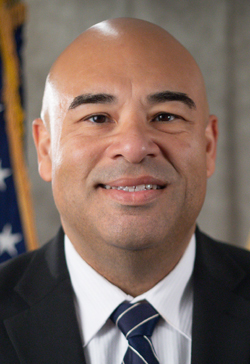
Asm. Julio Marenco
Sponsored bills
Maddy summaryThis bill amends New Jersey's indoor smoking ban to create a temporary exemption for racetracks and off-track wagering facilities. It allows these venues to permit smoking in designated areas during "cigar nights" held no more than five times per year. The exemption specifically applies to controlled, specified areas within these facilities and does not change the general smoking ban elsewhere. This change affects racetracks and off-track wagering facilities as defined by state law, adding a limited exception to the existing smoking restrictions.
Maddy summaryThis bill requires that mail-in ballot application forms, which voters return by mail, include prepaid postage paid by the State. It directly affects voters who apply for mail-in ballots using the physical form (as opposed to the electronic option starting in 2026) by eliminating the need for them to purchase postage. The key mechanism mandates that the Secretary of State’s application forms must include prepaid postage, ensuring voters can return their applications without cost. This change streamlines the process for mail-in ballot applicants without altering eligibility or voting procedures.
Maddy summaryThis bill increases the statute of limitations for prosecuting vehicular homicide from 5 years to 10 years under New Jersey law. It specifically applies to offenses committed after the bill's effective date, meaning prosecutors have up to 10 years to file charges for new cases. The change affects all vehicular homicide cases not already covered by existing 10-year provisions (like those involving school property). It does not apply retroactively to offenses committed before the law takes effect.
Maddy summaryThis bill amends New Jersey's parking law to allow disabled veterans and Purple Heart recipients to use designated disability parking spaces by displaying their valid disabled veteran or Purple Heart license plate or placard. It directly affects veterans and Purple Heart recipients who hold these specific plates issued by the New Jersey Motor Vehicle Commission. The key provision removes the requirement for these individuals to obtain a separate disability identification card or additional special plates to park in disability zones. The change takes immediate effect and ensures they can access these parking spaces using only their existing veteran or Purple Heart credentials.
Maddy summaryThis bill establishes geriatric parole for New Jersey inmates who are 60 or older and have served at least half their sentence, or 65 or older and have served at least one-third their sentence. The parole board must consider factors like age, time served, and diminished physical condition when reviewing requests, while excluding inmates serving sentences for certain serious offenses including sex offenses, murder, robbery, or financial crimes involving fraud. The board must notify sentencing courts, prosecutors, and victims before making a decision, and a denial of geriatric parole doesn't prevent inmates from being considered for regular parole under existing rules. This policy aims to provide an alternative to long-term incarceration for elderly inmates who pose minimal public safety risk.
Maddy summaryThis bill would allow law enforcement to seize a motor vehicle if an illegally possessed firearm (such as a handgun or assault weapon without a license) is found inside it. It directly affects vehicle owners whose cars are discovered containing unlawfully held weapons, as the vehicle could be forfeited under New Jersey's property forfeiture laws. The key change amends existing forfeiture statutes to specifically include vehicles where illegal firearm possession occurred, emphasizing public safety by targeting weapons transported in vehicles. The bill does not change firearm possession laws but adds vehicle seizure as a consequence for violating them. This aligns with the state's stated policy of aggressively addressing illegal firearm transportation.
Maddy summaryThis bill allows New Jersey municipalities to offer property tax bills, construction permits, and payment receipts via email as an optional delivery method. It directly affects property owners, permit applicants, and mortgage servicers who can choose to receive documents electronically or continue receiving paper copies by mail at no extra cost. Municipalities must adopt an ordinance to provide email delivery but cannot make it the sole option, requiring them to maintain standard mail delivery for all. The law establishes a process for municipalities to implement this option while ensuring no one is forced to use email. It does not require any municipality to adopt electronic delivery, preserving existing paper-based systems.
Maddy summaryThis bill directs $10 million annually from New Jersey's 21st Century Improvement Fund toward developing a Statewide digital e-court information system, specifically requiring it to include an individualized account access and notification system. The system would allow court users to receive email or text alerts about pending matters, such as court dates and violations, to help prevent missed appointments. The bill amends existing law to ensure this funding allocation is dedicated solely to this notification feature and cannot replace other court technology funding. It applies to all individuals interacting with New Jersey's court system who have provided contact information.
Maddy summaryThis bill establishes a $500,000 fund to reimburse New Jersey towns for police and sanitation costs caused by crowds at Motor Vehicle Commission (MVC) locations during the COVID-19 emergency. It directly affects municipalities that incurred expenses for crowd control, trash collection, and portable restrooms at MVC sites between March 9, 2020, and the end of the declared emergency. Municipalities must apply to the Division of Local Government Services for reimbursement, with funds coming from the Property Tax Relief Fund. The bill is retroactive to March 9, 2020, and expires when the state's emergency declarations end.