

Maddy summaryThis New Jersey bill (A 946), now law as P.L.2025, c.177, requires mental health services to be provided in the communication method preferred by each deaf or hard of hearing individual - such as sign language or oral communication - based on their assessment. It mandates that mental health professionals be fluent in that method, trained in cultural needs, and able to collaborate with interpreters. The law also requires a state resource guide listing specialized mental health services and ensures individuals can help shape their own care plans. It directly affects all deaf or hard of hearing residents seeking mental health support in New Jersey, addressing long-standing barriers in access and care quality.
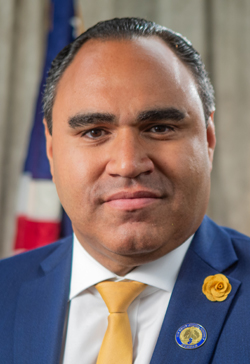
Asm. Gabe Rodriguez
Sponsored bills
Maddy summaryThis bill requires new hotels and multiple dwelling units (like apartment buildings) to install monitored carbon monoxide detectors that automatically alert emergency services if dangerous levels are detected. It applies specifically to newly constructed buildings built after the bill's enactment date. The key mechanism mandates that if a new building already has a monitored fire alarm system (which alerts the fire department), it must also include a monitored carbon monoxide system with the same emergency alert capability. The detectors must meet Underwriters Laboratories standard 2034 and be installed per rules set by the Community Affairs Commissioner.
Maddy summaryThis bill requires New Jersey's Law Revision Commission to specifically identify statutes containing racially discriminatory language as part of its ongoing review of state laws. The Commission, already tasked with examining statutes for defects, redundancies, and outdated language, must now add racial discrimination to its review criteria. It will propose amendments or repeals for such statutes to the Legislature. This change directly affects the Commission's existing duties under state law, aiming to update the legal code to align with current standards of equality.
Maddy summaryThis bill requires every public school in New Jersey to have at least one full-time school social worker employed by the local school district board. For schools with over 500 students, districts must add additional social workers in proportion to the student count. The law takes effect immediately for the first full school year after enactment, applying to all schools within participating districts. It directly affects all New Jersey public school districts and their staffing requirements for student support services.
Maddy summaryThis bill establishes a competitive grant program to fund organizations recruiting teachers for underserved New Jersey school districts. It appropriates $6 million from the General Fund to provide grants equal to private contributions raised by eligible organizations (up to $1 million annually per organization for three years). Eligible organizations must be tax-exempt, place new teachers in underserved districts, and commit to long-term teacher retention. An "underserved district" is defined as one where at least 40% of students qualify for free/reduced meals and faces a teacher shortage, as determined by the Commissioner of Education.
Maddy summaryThis bill codifies and expands New Jersey's "rescue doctrine," allowing rescuers to recover damages for injuries sustained while aiding people or protecting property endangered by another's negligent or wrongful actions. It directly affects individuals who voluntarily intervene to help others or safeguard property (e.g., rescuing a person from danger or saving a neighbor's dog from drowning) when the peril resulted from someone else's fault. The key change extends the existing doctrine - previously limited to rescuing people - to cover property-related rescues, aligning New Jersey law with the Restatement (Third) of Torts and the majority of states. The law takes effect immediately, following a 2022 court case (Samolyk v. Berthe) that highlighted the need for this clarification.
Maddy summaryNew Jersey's ACR 106 is a formal statement condemning President Trump's 2025 decision to end federal protections preventing immigration enforcement in sensitive locations like schools, hospitals, places of worship, and shelters. The resolution states this policy reversal - reversing Biden-era guidance that had barred ICE actions in these areas - undermines community trust and deters immigrants from accessing essential services. It does not change laws but sends a formal disapproval to the White House, Homeland Security, and New Jersey's congressional delegation. The resolution reaffirms New Jersey's commitment to equal access to healthcare, education, and community resources for all residents, regardless of immigration status.
Maddy summaryThis bill requires New Jersey's Attorney General to review and update statewide policies for investigating human trafficking. It directs the AG to specifically consider: whether recording undercover investigations protects victims and investigation integrity, strict rules for sharing such recordings, and involving county prosecutors early in cases. The policy review must address these points to better protect victims and support law enforcement. The bill responds to a 2024 commission report on human trafficking in New Jersey's massage industry and applies directly to county/municipal law enforcement and victims of trafficking.
Maddy summaryThis bill makes it a crime to refuse to provide valid identification or true identity to law enforcement upon request, if the purpose is to hinder arrest or prosecution. It directly affects individuals who withhold ID during police interaction, particularly in cases involving motor vehicle accidents, insurance fraud, or other serious offenses. Penalties range from a fourth-degree crime (for less serious underlying offenses) to a third-degree crime carrying a mandatory minimum one-year prison term for severe cases like fatal hit-and-runs. The law aligns refusal to provide ID with existing penalties for giving false information to police.
Maddy summaryThis bill requires all New Jersey municipal clerks to post public documents online, including forms, license applications, certificates, and renewal documents, unless prohibited by law. It directly affects every municipality's clerk and local government operations by mandating digital accessibility of these records. Key mechanisms include requiring clerks to make these materials available on municipal websites and providing state reimbursement through the Department of the Treasury for implementation costs. The law aims to improve public access to government records while offsetting local expenses.