

Maddy summaryThis bill bans the sale or assembly of lithium-ion batteries made from reconditioned cells used in low-speed electric bicycles, scooters, and related devices. It requires all new low-speed electric bicycles, scooters, and their batteries to meet specific safety certifications (like UL standards) and display certification marks at point of sale. Businesses using these devices commercially must provide employees with fire safety materials, and the state must launch public awareness campaigns about fire risks from improper charging or storage. The bill also mandates annual reports tracking fire incidents linked to these devices and evaluating safety measures.
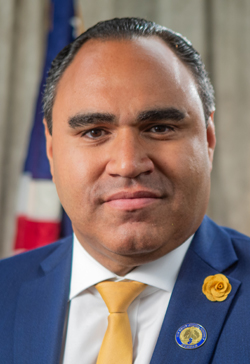
Asm. Gabe Rodriguez
Sponsored bills
Maddy summaryThis bill authorizes funding to protect the safety of cooperating witnesses - individuals who testify for the government to help prosecute crimes, including confidential informants. It expands New Jersey's Crime Victim's Bill of Rights to guarantee these witnesses assistance with psychological and practical challenges of testifying, protective measures before, during, and after trials, and court procedures ensuring their safety. The bill amends existing laws to allow the Victims of Crime Compensation Office to cover relocation and safety expenses, and authorizes the Victim and Witness Advocacy Fund to provide grants to organizations offering services like emergency shelter, medical advocacy, and safety planning for these witnesses and their families. These changes directly affect witnesses who cooperate with law enforcement in criminal cases, ensuring they receive concrete support and protection while navigating the justice system.
Maddy summaryAJR 89 is a symbolic joint resolution passed by the New Jersey legislature that unconditionally condemns all forms of hate, hate-based violence, and bias crimes targeting individuals based on race, religion, ethnicity, disability, age, marital status, gender, or sexual orientation. It does not create new laws or allocate funds but urges the Governor and Attorney General to continue existing efforts like supporting victims, improving hate crime reporting, enhancing security at vulnerable sites, and researching solutions. The resolution emphasizes New Jersey’s commitment to protecting citizens from hatred and promoting an inclusive community, reflecting the state’s ongoing stance against bias-motivated incidents. As a procedural resolution, it has no direct legal effect on individuals or policies.
Maddy summaryThis bill reinstates automatic cost-of-living adjustments (COLAs) for retirement benefits of certain retired police and firefighters in New Jersey's Police and Firemen's Retirement System (PFRS). It applies specifically to members who have been retired and receiving benefits for at least 10 years, excluding those hired after the bill's effective date, those in deferred retirement, and those with 20-24 years of service. The COLAs are tied to the Consumer Price Index for Urban Wage Earners, with benefits up to $75,000 receiving full adjustment, while higher benefits are capped at a 1% annual increase. The $75,000 threshold will adjust annually based on inflation, and the bill requires the Legislature to appropriate funds to cover both state and local costs for these adjustments.
Maddy summaryThis bill updates New Jersey's Teachers' Pension and Annuity Fund (TPAF) to provide current non-retired members and those applying for retirement after the bill's effective date with the same benefits as members enrolled before July 1, 2007. It eliminates tiered membership by moving all current TPAF members to Tier 1, requires public employers to enroll eligible employees (earning above minimum salary but not meeting hour requirements) in TPAF, and allows Defined Contribution Retirement Program participants to transfer service credit to TPAF without transferring contributions. Participants in the Defined Contribution Retirement Program have six months to opt out of the transfer after receiving notice. These changes apply only to retirement applications processed after the bill becomes law.
Maddy summaryThis bill requires New Jersey financial institutions (including banks, credit unions, and mortgage servicers) to allow mortgage borrowers to choose biweekly payments (every two weeks), bimonthly payments (twice monthly), and extra payments toward their mortgage principal without penalties. It directly affects homeowners with mortgages secured by residential properties (1-6 units) in New Jersey. The key provision mandates that any overpayment in biweekly plans must reduce the principal balance, while bimonthly payments must equal half the monthly amount. The law applies to all new mortgage agreements signed six months after enactment.
Maddy summaryAJR 101 designates the second Friday in December each year as "PSRPs in Our Schools Day" in New Jersey to honor paraprofessionals and school-related personnel (PSRPs). This resolution directly recognizes PSRPs - including instructional aides, bus drivers, cafeteria staff, custodians, and maintenance workers - who support students through tutoring, classroom assistance, translation, meal service, and facility upkeep. The key mechanism is an annual observance calling on the Governor, Legislature, and citizens to acknowledge these workers' contributions. The resolution does not create new programs or funding but establishes a recurring day of recognition.
Maddy summaryThis bill amends the lists of environmental infrastructure projects approved for long-term funding under New Jersey's FY2025 environmental infrastructure funding program. It creates two specific eligibility lists: one for clean water projects (including 152 projects totaling $1.4 billion) and one for drinking water projects (including 67 projects totaling $536 million), detailing each project sponsor, project number, and estimated loan amounts. The bill authorizes the Department of Environmental Protection to make zero-interest and principal-forgiveness loans for these projects, with varying levels of principal forgiveness based on project type, community size, and affordability criteria. The loans are intended to finance infrastructure improvements for water quality and drinking water systems across the state, with specific repayment terms and priority rankings established for different project categories.
Maddy summaryThis bill transfers the Division of Food and Nutrition (which administers programs like school meals and food assistance) from the Department of Agriculture to the Department of Human Services. It appropriates $128.241 million in state funds for farmland preservation, including $115.091 million to the State Agriculture Development Committee to acquire farmland through easements or ownership, and provide grants to counties (up to 80% of costs) and nonprofits (up to 50% of costs). The funds come from constitutionally dedicated revenues and a new General Fund appropriation, with $13.15 million specifically allocated for administrative costs like staff and legal services. This directly affects farmland preservation efforts, local governments, and nonprofit organizations working to protect agricultural land in New Jersey.
Maddy summaryThis bill expands New Jersey's affordable housing voucher program to cover homeownership costs, allowing low-income households to use state vouchers for down payments or monthly mortgage assistance instead of just rent. It specifically reserves funds for seniors aged 62+, veterans who completed the "Veterans Haven" program, and families participating in a self-sufficiency initiative. The program also creates a Home Repair Emergency Assistance Fund to cover necessary home repairs for participants. This change, now law as P.L.2024, c.98, directly affects eligible residents seeking homeownership support through the state's rental assistance framework.