

Maddy summaryThis bill establishes New Jersey's Second Chance Program within the Department of Labor and Workforce Development. The program provides career opportunities for formerly incarcerated individuals by partnering with labor organizations to identify and create employment pathways in local trades. It directly affects people recently released from prison who face significant barriers to stable work. The key mechanism requires labor organizations - defined as per federal law - to collaborate with the state in developing job placement plans, aiming to reduce recidivism through meaningful employment. The bill takes effect immediately upon enactment.
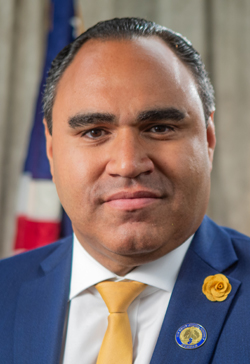
Asm. Gabe Rodriguez
Sponsored bills
Maddy summaryThis bill establishes a 15-member Core Curriculum Content Standards Advisory Council to review and update New Jersey's K-12 education standards. The council, including educators, higher education experts, business representatives, parents, and students, will create subject-specific subcommittees to assess current standards. Each subcommittee must research best practices, gather public feedback via surveys and hearings, and propose revisions - ensuring transparency through 60-day comment periods and public posting. The revised standards then go to the State Board of Education for adoption, directly affecting public school curricula, school districts, and students across the state.
Maddy summaryThis bill establishes a 12-member "Substance Use Disorder and Addiction Treatment Best Practices Task Force" within New Jersey's Department of Health. The task force will study whether oversight of addiction treatment services should be consolidated under one agency or improved through better coordination, develop best practices for treatment centers and sober homes, and recommend regulations for dual ownership of these facilities. It includes government officials, agency representatives, and public members (including treatment center managers and sober home owners) and must submit findings to the Governor and Legislature within two years. The task force aims to address fragmentation in New Jersey's current system, which involves multiple departments overseeing different aspects of addiction treatment and has faced issues like fraud and inefficiency.
Maddy summaryThis bill extends the early voting period for primary and general elections in New Jersey, starting 11 days before the election and ending the second day before election day. It directly affects voters in primary elections (both presidential and non-presidential), general elections, and May municipal elections, allowing them to cast ballots early at designated locations. Key provisions require counties to set up 3-10 early voting sites (based on voter population), prohibit schools as locations, and mandate paper ballots. Municipalities can opt into May municipal early voting via local ordinance, aligning with existing election laws.
Maddy summaryThis bill requires New Jersey's Office of Information Technology to create and maintain a single, centralized website to help people navigate mental health and substance use disorder services. The website must provide easily searchable information on treatment options, hotlines, housing resources, state procedures (like involuntary commitment), and agency oversight, all organized by the Division of Mental Health and Addiction Services and other relevant departments. It directly assists individuals with mental health or substance use disorders, their families, and concerned third parties seeking support. The site must include hyperlinks to providers, educational materials, recovery housing, and state reports, with prominent links on state agency websites. The bill takes effect immediately upon passage.
Maddy summaryThis bill (A 492) prevents health care providers from billing parents or guardians for early intervention services more than one year after those services were provided, and stops them from trying to collect payments on overdue bills. It allows providers to always seek payment from insurance companies, but prohibits billing parents for the remaining balance if insurance denies or partially pays a claim submitted over one year after the service was delivered, or if the claim was submitted within one year but over 18 months had passed since the service. The bill directly affects families of infants and toddlers (birth to age 2) receiving early intervention services for developmental delays or disabilities. It aims to prevent unexpected financial burdens on parents who might otherwise face late billing after their child has exited the program.
Maddy summaryThis resolution encourages colleges and universities to address the underrepresentation of Hispanic and Latino leaders in higher education leadership roles. It specifically urges institutions to establish leadership development programs, diversify hiring committees and governing boards, and partner with organizations supporting Hispanic and Latino leaders. The bill highlights that while Hispanic and Latino students make up about 20% of U.S. undergraduates (25% in New Jersey), only 6% of college presidents nationally identify as Hispanic or Latino, with just one in New Jersey. The resolution is non-binding and aims to promote inclusive leadership through actionable steps, not legislative mandates.
Maddy summaryThis bill (A475) expands eligibility for accidental disability retirement benefits and survivor benefits under New Jersey's Police and Firemen’s Retirement System (PFRS), State Police Retirement System (SPRS), and Public Employees’ Retirement System (PERS). It extends the filing deadline for accidental disability claims from 5 years to allow for delayed disability manifestations (e.g., from 9/11 exposure), and adds new qualifying health conditions like PTSD, respiratory illnesses, and cancer linked to work exposure. Public safety workers who participated in World Trade Center rescue/cleanup operations (or sustained injuries during those efforts) can now have disabilities presumed work-related without proving negligence, using alternate medical documentation if standard proof isn’t available. This directly affects first responders and public employees with qualifying conditions tied to their duties.
Maddy summaryThis bill requires electric, gas, and water utilities in New Jersey to automatically notify customers about service outages via phone calls, texts, or emails using contact details on file. Utilities must share outage location, estimated duration, emergency contacts, and updates as the situation develops. It specifically excludes outages caused by unpaid bills. The law applies directly to customers affected by unexpected service disruptions beyond the utility's control.
Maddy summaryNew Jersey bill A-3708 creates a new first-degree crime called "home invasion" for entering a residential dwelling with intent to commit certain offenses (like robbery or violent crimes) while someone is present, using force, threatening violence, or being armed with a weapon. It mandates a 10-30 year prison sentence with no early release under the No Early Release Act (requiring 85% of the sentence to be served). The bill also upgrades burglary of a residence to second-degree if a resident is present during the offense, applying the same mandatory 85% sentencing rule. This law directly affects individuals convicted of these specific home-related crimes, altering sentencing requirements for both new home invasion charges and certain burglary cases.