

Maddy summaryThis bill requires health insurance carriers in New Jersey to cover prostate cancer screening without cost sharing (no deductibles, copays, or coinsurance). It expands the definition of "prostate cancer screening" to include more diagnostic methods beyond digital rectal exams and PSA tests, such as urinary analysis, serum biomarkers, and medical imaging. The coverage applies to men age 50+ who are asymptomatic, and men age 40+ with family history of prostate cancer or other risk factors. The bill extends these requirements to additional insurance types, including individual health insurance policies, that weren't previously required to cover prostate cancer screening under current law.
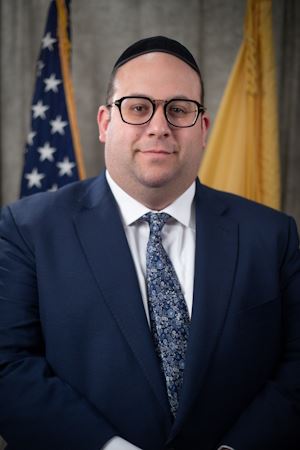
Asm. Avi Schnall
Sponsored bills
Maddy summaryThis bill increases the Work First New Jersey Child Care subsidy program appropriation by $28 million in the FY2026 budget, raising the total from $565.8 million to $593.8 million. It directly affects lower-income families who rely on the child care subsidy program to cover part of their child care costs. The bill reverses a pause on new applications and a recent increase in family copayments (from 1-5% to 2-6% of income) by requiring the Department of Human Services to resume accepting applications and return to pre-August 1, 2025 eligibility standards and copayment rates. This addresses a projected $25-30 million funding shortfall that had forced the program to limit enrollment and raise costs for families.
Maddy summaryThis bill (A4971) creates a "Small Business Interruption Grant Program" administered by New Jersey's Economic Development Authority (EDA). It provides grants to small businesses in low-income communities (defined as municipalities under 10,000 population with >7.5% poverty rate) that suffered economic loss due to prolonged state infrastructure or construction projects. Grants are based on actual or projected revenue loss from closures or reduced business, with $750,000 appropriated from the General Fund to fund the program. Businesses must independently own and operate (<100 employees), be located in a qualifying community, and demonstrate project-related revenue loss to qualify.
Maddy summaryThis bill requires contractors and subcontractors working on public projects to submit payroll records to New Jersey's Department of Labor and Workforce Development (DOLWD). It applies to any business performing work for public bodies (like state/local governments or projects funded by public money), including construction, maintenance, or repair work. The key mechanism mandates that these contractors must register with DOLWD and provide payroll details to verify compliance with prevailing wage laws and apprenticeship program requirements. This affects all employers engaged in public work contracts, ensuring transparency in worker compensation and program participation.
Maddy summaryThis bill expands New Jersey's child care assistance program to include full-time graduate and post-graduate students who meet income, asset, and residency requirements and are enrolled full-time in good academic standing at a public or private college or university. Currently, the program covers only full-time undergraduate students pursuing associate's or bachelor's degrees. The state must update its eligibility rules and seek federal funding through the Child Care and Development Block Grant to cover the costs of this expansion. This change directly affects graduate and post-graduate students who are parents and rely on the program for child care support.
Maddy summaryThe "Motor Vehicle Open Recall Notice and Fair Compensation Act" (S 3309) requires used car dealers to check for open recalls on vehicles before sale using the National Highway Traffic Safety Administration's website and provide prospective buyers with printed recall information if any are found. Dealers cannot sell vehicles subject to stop-sale or do-not-drive notices issued by NHTSA. The bill mandates dealers to report vehicles with unresolved recalls (for which repairs remain uncompleted six months after initial notice) to the New Jersey Motor Vehicle Commission every 180 days, prompting the Commission to send notices directly to vehicle owners. For vehicles with unavailable parts for recalls, dealers receive monthly compensation equal to 1.75% of the vehicle's value until repairs are completed.
Maddy summaryThis bill increases penalties for illegal payments related to patient referrals to substance use disorder treatment facilities. It makes such payments a third-degree crime (up from fourth-degree) with a mandatory $50,000 fine, affecting healthcare providers, facilities, non-profits, and recovery residences. The law prohibits payments that vary based on patient volume, treatment duration, or insurance benefits, but allows flat fees not tied to these factors. It clarifies that referrals to certified treatment facilities or recovery residences (sober living homes) must not involve commission-based payments.
Maddy summaryNew Jersey's A3558 bill establishes the state's official definition of antisemitism using the International Holocaust Remembrance Alliance (IHRA) standard, including specific examples of antisemitic conduct. State agencies and institutions must use this definition when reviewing, investigating, or deciding on cases involving discriminatory acts motivated by antisemitism. The bill appropriates $100,000 for a public awareness campaign by the Attorney General's office to educate residents on identifying and reporting bias crimes through community outreach and the existing bias crimes hotline. This campaign aims to improve reporting of antisemitic incidents without affecting First Amendment rights or conflicting with existing anti-discrimination laws.
Maddy summaryThis bill appropriates funds to New Jersey's Department of Environmental Protection (DEP) for fiscal year 2026 to provide zero-interest and principal-forgiveness loans to local governments and public water utilities for environmental infrastructure projects. It directly affects municipalities and water utilities that need financing for clean water projects (like combined sewer overflow reduction and water quality restoration) and drinking water projects, with specific funding limits based on project type and affordability criteria. The bill includes detailed lists of 151 qualifying clean water projects totaling $1.7 billion and 59 drinking water projects totaling $652 million, all intended to meet federal requirements under the Clean Water Act and Safe Drinking Water Act. The loans may offer full principal forgiveness for eligible projects or a blended interest rate based on project costs and borrower affordability.
Maddy summaryNew Jersey's A4194 prohibits public works contractors from bidding on state projects if any member of their cooperative entity failed to pay prevailing wages. Specifically, it extends the existing three-year ban on wage violators to entire cooperatives (defined as collective ownership structures where members control operations), preventing them from securing public contracts if one member is listed for nonpayment. The law requires public bodies to verify contractors against a commissioner's list of wage violators before awarding contracts, with broad definitions covering ownership ties, shared resources, or business relationships. This directly affects cooperative businesses in construction and related fields bidding on state-funded projects.