

Maddy summaryThis bill requires private bus companies operating regular scheduled routes (excluding charter, casino, or tourism-focused services) to notify the public and government agencies before making major service cuts. Specifically, operators must provide 4 months' written notice to state agencies (NJ Motor Vehicle Commission and NJ Transit) and 3 months' notice to riders before reducing service. They must also hold a public meeting in the affected area within 15 days of notifying riders, with prior notice to local officials. Violations could result in civil penalties up to $10,000 per instance.
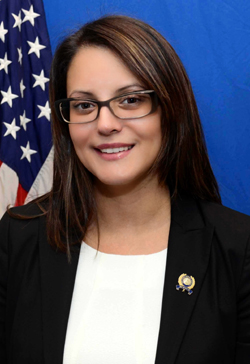
Asm. Eliana Pintor Marin
Sponsored bills
Maddy summaryS 3511 allocates $393.48 million from New Jersey's Debt Defeasance and Prevention Fund to fund specific state capital projects. It directs funds to the Department of Environmental Protection for Liberty State Park improvements (athletic fields, community center, and Greenway projects), the Department of Law and Public Safety for a juvenile facility, State Police Training Center, and forensic laboratory, the Department of Military and Veterans’ Affairs to convert veterans' homes to single-occupancy rooms, and the Office of Information Technology for data center upgrades. The bill also establishes a process for future fund appropriations, requiring State Treasurer reports to the Joint Budget Oversight Committee for debt retirement or capital projects. This legislation directly affects state departments managing these infrastructure projects and the public benefiting from improved facilities.
Maddy summaryThis bill modifies New Jersey's FY2024 budget by adding $37.43 million in supplemental funding while de-appropriating $24 million in existing funds, resulting in a net increase of $13.43 million. It directly affects multiple state departments including Corrections (receiving $9.8 million for inmate food and utility costs), Human Services (receiving $16.41 million for Medicaid and mental health programs), and Education (receiving $11.22 million for school aid). Key provisions include redirecting $24 million from the Jersey City Art Museum project to other priorities, allowing film industry funding to support digital media initiatives, and clarifying how preschool education funds should be allocated. The bill also establishes new language provisions to facilitate transfers between departments for specific programs like mental health services and community health projects.
Maddy summaryS 2024 is a supplemental appropriations bill for New Jersey's FY2024 budget that reallocates $13.43 million in net funding by adding $37.43 million in new spending while removing $24 million from existing appropriations. It directly affects state departments including Corrections (adding $9.8 million for materials and supplies), Human Services ($12.11 million for income assistance programs and $4.3 million for psychiatric hospital support), and Education ($11.22 million in aid for schools). Key provisions include redirecting $24 million from a Jersey City redevelopment project, allowing $50 million from a health fund to support Medicaid coverage, and adjusting preschool education funding to expand access for young children. The bill also modifies language in the budget to redirect film industry funding toward digital media initiatives and clarify how school aid is distributed. These changes aim to address budget shortfalls while adjusting funding priorities across state programs.
Maddy summaryThis bill establishes legal protections for patients and healthcare providers accessing or providing reproductive and gender-affirming health care services in New Jersey. It creates a new crime for interfering with these services (including physical obstruction, intimidation, or damaging property), with penalties ranging from a disorderly persons offense to a fourth-degree crime. The bill also prevents New Jersey from extraditing people for legally protected health care activities, prohibits licensing boards from penalizing providers for services that are legal in New Jersey but illegal in other states, and protects patient privacy related to these services. It specifically ensures that a fertilized egg, embryo, or fetus has no independent legal rights under New Jersey law.
Maddy summaryThis bill revises New Jersey's film and digital media tax credit program to increase incentives for production companies. It allows 40% tax credits for post-production services performed at designated New Jersey film-lease production facilities (with a $500,000 minimum requirement) and 35% for post-production services performed by independent post-production companies, with an additional 4% available for companies including diversity plans. The bill also expands eligible expenses to include wages paid to workers not subject to New Jersey tax due to reciprocity agreements (such as with Pennsylvania), and permits tenants of designated film-lease facilities to qualify for tax credits under specific conditions.
Maddy summaryThis bill requires New Jersey school districts to provide reading intervention programs for students in kindergarten through third grade who show reading deficiencies, as identified by approved assessments. The program must use a data-driven support system to deliver explicit instruction in phonological awareness, phonics, fluency, vocabulary, and comprehension, while regularly monitoring student progress and adjusting support as needed. School districts must adopt high-quality instructional materials based on scientific reading research, and the state education department must provide age-appropriate materials and develop an evaluation process for the program. The law applies starting with the first full school year after enactment.
Maddy summaryThis bill requires New Jersey school districts to provide annual training to K-12 teachers who deliver reading interventions to students with reading deficiencies, covering evidence-based "science of reading" practices and distinguishing reading deficiencies from special education needs. It mandates the Department of Education to create a "train the trainer" program certifying literacy coaches who provide ongoing coaching support - including classroom observations, example lessons, and feedback - to teachers implementing reading interventions. Literacy coaches receive a one-time stipend, and the required training counts toward existing professional development requirements. The law takes effect immediately for the first full school year after enactment, directly affecting school districts, certified reading teachers, and literacy coaches.
Maddy summaryThis bill would create a tax credit program allowing New Jersey taxpayers to receive a 75% credit against their state income tax for donations to approved scholarship organizations. It directly affects nonpublic school students who meet income criteria (household income ≤2.6x the federal reduced-price lunch threshold) attending schools complying with anti-discrimination and anti-bullying laws. The key mechanism requires scholarship organizations to spend 95% of donations on student aid, limit administrative costs to 5%, and adhere to strict eligibility rules. The program would have been capped at $37.5 million annually (adjusted for inflation), but the bill was withdrawn from consideration on June 13, 2024, and never became law.
Maddy summaryThis bill amends New Jersey's bias intimidation law to specifically include Sikhism as a protected class, making it illegal to commit hate crimes against Sikhs based on their religious identity. It appropriates $100,000 annually for three years to fund Sikh awareness educational initiatives, including law enforcement training on Sikh identity features like turbans and religious symbols to prevent misclassification of hate incidents. The bill requires the Office of Attorney General to develop public awareness campaigns and educational programs about Sikhism for public schools, and mandates that all public entities incorporate anti-Sikh hate into their bias intimidation policies and diversity programs. These changes directly affect Sikhs in New Jersey (who are the second-most targeted religious group for hate crimes) and all public institutions across the state.