

Maddy summaryThis bill appropriates $615,000 from the General Fund to the New Jersey Department of Human Services (DHS) for a grant to the NJ 2-1-1 Partnership. The funding directly supports the NJ 2-1-1 Partnership, which operates New Jersey’s statewide 2-1-1 service providing free information and referrals to health, social, and emergency services. The bill adds this amount to the existing fiscal year 2026 budget for DHS’s Behavioral Health Services division. The 2-1-1 service, designated by New Jersey in 2002 as the sole state administrator for the nationwide 2-1-1 dialing code, connects residents to community resources through a single phone number.
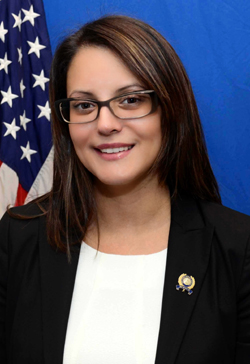
Asm. Eliana Pintor Marin
Sponsored bills
Maddy summaryThis bill amends New Jersey's Aspire Program to provide tax credit incentives specifically for redevelopment projects by institutions of higher education and distressed hospitals. It defines "institutional project" as one where at least 51% of square footage is dedicated to qualified research and development, including spaces like labs, classrooms, and dorms. The bill allows developers to receive tax credits equal to 80% of project costs (up to $120 million), requires a minimum $30 million capital contribution from developers, and exempts these projects from the standard net benefit analysis required for other redevelopment projects.
Maddy summaryThis bill amends New Jersey's Aspire Program to provide special tax credit incentives for redevelopment projects undertaken by institutions of higher education. It defines "institutional projects" as those where at least 51% of square footage is dedicated to qualified research and development in priority industries like technology, biotechnology, and renewable energy. These projects qualify for tax credits covering 80% of project costs, with a maximum of $120 million, and are exempt from the standard net benefit analysis required for other redevelopment projects. The bill aims to encourage higher education institutions to develop research-focused facilities that support key economic sectors while providing targeted financial incentives.
Maddy summaryThe "John R. Lewis Voter Empowerment Act of New Jersey" requires all voting policies to be interpreted in ways that maximize voting access for all eligible voters, particularly members of racial, color, and language-minority groups. It prohibits voting practices that burden protected class members and mandates language assistance for limited English proficient voters. The bill creates a preclearance process for voting changes in jurisdictions with a history of voting rights violations and establishes the New Jersey Voting and Elections Institute to maintain public voting data. These provisions aim to ensure equitable access to voting and protect against voter suppression and vote dilution.
Maddy summaryThis bill requires all paid and part-paid New Jersey fire departments to create, review annually, and update a written policy addressing pregnancy-related workplace issues within 180 days of the bill's effective date. The policy must cover disclosure of pregnancy, medical restrictions from a physician, availability of modified duties or non-hazardous assignments, information on unsafe tasks during pregnancy, leave usage, and continued benefits. Departments must follow guidelines from the National Fire Protection Association or similar professional standards when developing this policy. The bill directly affects pregnant firefighters in these departments by mandating clear, written workplace protections and support.
Maddy summaryThis New Jersey bill requires health insurance plans and Medicaid programs to cover prescription drugs for specific serious mental illnesses without prior authorization or step therapy protocols. It defines "serious mental illness" to include conditions like bipolar disorder, major depression, schizophrenia, and other disorders listed in the latest Diagnostic and Statistical Manual of Mental Disorders. The legislation applies to all health insurance carriers in New Jersey, mandating coverage for these medications without utilization management barriers that often delay treatment. This would directly affect individuals with these mental health conditions who currently face insurance hurdles to accessing necessary medications.
Maddy summaryThis bill creates the New Jersey Innovation Authority, a new state entity within the Department of the Treasury that will serve as the primary hub for technology innovation across state government. The Authority will be led by a Chief Innovation Officer (initially appointed by the Governor, then by the Authority) and consist of 13 members with expertise in digital technology, data science, and public engagement. Its responsibilities include advising state agencies on modernizing services, promoting evidence-based approaches to technology implementation, and developing metrics to measure innovation progress. The Authority must submit annual reports to the Governor and Legislature and can contract directly with technology experts and nonprofit organizations to advance its mission.
Maddy summaryThis New Jersey bill (S 1067) requires the state's Department of Human Services to conduct a landscape analysis of mental health services accessible to deaf and hard of hearing residents. It mandates that mental health services be provided in a client's primary communication method (like sign language or speech), delivered by professionals certified in that method and trained in culturally appropriate care for the deaf community. The bill also requires the creation of a resource guide listing providers meeting these standards and defines key terms like "culturally affirmative mental health services." It directly affects deaf and hard of hearing individuals seeking mental health care across New Jersey.
Maddy summaryThis bill sets a minimum daily reimbursement rate of $1,100 for special care nursing facilities in New Jersey that operate approved units for neurologically impaired young adults. It applies specifically to facilities holding a Department of Health certificate of need as of July 1, 2023, and must meet all state and federal licensing, safety, and quality standards. Starting January 1, 2024, these facilities will receive reimbursement at the higher of their 2022 rate or $1,100 per day under the NJ FamilyCare program (New Jersey's Medicaid program). The policy directly affects these specialized nursing facilities by ensuring a baseline payment level for their care services.
Maddy summaryAJR 226 designates April 11 of each year as "Black Doula Day" in New Jersey. The resolution requests the Governor issue an annual proclamation to honor Black doulas, who provide continuous physical, emotional, and informational support during childbirth. It aligns with Global Black Doula Day and references New Jersey's maternal health disparities, where Black mothers face over seven times higher pregnancy-related mortality rates than white mothers. This is a ceremonial designation with no new policy requirements.