

Maddy summaryThis Assembly Resolution (AR 138) symbolically designates June 2024 as LGBTQIA+ Pride Month in New Jersey. It urges public officials and citizens to commemorate the month with appropriate activities, recognizing the contributions and struggles of LGBTQIA+ individuals (including lesbian, gay, bisexual, transgender, queer/questioning, intersex, asexual, and non-binary people). The resolution does not create new laws or policies but formally acknowledges the community's achievements and ongoing advocacy. It follows similar designations by federal and state governments, emphasizing visibility and equality.
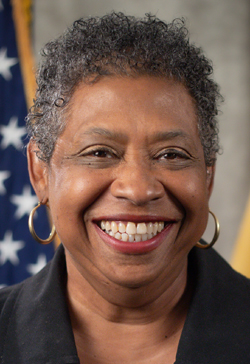
Asm. Garnet Hall
Sponsored bills
Maddy summaryThis bill modifies New Jersey's down payment assistance program to provide additional support for first-generation homebuyers. It increases the maximum down payment assistance to $20,000 for first-time homebuyers, with an extra $7,000-$10,000 specifically for first-generation homebuyers (defined as individuals whose parents never owned residential property and who may have been in foster care). The program requires recipients to use the home as their primary residence for five years, complete homebuyer counseling, and repay the loan if they move before the five-year term. The assistance is structured as a zero-interest, forgivable loan if all conditions are met.
Maddy summaryThis bill modifies New Jersey's down payment assistance program to better support first-generation and first-time homebuyers. It increases the maximum zero-interest, forgivable loan amount from $15,000 to $20,000, adds an extra $7,000-$10,000 for first-generation homebuyers (defined as those without parental home ownership history or who were in foster care), and requires recipients to use the home as their primary residence for five years. The program must allocate at least 50% of annual funding to first-generation homebuyers, with detailed reporting on recipient demographics and program effectiveness. This directly affects low-to-moderate income homebuyers seeking to purchase single-family homes through the state’s housing agency.
Maddy summaryThis concurrent resolution approves the New Jersey Infrastructure Bank's Fiscal Year 2025 Financial Plan, as required by state law. The bank uses this plan to finance environmental infrastructure projects like clean water systems, drinking water supply, stormwater management, and pollution control. The approval allows the bank to proceed with funding projects on the state's approved eligibility list for the 2025 fiscal year. This is a procedural step, not a new policy, enabling the bank's existing operations.
Maddy summaryThis bill bans the sale and use of gas-powered leaf blowers with two-stroke engines starting two years after enactment and restricts four-stroke models in residential areas starting four years after enactment. It limits four-stroke blower use in non-residential areas to specific seasons (March 15-May 15 and October 15-December 15). To encourage the switch, the bill offers a tax credit covering up to 50% of the cost for purchasing an electric leaf blower to replace a gas-powered model, requiring documentation of the replacement. The policy directly affects homeowners, landscapers, and businesses using leaf blowers, with exemptions for pest management equipment.
Maddy summaryThis bill establishes a three-year grant program (the "UNITY Grant Program") to provide school district employees facing adverse situations with financial support for their dependents' preschool or college education. The Commissioner of Education will administer the program, determine grant amounts, and allow multi-year awards after employees submit applications. It requires an annual report to the Governor and Legislature on program implementation, participants, and recommendations. The program is funded through an appropriation from the General Fund, with no specified cost or timeline beyond the three-year term.
Maddy summaryThis bill establishes two new benefit programs under New Jersey's Work First New Jersey (WFNJ) cash assistance program. It provides eligible participants with a $14 monthly benefit for menstrual hygiene products (tampons, pads, or cups) for individuals aged 18-50, and a $30 monthly benefit per child under 36 months for diaper products. Benefits are added to participants' existing WFNJ electronic cards on the same schedule as regular benefits, with unspent funds carrying over monthly. The $2.5 million appropriation funds these programs, which directly affect low-income WFNJ recipients and their dependent children.
Maddy summarySCR 110 is a legislative approval of the New Jersey Infrastructure Bank’s proposed Fiscal Year 2025 Financial Plan. The bill formally approves the bank’s plan to finance eligible environmental projects, including clean water systems, drinking water infrastructure, stormwater management, and pollution control initiatives. This approval is required by law (under statutes P.L.1985, c.334 and P.L.1997, c.224) after the bank submitted its plan by the May 15, 2024 deadline. The resolution does not create new policies or funding but authorizes the bank to implement its existing financing strategy for approved projects.
Maddy summaryThis bill revises New Jersey's film and digital media content production tax credit program to expand eligibility for tax credits. It specifically modifies the definitions of "qualified film production expenses" and "qualified digital media content production expenses" to include wages paid to employees who are exempt from New Jersey income tax due to reciprocity agreements with other states, such as Pennsylvania residents. The bill also updates the definition of "full-time or full-time equivalent employee" to include these workers. These changes apply retroactively to January 1, 2024, allowing taxpayers who received tax credit certificates before this date to surrender them for new certificates under the revised terms. The changes directly affect film and digital media production companies operating in New Jersey that employ workers from states with income tax reciprocity agreements.
Maddy summaryThis bill would allow New Jersey school districts without a board of school estimate to submit proposals for additional funding at special school elections, rather than only at annual elections. Special elections for this purpose could occur in January, March, September, or December, with districts limited to one such proposal per school year. The proposal must specifically identify program purposes for the funds and indicate whether approval would create a permanent tax increase. Districts could still submit capital project requests on the same election date. This change provides more flexibility for school districts to seek voter approval for additional funding when needed.