

Maddy summaryAJR 113 designates November of each year as "Transgender Awareness Month" in New Jersey. The resolution requests the Governor to issue an annual proclamation encouraging public officials and citizens to observe the month with activities that raise awareness of transgender issues and recognize the community's contributions. It does not create new laws or requirements but formally acknowledges challenges transgender individuals face, including discrimination and violence, while highlighting their societal contributions. The measure follows existing New Jersey designations for Transgender Awareness Week (November 14-20) and Transgender Day of Remembrance (November 20).
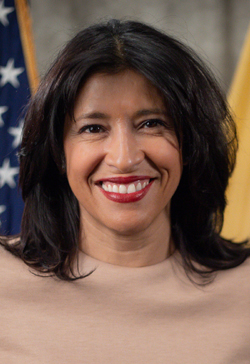
Asm. Rosy Bagolie
Sponsored bills
Maddy summaryThis bill requires all New Jersey public schools to integrate age-appropriate lessons about the September 11, 2001 attacks into Social Studies curricula for elementary, middle, and high school students. It mandates coverage of six specific topics: historical context, the timeline of events, first responder heroism, humanitarian aid following the attacks, global counterterrorism responses, and strategies for promoting tolerance and diversity. Additionally, every public school must hold an annual commemorative event focused on conflict resolution, diversity, and cultural tolerance. The New Jersey Commissioner of Education will provide schools with sample lesson resources to support implementation.
Maddy summaryThis bill prohibits New Jersey charter schools from contracting with for-profit organizations to manage or operate their schools, requiring all charter management organizations to be nonprofit. It mandates that charter schools annually submit detailed budgets - including all revenues, expenses, and in-kind contributions - to the Commissioner of Education for review, with the budget to be publicly posted in plain language on school websites or in print. The bill also requires annual financial audits of charter schools and compels charter management organizations to disclose their financial data, donor information, and operational details to the public via the Department of Education’s website. These measures aim to increase transparency and accountability in charter school finances without altering school operations or funding mechanisms.
Maddy summaryThis bill (A2945) makes it a third-degree crime to knowingly possess a firearm at a public demonstration with the purpose of causing civil disorder. It applies even if the person has a valid permit to carry a firearm. The bill defines "civil disorder" as violent gatherings creating imminent danger to public safety or causing injury, and "public demonstration" as a public gathering for expressing support or opposition to a cause. A conviction carries a penalty of 3-5 years in prison, a $15,000 fine, or both.
Maddy summaryThis bill prevents reductions in New Jersey state school aid for specific districts. It protects districts in Atlantic, Cape May, Monmouth, and Ocean Counties (fifth/sixth class counties) if their property value assessments (equalized valuation) for the current year are lower than in the 2012-2013 school year. If this condition is met, the district’s total state aid cannot be less than what it received in the 2017-2018 school year. The protection excludes preschool aid, special education costs aid, school choice aid, and debt service aid.
Maddy summaryThis bill requires public school districts, charter schools, and other eligible entities (including county vocational and special services schools) that receive New Jersey state aid to begin regular high school instruction no earlier than 8:30 a.m. local time. It applies to all schools serving grades 9 through 12 and is based on medical findings that adolescents need 8-10 hours of sleep, which early start times often prevent. The requirement takes effect for the 2024-2025 school year and does not affect individualized education plans under federal disability law. The law aims to align school schedules with adolescent sleep needs, as recommended by medical organizations.
Maddy summaryThis bill revises New Jersey's renewable energy portfolio standards, requiring electric power suppliers and basic generation service providers to gradually increase their use of renewable energy. Starting in 2020, they must provide 21% of electricity from Class I renewable sources (solar, wind, geothermal), increasing to 35% by 2025, 50% by 2030, and 100% by 2045. The bill also specifies that beginning in 2030, at least 50% of the renewable energy certificates (RECs) used to meet these requirements must represent energy generated within New Jersey. Providers can meet these targets by purchasing and retiring RECs from eligible renewable sources.
Maddy summaryAR 86 is a symbolic Assembly Resolution expressing New Jersey's support for Israel following Hamas' October 7, 2023 attacks. It condemns Hamas for launching a "massive, unprovoked war" involving rocket attacks, killings, abductions, and violence against civilians (citing 1,400 Israeli deaths and 30 American citizens among the casualties). The resolution formally supports Israel "as it defends itself" and directs copies to Israel's Prime Minister, U.S. ambassadors to Israel and the U.S., and New Jersey's members of Congress. As a non-binding resolution, it does not enact new laws but publicly affirms New Jersey's stance on the conflict.
Maddy summaryThis bill requires vehicle manufacturers to give owners and their authorized representatives immediate, free access to real-time vehicle data collected by the car's systems. It covers specific information like speed, location, braking performance, seatbelt status, and crash details (excluding audio/video), transmitted in a standard digital format. Manufacturers must provide this data without charging fees, requiring special devices, or limiting access - owners can also share or delete data they input. The law prohibits manufacturers from forcing owners to waive this right, and any such waiver after the bill's effective date would be invalid.
Maddy summaryThis bill establishes an independent Office of the Child Advocate within New Jersey's government to protect children at risk of abuse or neglect. The Child Advocate, appointed by the Governor, will monitor how state agencies and private entities provide child welfare services, investigate complaints, and ensure children in state custody receive appropriate care. The office will have the authority to review facilities like juvenile detention centers and group homes, require agencies to develop corrective action plans for systemic issues, and maintain a 24-hour hotline for public concerns. The Child Advocate will report annually to the Governor, Attorney General, and Legislature on findings and recommendations for improving child welfare services.