

Maddy summaryThis bill establishes new financial reserve accounts for New Jersey school districts to manage liabilities related to accumulated unused leave. It allows districts to set aside funds specifically for paying out sick and vacation leave when employees retire or leave their jobs, using either annual budgets or unspent funds from the current year. The legislation also creates three other reserve accounts for emergency expenses, debt repayment, and federal impact aid, while updating rules on how districts can transfer unspent money to these reserves. Ultimately, the bill provides a structured way for school boards to save money in advance to cover future employee leave costs without relying solely on current operating budgets.
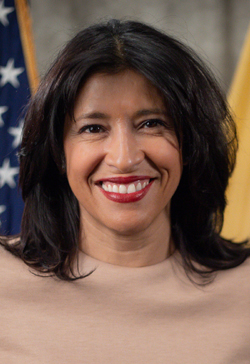
Asm. Rosy Bagolie
Sponsored bills
Maddy summaryThis bill requires automobile insurance companies in New Jersey to offer customers the option to purchase 12-month insurance policies. The legislation applies to carriers providing standard or basic auto insurance coverage while allowing them to continue offering shorter or longer-term policies. The 12-month option would give drivers a fixed annual coverage period that could simplify renewals and potentially stabilize rates for longer durations. The law would take effect 120 days after it is signed into law.
Maddy summaryThis New Jersey bill requires businesses using real-time text chat (like customer support) to offer consumers a verbatim transcript of the conversation at the end of the interaction. Businesses must clearly inform customers upfront about this option. Violations are illegal under consumer fraud law, with penalties up to $20,000 per offense and potential fines or court-ordered remedies. The law applies to all businesses operating in New Jersey that use chat communication with consumers.
Maddy summaryThis New Jersey bill mandates that all public school districts create and maintain policies governing the responsible use of artificial intelligence within their schools. To assist in this effort, the state Department of Education must develop a model policy that districts can reference, which will be updated as needed based on consultations with technology and education experts. Each district's policy must address equity issues, such as access for students with disabilities or limited technology, and include a process for community members to submit questions or concerns. Furthermore, these policies must be reviewed annually and posted prominently on each district's website to ensure transparency and ongoing oversight.
Maddy summaryThis bill creates a three-year pilot program in Essex, Mercer, and Camden counties to enhance school safety and student mental health support. The initiative provides $15 million in funding to deliver clinical mental health services, such as counseling and crisis intervention, alongside security upgrades like active shooter training and protective equipment. Implementation requires collaboration between the Department of Education and other state agencies, with district selection based on reported violence and bullying data. At the end of the pilot period, the Commissioner of Education must submit a report to the Governor and Legislature to evaluate the program's effectiveness.
Maddy summaryThis bill establishes rules for on-demand micro transit programs in New Jersey, which are app- or phone-based shared rides using vehicles. It directly affects New Jersey Transit, county transit agencies, and other operators by requiring drivers to be public employees or contractors who hire existing drivers at equivalent wages/benefits (no independent contractors), and mandating that services expand into transit deserts without replacing existing routes. Key provisions include ensuring accessibility for people with disabilities, providing non-smartphone access options, and requiring monthly data reporting on costs, ridership, and wait times. The New Jersey Transit Corporation must publish this data quarterly, and violations will trigger wage law penalties.
Maddy summaryThis bill requires New Jersey's Division of Children's System of Care to change how respite care services are authorized for individuals under 21 with developmental disabilities. It establishes a 12-month authorization period (replacing the current 90-day renewal) and mandates that families receive a separate "bank" of respite care hours - distinct from regular family support hours - to use for agency-hired, agency-weekend, or self-hired respite care based on their needs. Families must undergo an annual review of service needs and outcomes but cannot have their authorized respite hours reduced. The bill applies directly to families of eligible youth and ensures continuity of care while maintaining current service levels.
Maddy summaryThis bill requires all New Jersey municipalities to provide basic life support (BLS) ambulance services to meet community needs, designating BLS as an essential service. It specifies five ways municipalities can arrange these services: licensing private companies, contracting with public/private entities, creating mutual aid agreements with other towns, partnering with hospitals, or using existing fire/EMS departments. The law defines BLS as pre-hospital care including CPR, wound stabilization, and emergency transport. This policy change ensures consistent access to emergency medical care across the state by making BLS a mandatory municipal responsibility.
Maddy summaryThis bill establishes two main rules for real property transactions involving public bodies in New Jersey. First, it mandates that private buyers of former public property must agree to pay prevailing wages for all construction and maintenance work for a period of 10 years, during which time the property cannot be resold without this agreement. Second, the bill declares invalid any deed restrictions that prevent commercial real estate from being used for the same business purpose as the previous owner. These changes directly affect public agencies selling property and private individuals or entities purchasing it, ensuring wage standards are maintained and preventing specific types of use limitations on commercial assets.
Maddy summaryThis bill requires social media platforms with at least five million global users to cooperate with designated nonprofit organizations (like StopNCII.org and the National Center for Missing and Exploited Children’s Take It Down initiative) to remove nonconsensual intimate images or videos. It mandates that platforms establish procedures for nonprofits to flag and request removal of such content - including AI-generated deceptive media - and requires immediate takedown of flagged material pending review. The law defines "nonconsensual" broadly, covering cases where victims didn’t consent, minors were involved, or deceptive media misrepresented individuals. Social media companies violating the law face fines up to $20,000 per offense. The bill directly affects platforms serving New Jersey users and protects individuals targeted by nonconsensual sharing of intimate content.