

Maddy summaryThe Tariff Transparency Act (A5922) requires New Jersey retail stores to disclose the portion of a product's final price caused by tariffs and import taxes. Retailers must display this information visibly on price tags, online product pages, or sales receipts, and maintain records of tariff calculations. Small businesses with under $500,000 annual revenue and products where tariffs impact less than 2% of the price are exempt. Noncompliance may result in fines up to $500 per violation, with compliance audits conducted by the Division of Consumer Affairs.
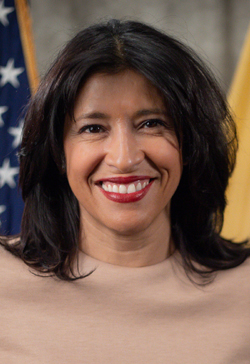
Asm. Rosy Bagolie
Sponsored bills
Maddy summaryAJR 126 designates April 18 of each year as "Worker Safety Day" in New Jersey. The bill encourages employers, workers, government agencies, and communities to promote workplace safety through public awareness. It requires the Governor to issue an annual proclamation urging New Jersey residents to observe the day with activities supporting safe work environments. This resolution has no regulatory effect but aims to highlight the importance of preventing workplace injuries and deaths.
Maddy summaryThis bill expands eligibility for New Jersey's Teachers' Pension and Annuity Fund (TPAF) to include certain substitute teachers who were previously excluded. It amends the law to allow eligible substitutes - defined by specific criteria in the bill - to enroll in the retirement system, directly affecting their access to pension benefits. The key change modifies the definition of "member" in the pension law to include these substitute educators. This policy shift provides a concrete pathway for qualifying substitutes to build retirement savings through TPAF.
Maddy summaryThis bill appropriates $3,750,990 from constitutionally dedicated corporation business tax revenues to the State Agriculture Development Committee for farmland preservation grants. The funds will cover up to 50% of the cost for nonprofit organizations to acquire development easements or fee simple ownership of farmland, ensuring the land remains available for agricultural use under approved restrictions. The grants specifically support eight farmland preservation projects managed by the Land Conservancy of New Jersey in Warren and Sussex counties, using funds from the Preserve New Jersey Farmland Preservation Fund established by state law.
Maddy summaryThis bill requires New Jersey Medicaid to cover ovulation-enhancing drugs and related medical services for individuals aged 21-44 experiencing infertility, with coverage limited to three treatment cycles per person. Infertility is defined as failure to conceive after 12 months of regular, unprotected sex for those 21-34 years old, or six months for those 35-44 years old. Covered medical services include office visits, hysterosalpingograms, pelvic ultrasounds, and blood testing, but not the drugs themselves for more than three cycles. The coverage is contingent on federal financial participation being available.
Maddy summaryThis bill requires New Jersey's Medicaid program and Plan First program to cover fertility preservation services for individuals whose fertility may be impaired by medically necessary treatments like cancer therapy. It defines "iatrogenic infertility" as fertility loss caused by medical treatments affecting reproductive organs, and specifies that covered services include storage of sperm, eggs, embryos, and cryopreserved ovarian tissue. The coverage must be provided without discrimination based on age, gender, sexual orientation, or other personal characteristics, making these often-expensive services accessible to low-to-moderate income patients who would otherwise be unable to afford them.
Maddy summaryAJR 150 designates July of each year as "Cleft and Craniofacial Awareness and Prevention Month" in New Jersey. This symbolic resolution encourages community organizations, medical institutions, and advocacy groups to raise public awareness about cleft lip and palate birth defects - conditions affecting about 1 in 1,700 babies in the U.S. - and promote collaboration on outreach and research. It does not create new laws or funding but requests the Governor issue an annual proclamation to support this awareness effort. The resolution directly affects New Jersey residents and families impacted by these birth defects by fostering community engagement and education.
Maddy summaryThis bill makes several changes to New Jersey's school funding system. It requires the Department of Education to publish school district funding calculations in plain language, establishes a Special Education Funding Review Task Force to examine special education funding models, and creates "reduction adjustment aid" to limit annual reductions in state school aid to no more than 2% of a district's previous year's total operating budget. The bill also adjusts vocational expansion stabilization aid for enrollment changes and establishes protections for school districts in municipalities with high tax rates that are spending below adequacy levels. These changes aim to improve transparency, adjust funding formulas, and protect school districts from excessive aid reductions.
Maddy summaryThis bill establishes the New Jersey Energy Independence Bank as an independent subsidiary of the New Jersey Economic Development Authority (EDA). It renames the existing New Jersey Green Bank (created in April 2024) as the Energy Independence Bank and transfers its staff, funds, and assets to this new entity. The bank will provide financing, loan guarantees, or other financial support for eligible projects like renewable energy facilities, energy storage, efficiency upgrades, and electric vehicle infrastructure - excluding direct residential lending. It must operate separately from the EDA, maintain its own board (with majority independent members), and cannot guarantee state obligations. This directly affects developers and businesses seeking capital for qualifying clean energy projects across New Jersey.
Maddy summaryThis bill establishes a three-year pilot program in New Jersey public elementary schools to assess the academic and health benefits of using therapy dogs in wellness programs. It requires the state Department of Education (DOE) to select six school districts (two per geographic region) that apply with details about their schools, student wellness participation, and therapy dog plans. The DOE will provide participating districts with guidance on therapy dog activities, handler training, dog health checks, and insurance requirements. After three years, the DOE must submit a report evaluating whether the program improved student attendance, confidence, and academic outcomes like reading skills. The pilot directly affects public elementary schools that apply and participate.