

Maddy summaryThis bill (A 3240) amends New Jersey's insurance law to clarify that contracts between insurance policyholders ("subscribers") and their appointed attorneys in fact (who manage their insurance affairs), along with any fees from these contracts, are not considered "related party transactions." It directly affects insurance subscribers and their designated attorneys in fact by removing these agreements from a specific regulatory category. The key provision explicitly states such contracts shall not be construed as related party transactions under state law, preventing them from being subject to additional oversight typically applied to such deals. This change ensures these insurance arrangements are governed solely by the existing reciprocal insurance statute, not other insurance regulations.
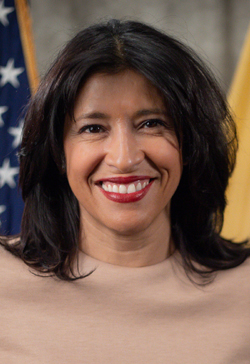
Asm. Rosy Bagolie
Sponsored bills
Maddy summaryThis bill would create a standardized "pollinator-friendly" label for plants sold in New Jersey, requiring the Environmental Protection Commissioner (with Agriculture Secretary) to establish specific standards. These standards must prohibit or limit pesticides harmful to pollinators and define "pollinator-friendly" plants as native, non-invasive species. Retailers and distributors could only use the label on plants meeting these standards, which cover bees, butterflies, hummingbirds, and other pollinators. The bill does not ban pesticides but sets requirements for labeling to help consumers identify pollinator-safe plants. (Note: The bill is currently pending in committee and has not yet been enacted.)
Maddy summaryThis bill requires health insurance plans in New Jersey to continue covering adult children with disabilities who are 26 or older, provided they cannot work due to a physical or intellectual disability and are financially dependent on their parent. It amends existing law to extend coverage beyond the standard age limit of 26 for this specific group, ensuring they maintain health insurance through their parent's plan. The bill prohibits denial of coverage based on factors like marriage, having a child, or school status, which commonly affected young adults with disabilities. This change directly impacts young adults with disabilities in New Jersey who would otherwise lose coverage at age 26 but meet the eligibility criteria.
Maddy summaryThis bill requires contractors working on New Jersey public works projects to verify that all craftworkers meet minimum qualifications. Specifically, it mandates that contractors register electronically and provide proof that each journeyperson has either completed a registered apprenticeship program meeting federal standards or has four years of documented work experience (with union members under certain collective bargaining agreements exempt). The law also requires contractors to confirm they participate in approved apprenticeship programs for any craftworkers they employ. These requirements apply directly to contractors bidding on or performing state-funded construction projects.
Maddy summaryThis bill permanently requires New Jersey health insurance carriers to pay the same reimbursement rate for telemedicine and telehealth services as they do for in-person visits, provided the service is otherwise covered. It ensures patients face no higher deductibles, copays, or coinsurance for telehealth compared to in-person care. The law prohibits insurers from restricting where telehealth services can occur, limiting which technology platforms providers can use, or denying coverage for routine remote monitoring. It directly affects health insurance companies, healthcare providers offering telehealth, and patients receiving covered telehealth services. The policy change applies to all health benefits plans in New Jersey without time limits.
Maddy summaryThis bill requires data center owners and operators in New Jersey to submit semi-annual reports to the Board of Public Utilities (BPU) detailing their water and energy usage. The reports must include specific metrics like total energy consumption (including cooling), water sources, and efficiency calculations such as "water usage effectiveness" (water used per computing task) and "energy reuse factor" (heat reused outside the facility). Data centers that receive state financial incentives must also report additional sustainability metrics, including average cooling temperatures and renewable energy usage. The law applies to all data centers operating in the state, with initial reports due 3-6 months after the bill takes effect.
Maddy summaryThis bill exempts small portable solar devices (under 1,200 watts) from standard utility requirements. It directly affects homeowners using these devices, which connect via standard 120V outlets and meet electrical safety standards. Key provisions remove the need for interconnection agreements, net metering program rules, utility approval, or fees. Utilities cannot charge for these devices or require additional equipment beyond what’s built-in. The bill also shields utilities from liability for customer use of these devices.
Maddy summaryThis bill requires social media platforms with significant user activity in New Jersey to display prominent warning labels about mental health risks during account sign-up and when users access certain features. It specifically targets platforms that allow social interaction (like profile creation and content sharing) and directly affects minors under 18, as defined by the bill. The warnings must highlight risks identified by the U.S. Surgeon General, including links between heavy social media use and increased depression, anxiety, and sleep disruption in youth. Platforms must comply with these labeling requirements to inform users and families about potential harms. The bill does not impose additional restrictions beyond the warning labels.
Maddy summaryThis bill restructures the governance of New Jersey's State Health Benefits Program by creating a new State Health Benefits Commission with 13 members. The commission will include existing state officials, representatives from local and higher education employers, and members appointed by various public employee unions, including specific seats for police and firefighters. A key provision is the addition of a non-voting expert member selected by the other commissioners to provide independent advice on health care plan design. The bill also establishes a new committee to assist with plan design and outlines how members will be appointed, serve terms, and manage conflicts of interest. Ultimately, the legislation aims to broaden representation and oversight in how the state manages health benefits for its employees.
Maddy summaryThis bill would require New Jersey Medicaid to cover ovulation-enhancing drugs and related medical services without restrictions for beneficiaries experiencing infertility. It directly affects low-income New Jersey residents enrolled in Medicaid who seek infertility treatment. The key provision amends Medicaid law to explicitly include these services as a standard benefit, removing prior authorization requirements. This change would expand current coverage to ensure these treatments are accessible as routine care for eligible individuals.