

Maddy summaryThis bill adjusts the tax levy cap for New Jersey school districts that experience reductions in state school aid. It ensures these districts are not required to raise local property taxes as much when state funding decreases, by linking their required local tax levy directly to their state aid amount. The key mechanism requires the state commissioner to calculate each district's "required local share" based on their state aid level, preventing districts from facing higher tax increases during funding shortfalls. This policy directly affects school districts receiving state aid that may see reduced payments, providing them relief from mandatory tax hikes.
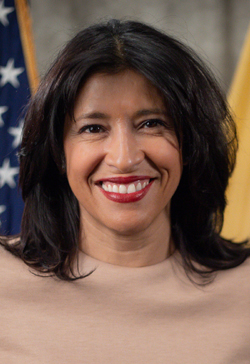
Asm. Rosy Bagolie
Sponsored bills
Maddy summaryThis bill establishes an independent Office of the Child Advocate within New Jersey's government to protect children at risk of abuse or neglect. The Child Advocate, appointed by the Governor, will investigate state agency responses to child abuse cases, inspect facilities like juvenile detention centers and group homes, and ensure children in state care receive appropriate services. Key mechanisms include accessing relevant records (with privacy safeguards), issuing subpoenas for investigations, and operating a 24-hour hotline for public concerns. The office directly affects children in state custody, their families, and state agencies such as the Department of Children and Families.
Maddy summaryThis bill amends New Jersey's film and digital media tax credit program to require that all original music and musical scores for qualifying productions must be created and recorded within the United States. It directly affects film and digital media producers seeking tax credits under the program, which provides credits of up to 40% of eligible production costs. The key change adds a mandatory condition: producers must ensure domestic production of original music/scores as part of their eligibility, alongside existing requirements like spending 60% of costs in New Jersey. This policy update applies to all productions claiming the credit, without altering the credit percentages or other existing program rules.
Maddy summaryThis bill requires public water suppliers in New Jersey to immediately notify local governments and schools whenever a serious drinking water violation occurs under federal EPA rules. Specifically, suppliers must contact municipal officials and school administrators (including charter schools, nonpublic schools, and colleges) via phone and email within the affected area. The notification must detail the contaminant, test results, locations of violations, and suggested remedies for affected customers. It applies to all public water systems and ensures transparency about water safety issues impacting communities and educational institutions.
Maddy summaryThis bill requires all New Jersey public school districts to integrate age-appropriate lessons about the September 11, 2001 attacks into Social Studies curricula for elementary, middle, and high school students. It mandates specific content, including the historical context, timeline of events, recognition of first responders and Flight 93 passengers' sacrifice, and lessons on humanitarian aid and tolerance. Additionally, schools must hold annual commemorative events focused on conflict resolution, diversity, and cultural acceptance. The Commissioner of Education will provide sample resources to support implementation, with the law taking effect in the first full school year after enactment.
Maddy summaryThis bill makes adults criminally liable if a minor gains access to an improperly stored firearm (including in vehicles) and uses it to commit a crime. It raises the age of "minor" from 16 to 18, removes the requirement that the firearm be loaded, and upgrades the offense from a disorderly persons offense to a third-degree crime. If a minor uses such a firearm for criminal activity, the adult who facilitated access faces a second-degree crime charge (5-10 years in prison), and the firearm is deemed a "community gun" under existing law. The law aims to hold adults accountable for negligent firearm storage that enables minors to access weapons used in crimes.
Maddy summaryThis bill provides an additional $3 million in state funding to New Jersey's Division on Civil Rights specifically for upgrading the New Jersey Bias Investigation Access System (NJ BIAS). The system tracks bias crimes reported by state, county, and municipal law enforcement agencies. The funding ensures consistent and uniform reporting of bias incidents across all law enforcement levels. This is a procedural appropriation (not a new policy), directly supporting the operational capacity of law enforcement agencies to document bias crimes.
Maddy summaryThis bill bans businesses in New Jersey from owning, controlling, installing, managing, selling, or offering for sale cryptocurrency ATMs. These are defined as physical, internet-connected kiosks that let users buy, sell, or exchange digital currency using cash, debit, or credit cards. The law directly affects businesses operating such kiosks, prohibiting them under the state's consumer fraud act with penalties up to $20,000 per violation. It targets a surge in fraud - citing FTC data showing $110 million in losses linked to these machines in 2023 - aimed at protecting consumers, especially older adults who face higher risks.
Maddy summaryThis bill prohibits New Jersey state aid to public colleges and universities that authorize, fund, or support antisemitic events or organizations; fail to enforce campus conduct policies against harassment, intimidation, or bullying; or fail to appropriately punish perpetrators of antisemitism (including through expulsion or criminal referral). It directly affects all institutions of higher education receiving state funding in New Jersey. The law defines "antisemitism" using the International Holocaust Remembrance Alliance's 2016 working definition and ties funding to compliance with these requirements. The bill takes immediate effect upon enactment.
Maddy summaryNew Jersey bill A-484 allows local sewer and water authorities to create programs reducing monthly fees for low-income residents. It directly affects households with incomes at or below federal poverty guidelines (capped at existing state assistance thresholds), requiring applicants to own or rent a dwelling unit and meet specific residency criteria. Authorities must establish eligibility procedures, verify income documentation, and ensure sufficient budget funds to cover reduced revenue before implementing these fee cuts. The bill also requires authorities to advertise available reductions to residents and prohibits overlapping discounts with existing programs.