

Maddy summaryThis bill (A5052) requires New Jersey health insurers, Medicaid (NJ FamilyCare), and state health benefit programs to cover screening, prevention, and treatment services for children's behavioral health issues without requiring a formal mental health diagnosis. It establishes "at-risk diagnosis" as a billing mechanism, allowing providers to use Social Determinants of Health Z-codes (instead of standard mental health codes) for preventive care based on factors like family circumstances. Coverage must be provided at the same level as other medical services for children under 18. The law applies to all health plans, Medicaid contracts, and state employee health programs effective 90 days after enactment.
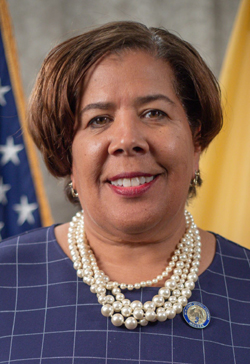
Asm. Linda Carter
Sponsored bills
Maddy summaryThis bill authorizes municipalities and school districts to install school bus monitoring systems with cameras to capture vehicles illegally passing school buses. If a violation is recorded by such a system, the violator would face a $250 civil penalty instead of criminal penalties, with collected funds going to the municipality or school district for safety programs. The monitoring systems must capture specific evidence including the bus's flashing lights, the violating vehicle's license plate, and the date/time/location of the violation. Recorded images are not public records and must be purged within 95 days of recording. The registered owner of the vehicle would be liable for the penalty unless they can prove the vehicle was used without consent or was stolen.
Maddy summaryS 1965 requires New Jersey long-term care facilities (including nursing homes and assisted living residences) to have a consultant pharmacist and either a provider pharmacist or an in-house pharmacy director. It mandates an interdisciplinary pharmacy committee - comprising the facility administrator, nursing staff, and consultant pharmacist - to meet quarterly and maintain records. The bill also prohibits consultant pharmacists from having conflicts of interest with facility pharmacy staff and requires proper Drug Enforcement Administration registration for facilities storing controlled substances. These requirements take effect immediately, with the Health Commissioner authorized to create implementing rules. The bill directly affects all licensed long-term care facilities in New Jersey.
Maddy summaryThis bill requires New Jersey nursing homes to have a licensed pharmacist serving as either a consultant pharmacist or director of pharmaceutical services, and to establish an interdisciplinary pharmacy committee. The committee, which must include the facility administrator, nursing staff representative, and consultant pharmacist, must meet at least quarterly and maintain detailed records of its work. Nursing homes must also appoint a consultant pharmacist who avoids conflicts of interest with the facility's pharmacy staff, and must ensure proper handling of controlled substances if kept on-site. These requirements apply to all licensed nursing homes in New Jersey, aiming to standardize and oversee medicine management for residents.
Maddy summaryThis bill requires public colleges and universities in New Jersey that partner with sports gambling companies (e.g., through stadium advertising or promotional agreements) to establish gambling addiction prevention programs. Institutions must provide students with educational materials on responsible gambling and share hotline information for gambling support services. The required materials must be posted on campus websites and in high-traffic areas like dorms, libraries, and student centers. The law takes immediate effect and directly affects all public higher education institutions with such sports wagering partnerships.
Maddy summaryThe New Jersey Menopause Coverage Act requires all health insurance plans in New Jersey to cover medically necessary treatments for perimenopause and menopause to the same extent as coverage for other medical conditions. Covered treatments include hormonal therapies, non-hormonal medications, behavioral health services, pelvic floor physical therapy, bone health screenings and treatments, preventative services for related conditions like cardiovascular disease and osteoporosis, and counseling. The law applies to all health insurance carriers in the state, including hospital service corporations, medical service corporations, health service corporations, and health maintenance organizations. Insurers must also provide clear information about covered treatments to policyholders. The law takes effect 90 days after enactment and applies to policies delivered, issued, executed, or renewed on or after that date.
Maddy summaryThe "John R. Lewis Voter Empowerment Act of New Jersey" requires all voting policies to be interpreted in ways that maximize voting access for all eligible voters, particularly members of racial, color, and language-minority groups. It prohibits voting practices that burden protected class members and mandates language assistance for limited English proficient voters. The bill creates a preclearance process for voting changes in jurisdictions with a history of voting rights violations and establishes the New Jersey Voting and Elections Institute to maintain public voting data. These provisions aim to ensure equitable access to voting and protect against voter suppression and vote dilution.
Maddy summaryThis bill requires New Jersey's Department of Human Services to create a public awareness campaign about doulas. It mandates the campaign to explain doulas' roles before, during, and after pregnancy; detail their services and research-supported benefits; and list free or low-cost doula resources. The campaign must provide materials in the top 10 languages spoken in New Jersey, available online and distributed through health clinics, WIC offices, Planned Parenthood locations, pharmacies, and community organizations. The goal is to increase public understanding and access to doula services for pregnant and postpartum individuals statewide.
Maddy summaryThis bill would enter New Jersey into the Cosmetology Licensure Compact, creating a multistate licensing system for cosmetologists. Under the compact, cosmetologists licensed in New Jersey would be able to practice in other participating states without needing separate licenses, provided they meet uniform requirements. The compact establishes a Cosmetology Licensure Compact Commission to manage the system, share disciplinary information between states, and ensure public safety standards are maintained. This would reduce barriers for cosmetologists seeking work across state lines while maintaining regulatory oversight. The system requires member states to share information about licensees and disciplinary actions to protect public health and safety.
Maddy summaryThis bill requires New Jersey's Department of Human Services (DHS) to establish an Alzheimer's disease public awareness and education program. The program must develop public campaigns about symptoms, early detection, and safety; create accessible educational materials for health providers; and train emergency responders, judicial staff, and social services personnel. DHS must consult with the Alzheimer's Association and make materials available online in English and Spanish. The initiative is subject to available funding and aims to improve community understanding and response to Alzheimer's disease.