

Maddy summaryThis bill allows for-profit organizations that provide low- and moderate-income housing to join with non-profit housing groups and housing authorities in shared insurance funds. It defines eligible for-profit entities as those focused on housing developments under state fair share plans or federal Section 8 programs. The shared funds cannot include municipalities, school boards, or offer health/life insurance to employees, but may provide environmental liability coverage or join higher-level insurance pools for excess risks. This changes how these housing entities access insurance options under existing law, without creating new funding or a pilot program.
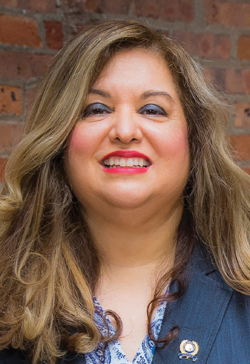
Asm. Annette Quijano
Sponsored bills
Maddy summaryThis bill abolishes New Jersey's Council on Affordable Housing (COAH) and replaces its system with a new municipal framework for meeting affordable housing obligations. Municipalities must now determine their own "fair share" of low- and moderate-income housing through binding resolutions, using state-published calculations, while allowing advocates to contest these determinations. The law appropriates $16 million for housing programs to support new construction and rehabilitation of substandard housing, particularly in urban areas. It directly affects all New Jersey municipalities and low-to-moderate-income residents seeking housing, ending regional contribution agreements and establishing clearer deadlines to prevent previous compliance gaps.
Maddy summaryThis bill allows affordable housing projects funded by New Jersey's State or municipal affordable housing trust funds to be exempt from property taxes. Instead of paying property taxes, housing sponsors would make payments to municipalities equal to up to 20% of the project's annual gross revenue. These agreements between housing sponsors and municipalities must be reviewed by the Commissioner of Community Affairs and expire when the eligible loan for the project is paid in full. The policy directly affects housing developers, municipalities, and low-to-moderate income households who benefit from subsidized housing projects.
Maddy summaryAJR 163 designates March 15 of each year as "Jewish War Veterans Day" in New Jersey. The resolution recognizes Jewish American military service, referencing the historical founding of the Jewish War Veterans of the USA organization on March 15, 1896, and the contributions of Jewish veterans throughout U.S. military history. It requires the Governor to issue an annual proclamation encouraging New Jersey residents and organizations to observe the day with appropriate events. This is a commemorative resolution with no new funding or policy requirements.
Maddy summaryThis bill would establish a certification program for businesses owned by LGBTQ+ individuals in New Jersey. To qualify, a business must be at least 51% owned, operated, and controlled by LGBTQ+ persons, with specific documentation required to verify eligibility. Certified businesses would be listed in the SAVI database, making them eligible for state contracting opportunities and public recognition. The program formalizes an existing executive order (E.O. 295) that created this certification process, making it permanent rather than temporary. Businesses seeking certification would apply through the Division of Revenue and Enterprise Services, with appeal processes available for denials or revocations.
Maddy summaryAssembly Bill A4092 establishes a nine-member study commission to analyze how a 2017 Medicaid reimbursement rate increase for nursing home personal care services (P.L.2017, c.239, as amended by P.L.2019, c.275) affected nursing homes in New Jersey. The commission will examine impacts on nursing home operations, staffing compliance, financial health, resident costs, closures, and whether the rate change required reallocation of state funds. It includes representatives from nursing home operators, Medicaid policy experts, and state health/human services officials. The commission must submit a report with findings and recommendations to the Governor and Legislature within 12 months of its first meeting.
Maddy summaryThis symbolic Assembly Resolution (AR 122) condemns the Alabama Supreme Court ruling in *LePage v. Mobile Infirmary Clinic* (which treats embryos as "extrauterine children") and federal bill H.R. 431 (which would extend constitutional personhood to embryos from fertilization). It reaffirms New Jersey’s existing protections for reproductive health care access, including in vitro fertilization (IVF), which the state already supports through laws requiring insurance coverage for fertility services. The resolution does not create new legal requirements but publicly opposes actions that threaten IVF access and reproductive freedom. New Jersey has previously enacted measures to shield patients and providers from out-of-state prosecution for legally accessed reproductive care.
Maddy summaryThis bill requires New Jersey long-term care facilities to provide biennial staff training on caring for lesbian, gay, bisexual, transgender, questioning, queer, intersex seniors and seniors living with HIV, and on preventing discrimination based on sexual orientation, gender identity, intersex status, or HIV status. It specifies that facilities must designate one management and one direct care staff member to receive in-person training from an expert within six months, then use that training to educate all other staff within one year. Facilities must cover all training costs, maintain records for state agencies to review, and ensure training covers communication practices, health challenges, and creating safe environments. The law directly affects long-term care facilities and their staff, aiming to improve care quality for these vulnerable senior populations.
Maddy summaryThis bill establishes the Autism Education Council within New Jersey's Department of Education to improve services for students with autism in public schools. The council, composed of seven members including the Education Commissioner and appointed representatives from parent groups and autism organizations, will distribute $9.6 million annually (from a $10 million appropriation) to public school districts and colleges. Grants fund professional development for educators, hiring additional support staff, and supplemental programs like after-school socialization and transitional planning. The council must monitor grant impacts and submit annual reports to the Governor, Legislature, and school districts detailing grant recipients, amounts, and outcomes.
Maddy summaryThis bill changes penalties for underage gambling in New Jersey from criminal charges to civil fines. It affects minors who gamble (now facing fines up to $2,000 for repeat offenses), casino employees or licensees who allow underage gambling (liable to the same fines), and Atlantic City (which will receive all collected fines). Key provisions set specific fine tiers: $500 for a first offense, $1,000 for a second, and $2,000+ for subsequent offenses. All fines collected will be deposited exclusively into Atlantic City's public safety services trust fund, with no criminal records or court proceedings involved.