

Maddy summaryThis bill requires hospitals and medical professionals to report all suicide attempts or deaths by suicide involving first responders (including police, firefighters, EMTs, and emergency rescue personnel) to New Jersey's Division of Mental Health Services within three business days. It mandates the creation of an anonymous, aggregated database tracking these incidents statewide, without identifying individuals. The Division must then issue an annual report to the Governor and Legislature containing demographic summaries of these cases. The goal is to better understand and address the elevated suicide risk among first responders, who face significant job-related stressors and are documented to have higher suicide rates than the general public.
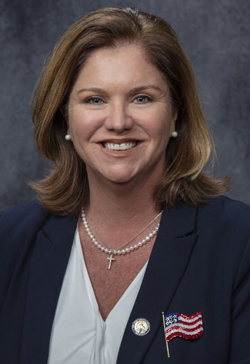
Asm. Claire Swift
Sponsored bills
Maddy summaryThis bill would appropriate $2.9 billion in state funding to ensure school districts receive aid equal to their "adequacy budget" as determined under New Jersey's School Funding Reform Act. It requires districts that receive increased state aid to reduce their property tax levies by the same amount, with specific provisions for districts where property taxes exceed 5% of district income. The bill also provides additional aid to districts that experienced funding cuts between 2018-2023 and repeals certain laws that contributed to reduced state aid and higher property taxes. The policy aims to align school funding with constitutional requirements for a "thorough and efficient" education system while reducing property tax burdens on residents.
Maddy summaryThis bill (A1118) revises New Jersey's tax rates for married couples filing jointly, aiming to reduce the "marriage penalty" where joint filers pay more tax than if they filed separately. It increases the threshold for the lowest tax bracket from $20,000 to $40,000 for joint filers and changes the tax rate for income between $40,000 and $70,000 from 2.5% to 1.75%. These changes apply to taxable years beginning January 1, 2020, and directly affect married couples who file joint tax returns in New Jersey.
Maddy summaryThis bill directs New Jersey's Department of Community Affairs (DCA) to end veteran homelessness within three years. It requires the DCA to develop a statewide plan using specific mechanisms: creating a comprehensive by-name list of veterans at risk of homelessness, prioritizing veterans for existing housing and emergency assistance benefits, coordinating with service providers to share data, connecting veterans to health and job resources, and implementing "Housing First" principles (permanent housing as quickly as possible). The plan must be updated every three years, with annual progress reports to the Governor and Legislature. It directly affects all New Jersey veterans experiencing or at risk of homelessness, regardless of their discharge status or length of service.
Maddy summaryThis bill provides a non-refundable New Jersey gross income tax credit for eligible homeschooling expenses incurred by parents or guardians. Taxpayers with gross income under $260,000 can claim up to $2,500 per child or dependent for qualified expenses (like textbooks, educational software, school supplies, and internet fees), with a total annual cap of $7,500. An additional $1,000 credit is available per child with special needs, raising the total annual cap to $10,500. The credit applies to expenses for children or dependents and includes specific provisions for married couples filing separately.
Maddy summaryThis bill allows surviving spouses of retired police and firefighters (PFRS members) who died while receiving disability retirement benefits to keep state-paid health coverage and continue receiving their pension after remarriage. Specifically, if the retiree's death was linked to a disability (through injury, complications, or worsening of a preexisting condition), the surviving spouse qualifies for full state-funded health benefits under the State Health Benefits Program (SHBP) and can receive their pension without termination upon remarriage. The state will cover all health insurance premiums for the spouse and dependent children, and also handle any increased retirement system costs from continuing payments. This applies to deaths occurring before, during, or after the bill's effective date, with retroactive reinstatement possible for those previously denied benefits.