

Maddy summaryAJR 112 establishes a 11-member Commission to review how pandemic-related rules and orders (like Executive Order 103) affected small businesses in New Jersey. The Commission, appointed by the Governor, Senate President, and Assembly Speaker, will analyze impacts on small businesses (defined as having ≤100 full-time employees), investment, economic growth, and recovery. It must hold at least three public hearings and issue reports with findings and recommendations to the Governor and Legislature after each meeting. The Commission expires when the state’s public health emergency ends. This resolution does not create new laws but mandates a review of existing pandemic policies.
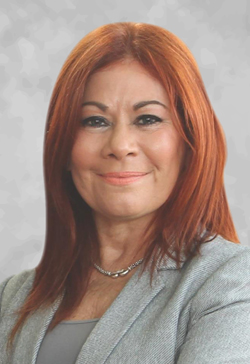
Asm. Yvonne Lopez
Sponsored bills
Maddy summaryNew Jersey's Bill A1696 updates optometrists' scope of practice by expanding their ability to provide eye care services. The bill allows optometrists to prescribe pharmaceutical agents (including controlled substances under specific conditions), administer immunizations for coronaviruses, flu, and shingles (for patients 18+), and perform minor procedures like removing superficial foreign bodies or treating chalazions. It also permits certain non-invasive laser/ultrasound treatments (e.g., trabeculoplasty) using only topical anesthesia, while explicitly prohibiting invasive eye surgery, orbital procedures, or general anesthesia. These changes apply to all optometrists practicing in New Jersey and require adherence to CDC guidelines for immunizations and reporting to the state immunization registry.
Maddy summaryThis bill would amend New Jersey's Law Against Discrimination to explicitly protect people from "disparate impact" discrimination - meaning policies that seem neutral but disproportionately harm individuals in protected groups (such as race, disability, gender identity, or sexual orientation). Currently, courts have interpreted the law to cover this, but the bill would codify that protection directly into statute. It affects anyone facing discrimination in housing, employment, or services due to such policies, making it easier to seek legal remedies. The change clarifies existing protections without altering the scope of covered discrimination.
Maddy summaryThis bill appropriates $20 million from the General Fund to the New Jersey Department of Education (DOE) specifically for school facility cleaning and sanitization during the COVID-19 pandemic. It directly affects public school districts, charter schools, and nonpublic schools that received a health department directive for a closure on or after March 9, 2020. Funds cover disinfectants, cleaning supplies, and increased personnel costs for enhanced cleaning schedules, with allocations based on student enrollment. The DOE must establish an expedited application and disbursement process for these funds.
Maddy summaryThis bill creates a certification process for nonprofits that help low- and moderate-income residents build or rehabilitate homes through sweat equity (where future occupants contribute labor instead of money). It waives certain regulatory requirements for these certified nonprofits, including adaptability rules for housing units and marketing mandates for municipalities to count sweat equity homes toward affordable housing obligations. The bill also allows certified nonprofits to use their own affordability controls instead of state-mandated standards and directs state offices to expedite assistance for these projects. It directly affects low- and moderate-income households seeking affordable housing and the nonprofits facilitating their home construction.
Maddy summaryThis bill requires landlords of properties used for child care services (like daycares caring for 6+ children under 13) to install and maintain NSF/ANSI-certified water filters at all fixtures used for drinking, food, or baby formula if they refuse to allow public water systems to replace lead service lines. Landlords must certify annual filter compliance to the Department of Environmental Protection and face civil penalties of up to $500 per day for violations. The requirement applies until lead lines are replaced and for six months afterward, with tenants able to seek court-ordered rent escrow if landlords fail to act. The bill targets lead exposure risks in child care settings where landlords block infrastructure upgrades.
Maddy summaryThis bill exempts from motor vehicle registration fees certain vehicles owned by local senior nutrition programs (specifically Meals on Wheels America members) and nonprofit organizations providing social services in New Jersey, such as addiction support or mental health services. The exemption applies to vehicles not used for pleasure or hire, requiring them to still be registered with standard or special number plates valid for up to 26 months. Owners may transfer the special registration to a new vehicle by applying to the chief administrator, maintaining compliance without fee payments.
Maddy summaryThis bill directs New Jersey's Department of Environmental Protection (DEP) to create a program allowing qualified entities - including local governments, nonprofits, and individuals - to lease state-owned land for developing and managing pollinator habitat. The DEP must establish rules (in consultation with the Department of Agriculture) to identify suitable land and select appropriate lessees, focusing on areas beneficial for bees, butterflies, and hummingbirds. The program requires no new taxes or fees but formalizes how state land can be used to support pollinator conservation.
Maddy summaryThis bill clarifies eligibility rules for New Jersey's state small business set-aside program, which helps direct government contracts to qualifying small businesses. It specifies that employee size limits apply only to businesses without a federal revenue standard (13 CFR §121.201), and changes how gross revenue is calculated: businesses must now average revenue over five tax years (instead of three), with specific formulas for newer businesses or those with short fiscal years. These rules directly affect small businesses seeking state contracts under the program. The bill was withdrawn after being approved as part of P.L.2025, c.254, so it did not become law.
Maddy summaryNew Jersey's A3405 requires the Department of Transportation to adopt a complete streets policy for all new and rebuilt highway and public transit projects, ensuring safe access for all users including people with disabilities. It specifically mandates that projects consider the needs of individuals diagnosed with autism spectrum disorder and those with intellectual or developmental disabilities to enable independent travel. The policy requires the DOT to develop universal design concepts and implementation guidance for these accessibility features in all planning, construction, and maintenance activities.