

Maddy summaryThis bill requires New Jersey's Corrections Ombudsperson to review criminal investigations conducted by the Department of Corrections or Special Investigations Division to ensure they were accurate, unbiased, and thorough. The ombudsperson must examine investigation methods, evidence files, and other relevant documents - excluding ongoing investigations - and provide inmates who filed complaints with updates on the review status and estimated completion time. It removes prior restrictions preventing the ombudsperson from reviewing Prison Rape Elimination Act investigations and confidential files. The bill directly affects inmates who report concerns about criminal investigations within correctional facilities.
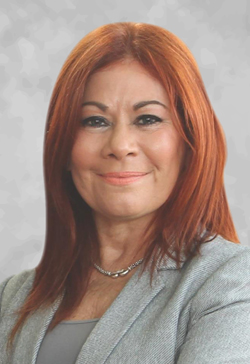
Asm. Yvonne Lopez
Sponsored bills
Maddy summaryThis bill establishes a new Office for Women's Advancement within New Jersey's Department of Labor and Workforce Development. The office will directly support women in the state's workforce by gathering data on issues like the gender pay gap, workplace culture, and hiring practices; collaborating with state agencies and groups like the New Jersey Advisory Commission on the Status of Women; reviewing legislation for gender equity; and publishing reports and hosting events. It creates a dedicated "Women's Advancement Fund" to receive annual state appropriations and accept federal funds or grants for the office's operations. The goal is to promote full and equal workplace participation for women across all industries in New Jersey.
Maddy summaryThis bill increases New Jersey's Medicaid reimbursement rates for private duty nursing (PDN) services by $4 per hour. It raises the rate to at least $65/hour for registered nurses and $53/hour for licensed practical nurses, applying to all Medicaid delivery systems (fee-for-service and managed care). The change affects nursing providers who deliver home-based, continuous care to Medicaid beneficiaries. The bill requires the state to seek federal approval for these rate changes to maintain federal funding.
Maddy summaryThis bill (A2484) eliminates a $50 fee charged to New Jersey residents for filing a certified copy of a court-ordered name change. It directly affects individuals who change their names due to events like marriage, divorce, or legal adoption. The bill amends state law by removing the specific fee provision (previously listed in Section 11(d)) for certified name change documents. This change applies immediately upon enactment, reducing costs for people needing official documentation of their name change.
Maddy summaryThis bill requires New Jersey's Department of Human Services (DHS) and Department of Health (DOH) to apply for federal waivers to cover menstrual hygiene products (like tampons, pads, and cups) under NJ FamilyCare, SNAP (food stamps), and WIC programs. If the federal government denies the waiver, DHS must establish a state-funded benefit using $2 million from the General Fund, with eligibility determined through a household certification process for minors. The law mandates an educational campaign to inform program participants about the new benefit and applies to anyone enrolled in these specific public assistance programs who menstruates. The $2 million appropriation is contingent solely on federal denial of the waiver request.
Maddy summaryThis bill eliminates an exception in New Jersey's Smoke-Free Air Act that previously allowed smoking in casinos and simulcasting facilities. It would require these venues to become smoke-free, meaning no smoking would be permitted inside for employees, patrons, or visitors. The change directly affects casino operators, staff, and customers at all New Jersey casinos and simulcasting facilities (such as those with slot machines, table games, or dedicated seating for betting). This policy shift extends the existing indoor smoking ban to these locations, removing a long-standing exemption.
Maddy summaryThis bill requires New Jersey's Economic Development Authority (EDA) to create a website connecting eligible businesses and organizations in innovation industries with suppliers. Eligible entities include those operating in fields like biotechnology, information technology, renewable energy, and life sciences. The website will allow these entities to post needs for physical locations, equipment, labor, or supplies, and search for matching suppliers to arrange purchases or rentals. It must also list public and private funding sources, such as state/federal grants and investment opportunities, to support their projects.
Maddy summaryThis bill establishes free post-COVID-19 health clinics across New Jersey, providing physical and mental health evaluations, physical therapy, and related services at no cost to residents previously diagnosed with COVID-19. It requires the Department of Health to launch a public awareness campaign - including informational pamphlets in healthcare facilities - to educate people about long-term health effects and available care, with special focus on medically underserved communities and areas with poor health outcomes linked to the pandemic. The bill also creates a 15-member task force to study racial and ethnic disparities in long-term COVID-19 health impacts, with a one-year deadline to submit policy recommendations. The clinics, awareness efforts, and task force will expire one year after New Jersey’s public health emergency ends.
Maddy summaryThis bill requires New Jersey's Department of Transportation (DOT) to implement a "complete streets" policy for all new or rebuilt public highways and transportation projects. The policy must specifically include design elements that help people with autism spectrum disorder and intellectual or developmental disabilities travel independently. The DOT must also develop universal design concepts and guidance to integrate these accessibility features into planning, construction, and maintenance. Additionally, the DOT must encourage local governments receiving state transportation funding to adopt similar inclusive policies.
Maddy summaryThis bill creates a $2,000 tax exemption for New Jersey volunteer firefighters, first aid, and rescue squad members who meet specific service and training requirements. To qualify, firefighters must serve the entire year, respond to at least 60% of fire alarms and drills, and hold Firefighter I certification; rescue and first aid members must respond to at least 10% of rescue alarms and drills and have approved training or EMT certification. Volunteer organizations must submit annual lists of eligible members to the state for verification by March 31. The exemption applies to taxable years starting after the bill's enactment.