

Maddy summaryThis New Jersey bill (A567) requires courts to order counseling for children who have witnessed or been exposed to domestic violence in households where abuse has occurred. It establishes a legal presumption that custody of minor children should be awarded to the non-abusive parent when a final restraining order is issued in domestic violence cases. The bill also permits courts to order the abusive parent to pay for the child's counseling and requires them to provide proof of payment to the court. Additionally, it mandates that courts consider the child's exposure to domestic violence when making custody decisions, prioritizing the child's safety and well-being.
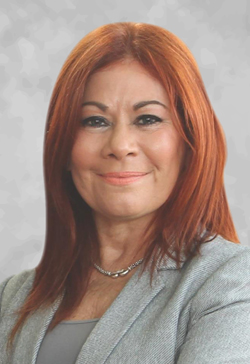
Asm. Yvonne Lopez
Sponsored bills
Maddy summaryThis bill establishes the Council for Community Recovery and Family Success, a new 25-member body within New Jersey's Department of Community Affairs (though independent of it), to develop a statewide initiative focused on preventing family crises and promoting well-being for infants, children, youth, and families. The Council will identify gaps in current services, recommend policies to shift focus from crisis response to prevention, and coordinate with state departments and community organizations across New Jersey. It will create county-level councils to assess local needs and develop preventive services, and will receive $4 million in state funding to implement these efforts over three years. The initiative aims to improve outcomes through four pillars: positive family relationships, financial security, quality education, and health. The Council must submit annual reports to the Governor and Legislature with recommendations for improving family support services.
Maddy summaryThis bill would automatically qualify certain child care workers for state-subsidized child care services, regardless of their family income. It defines a "qualifying child care worker" as an educator or staff member employed at least 20 hours weekly by a licensed child care center or registered family child care provider. The state must verify employment through a new process and seek federal approvals to maintain funding under the Child Care and Development Block Grant Act. This policy directly affects child care workers in New Jersey’s licensed facilities, making child care more affordable for them without changing income requirements for other program participants.
Maddy summaryThe "Climate Superfund Act" would hold fossil fuel companies liable for climate change damages by requiring them to pay compensatory payments based on their historical greenhouse gas emissions. It targets companies that extracted or refined fossil fuels and are responsible for over one billion metric tons of emissions between 1995 and the bill's effective date. The bill establishes a program through New Jersey's Department of Environmental Protection to collect these payments and distribute funds for climate adaptation projects, such as flood protection, infrastructure upgrades, and health programs. Companies would pay their proportional share of damages over nine years, with options for installment payments, and the collected funds would specifically support projects that help communities prepare for climate impacts.
Maddy summaryThis bill allows tax-exempt nonprofits (501(c)(3) organizations under federal tax law) to obtain amusement game licenses for events they host, such as festivals, carnivals, or fairs held for their benefit or sponsored by them. Currently, licenses are available for certain venues and events like agricultural fairs, but nonprofits were excluded. The bill adds these organizations to the list of eligible applicants under New Jersey’s existing Amusement Games Licensing Law, requiring all other standard licensing conditions to be met. It does not change current licensing rules for other entities or permit permanent amusement operations.
Maddy summaryThis bill amends a $2 million FY2024 appropriation originally designated for a Convery Boulevard Pedestrian Bridge in Perth Amboy, New Jersey. It allows the city to redirect unused funds toward other pedestrian safety infrastructure projects after the bridge became unfeasible. The change modifies the specific purpose of the state aid allocation under P.L.2023, c.74, without creating new funding. The city can now use the full $2 million for broader pedestrian safety needs, such as crosswalks or sidewalk improvements, rather than the original bridge project.
Maddy summaryThis bill modifies New Jersey's requirements for homeowners' associations managing planned real estate developments (like condos and co-ops) regarding their capital reserve funds. It clarifies that "adequate" funding means reserves must not fall below zero dollars over a 30-year plan, and allows associations to create plans with a minimum zero balance (instead of requiring higher balances). For associations needing to fix inadequate reserves, it extends the timeline from 10 to 30 years when annual funding increases would exceed 10% of assessments, or uses the reserve study's predicted zero-balance date. Associations must now ensure reserve studies are reviewed by licensed professionals every five years.
Maddy summaryThis bill (A 5303) requires New Jersey's Attorney General to review and update the statewide policy for investigating human trafficking. It directs the AG to specifically consider: (1) using audio/video recordings in undercover operations to protect investigations and victims, (2) strict rules for sharing such recordings, (3) involving county prosecutors early in investigations, and (4) other relevant areas. The review responds to a 2024 Commission report on human trafficking in the massage industry. This policy update will affect law enforcement agencies conducting human trafficking investigations statewide.
Maddy summaryThis bill requires mental health services in New Jersey to be provided in a culturally affirming and linguistically appropriate manner for individuals who are deaf or hard of hearing. It mandates that services be delivered in the client's primary method of communication, as determined by the client's preference or a communication assessment, and that mental health professionals be certified as fluent in that method. The bill establishes a deaf services coordinator position within the Department of Human Services to oversee implementation, develop certification standards for professionals, and ensure access to services statewide, including through telemedicine in underserved areas. It also requires the development of a statewide system of care with specific standards for communication accessibility and cultural competence in mental health services.
Maddy summaryThis bill increases penalties for retail theft offenses based on the value of stolen goods, with shoplifting over $500 becoming a third-degree crime. It creates a new offense for "fostering the sale of stolen property" (including online sales) and upgrades penalties for "leader of organized retail theft enterprise" to a first-degree crime. The bill establishes a retail theft unit within the Attorney General's office to investigate and prosecute organized retail theft, and includes new requirements for gift card retailers to prevent fraud through packaging standards and third-party reseller record-keeping. It also creates extended prison terms for repeat retail theft offenders and increases penalties for tax evasion related to retail theft.