

Maddy summaryThis bill allows members of New Jersey's Police and Firemen's Retirement System (PFRS) to purchase retirement credit for prior service as a class two special law enforcement officer with a public employer in the state. To qualify, the member must have worked in that role and then started a PFRS-covered position within 120 days of ending that service. Members can purchase up to 10 years of credit by paying the cost, calculated based on their salary and an actuarial factor, with current members having one year from the bill's effective date to apply. This change aligns the process for purchasing such credit with existing rules for federal or military service.
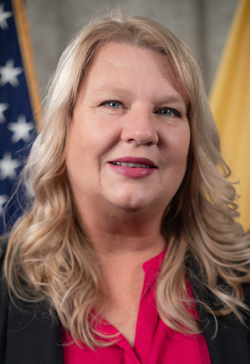
Asm. Mitchelle Drulis
Sponsored bills
Maddy summaryS 2793 appropriates $1.723 million from two existing state funds - the constitutionally dedicated "Preserve New Jersey Farmland Preservation Fund" (using CBT revenues) and the "2009 Farmland Preservation Fund" - to the State Agriculture Development Committee. The funds provide grants to qualifying nonprofit organizations for up to 50% of the cost to acquire development easements or fee simple titles on farmland, with the land maintained for agricultural use through deed restrictions. This directly supports five specific farmland preservation projects across Hunterdon, Sussex, and Warren counties, as approved by the committee. The bill reallocates previously designated funds without creating new taxes or policies.
Maddy summaryThis bill appropriates $101.7 million from constitutionally dedicated corporation business tax revenues and Green Acres funds to the Department of Environmental Protection for local government open space acquisition and park development projects. The funds will support $24.3 million in land acquisition projects (including planning incentive, standard, site-specific, and urban aid acquisition) and $75 million in park development projects (including inclusive playgrounds required by "Jake's Law" and projects in densely populated areas). Local governments across New Jersey will receive grants or loans to acquire or develop lands for recreation and conservation purposes, with $2.4 million allocated for administrative costs. The bill defines eligibility based on population density criteria to target funding to areas with higher population needs.
Maddy summaryS 2792 appropriates $500,000 from two state funds - $200,000 from constitutionally dedicated business tax revenues and $300,000 from the 2009 Farmland Preservation Fund - to the State Agriculture Development Committee. This funding provides a $500,000 grant to Washington Township in Warren County for municipal planning to preserve farmland. The grant is a direct allocation under existing farmland preservation programs, with Washington Township also potentially eligible for additional competitive grants from other funds. The bill specifically directs this $500,000 to Washington Township without requiring a separate application.
Maddy summaryThe bill authorizes the New Jersey Infrastructure Bank to provide up to $53,883,706 in low-interest loans for 14 specific transportation infrastructure projects in Fiscal Year 2025. These projects include bridge replacements, road improvements, and pedestrian safety initiatives in cities and counties across New Jersey, such as Bayonne's E. 25th Street Pedestrian Bridge Replacement and Atlantic County's Rte. 629 Pedestrian & Traffic Signal Improvement Project. The loans will be provided to local government units (municipalities and counties) and can be repaid over up to 31 years, with interest rates tied to the bank's bond rates. The program expires on July 1, 2025, and is limited to the specific projects outlined in the legislation.
Maddy summaryS 3384 appropriates funds to New Jersey's Department of Environmental Protection (DEP) to provide zero-interest loans and principal forgiveness for environmental infrastructure projects. The bill authorizes the DEP to make loans to local governments and public water utilities for clean water and drinking water projects, with specific funding limits including $20 million for combined sewer overflow projects and $10 million for water quality restoration. Funds will come from state revolving funds, federal grants from the Infrastructure Investment and Jobs Act, and unexpended balances from previous programs, with projects requiring repayment within 30-45 years. The bill's funding authorization expires on July 1, 2025.
Maddy summaryThis Assembly Resolution (AR 138) symbolically designates June 2024 as LGBTQIA+ Pride Month in New Jersey. It urges public officials and citizens to commemorate the month with appropriate activities, recognizing the contributions and struggles of LGBTQIA+ individuals (including lesbian, gay, bisexual, transgender, queer/questioning, intersex, asexual, and non-binary people). The resolution does not create new laws or policies but formally acknowledges the community's achievements and ongoing advocacy. It follows similar designations by federal and state governments, emphasizing visibility and equality.
Maddy summaryThis bill revises eligibility for reimbursement from New Jersey's Emergency Medical Technician (EMT) Training Fund. It allows training agencies (like private organizations or schools) to receive reimbursement for volunteer EMTs' certification costs regardless of whether the ambulance or rescue squad they serve charges for services. To maintain eligibility, volunteer EMTs must complete at least one service call per month during their initial three-year certification period. If they stop meeting this requirement, the squad can seek repayment from the EMT for fund costs related to their training. The bill prioritizes reimbursement for initial EMT certification and refresher courses.
Maddy summaryThis bill requires that workers on projects financed through New Jersey's Commercial Property Assessed Clean Energy (C-PACE) program receive prevailing wage rates. It amends existing law to explicitly classify C-PACE financing as "authority financial assistance" under state law, triggering prevailing wage requirements for all construction work related to these projects. The bill affects property owners who use C-PACE financing for energy efficiency, renewable energy, water conservation, or resiliency improvements, as well as the contractors and workers performing the work. The prevailing wage rate, determined by the Commissioner of Labor and Workforce Development, must be paid to all workers involved in projects connected to C-PACE financing. This policy change ensures that C-PACE financed projects meet the same labor standards as other publicly assisted projects.
Maddy summaryThis bill appropriates funds to New Jersey's Department of Environmental Protection (DEP) to provide zero-interest loans or principal forgiveness for clean water and drinking water infrastructure projects. It authorizes funding for 156 specific clean water projects and 72 drinking water projects across the state, totaling approximately $2.6 billion in estimated loan amounts. The funding is intended to help municipalities and public water utilities finance infrastructure improvements that reduce pollution, improve water quality, and address environmental challenges. The bill includes specific provisions for varying levels of principal forgiveness based on project type and community need, with a focus on making these projects more affordable for local governments.