

Maddy summaryThis bill amends the lists of environmental infrastructure projects eligible for loans from New Jersey's Infrastructure Bank for fiscal year 2025. It modifies the project eligibility lists by adding new projects, removing some projects, and adjusting the priority rankings and loan amounts for certain projects. The bill reduces the total funding authorization from $2.73 billion to $2.47 billion and changes the total number of eligible projects from 240 to 227, including 152 clean water projects and 67 drinking water projects. These changes affect local governments, public water utilities, and other project sponsors seeking funding for environmental infrastructure improvements.
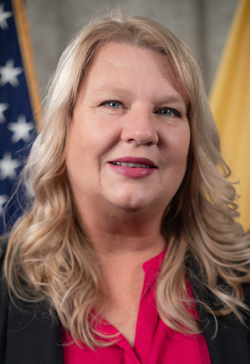
Asm. Mitchelle Drulis
Sponsored bills
Maddy summaryAJR 101 designates the second Friday in December each year as "PSRPs in Our Schools Day" in New Jersey to honor paraprofessionals and school-related personnel (PSRPs). This resolution directly recognizes PSRPs - including instructional aides, bus drivers, cafeteria staff, custodians, and maintenance workers - who support students through tutoring, classroom assistance, translation, meal service, and facility upkeep. The key mechanism is an annual observance calling on the Governor, Legislature, and citizens to acknowledge these workers' contributions. The resolution does not create new programs or funding but establishes a recurring day of recognition.
Maddy summaryThis bill requires New Jersey's Division of Child Protection and Permanency (DCPP) to consult with the Division of Developmental Disabilities (DDD) when a court finds that a person who abused or neglected a child has a developmental disability and qualifies for DDD services. It mandates DCPP to work with DDD to create a tailored services plan for that individual, considering their disability. DDD must then determine the most appropriate service methods based on the person's specific disability needs. The policy change applies directly to adults with developmental disabilities involved in child abuse/neglect cases who are eligible for DDD support, ensuring their treatment aligns with disability-specific care standards.
Maddy summaryThis bill allocates $60 million from constitutionally dedicated corporation business tax (CBT) revenues - funds already set aside by voter-approved constitutional amendment - to the New Jersey Department of Environmental Protection (DEP) for specific improvements at state parks, forests, and conservation lands. The funds will directly support projects like repairing bridges and buildings, developing camping facilities, enhancing habitat access, and maintaining historic structures across state-managed recreation areas. It uses existing tax revenues (not new taxes) that were constitutionally earmarked for open space preservation under the Preserve New Jersey Act. The DEP can implement these projects without requiring separate budget committee approvals, as specified in the bill.
Maddy summaryThis bill requires telecom, cable, and internet providers in New Jersey to let customers cancel service contracts without early fees when moving to a long-term care facility for at least 90 days. It applies to individuals receiving a physician's referral or care plan for relocation to licensed facilities like nursing homes, assisted living, or dementia care homes. Customers must typically provide 45 days' notice (or 48 hours if a physician orders immediate relocation), and providers may request a physician's letter as proof. The bill does not relieve customers of equipment return fees or payments for equipment they already purchased.
Maddy summaryThis bill amends the lists of environmental infrastructure projects approved for long-term funding under New Jersey's FY2025 environmental infrastructure funding program. It creates two specific eligibility lists: one for clean water projects (including 152 projects totaling $1.4 billion) and one for drinking water projects (including 67 projects totaling $536 million), detailing each project sponsor, project number, and estimated loan amounts. The bill authorizes the Department of Environmental Protection to make zero-interest and principal-forgiveness loans for these projects, with varying levels of principal forgiveness based on project type, community size, and affordability criteria. The loans are intended to finance infrastructure improvements for water quality and drinking water systems across the state, with specific repayment terms and priority rankings established for different project categories.
Maddy summaryThis bill makes significant changes to New Jersey's school funding system. It eliminates the use of census-based funding for special education aid, replacing it with a system that calculates aid based on the actual number of special education students in each district. The bill also establishes a reimbursement program for school districts to cover actual fuel costs for student transportation services. Additionally, it creates a 2% cap on annual reductions to State school aid and provides a Stabilization Aid program for districts facing budget imbalances.
Maddy summaryThis Assembly Resolution (AR 173) is a non-binding request urging the federal government to investigate unidentified drone sightings reported across New Jersey. It directly addresses federal agencies (like the FAA, Defense, and Homeland Security departments) and asks them to conduct a thorough investigation into drone activity near critical infrastructure, military sites, and residential areas. The resolution cites over a dozen counties reporting nightly drone flights, including near President-elect Trump’s property, and emphasizes that local officials and residents feel these sightings pose security concerns despite federal claims of no verified threat. It does not create new laws or regulations but formally requests federal action to address public safety worries.
Maddy summaryThis bill amends New Jersey's law governing employment programs for people with disabilities, renaming the "Sheltered Workshop Act" to the "Extended Employment Act." It changes eligibility requirements by redefining disabilities from "severe" to "significant" and removes the need for participants to complete workshop programs or prove they can't compete in the regular labor market. The bill eliminates oversight by the New Jersey Commission for the Blind and Visually Impaired, revises funding mechanisms to adjust annually based on inflation, and repeals outdated provisions about product labeling and sales from these programs. The changes aim to modernize the program to better serve people with disabilities who may not have qualified under previous rules. The bill directly affects nonprofit extended employment providers and people with disabilities enrolled in these programs.
Maddy summaryNew Jersey Assembly Bill A5101 would eliminate the requirement for remote sellers and out-of-state corporations to collect sales tax or pay corporate business tax based on the number of transactions in the state. Currently, sellers must collect tax if they exceed $100,000 in revenue *or* have 200+ transactions in New Jersey; this bill removes the transaction threshold, leaving only the $100,000 revenue requirement. It directly affects online retailers and businesses selling digital products or services into New Jersey without a physical presence. The change simplifies tax collection obligations by focusing solely on revenue volume rather than transaction volume for both sales tax and corporate business tax purposes. This applies to all sales occurring after the bill's effective date.