

Maddy summaryThis bill (A4486) requires New Jersey public colleges and universities to award academic credit to students who earn a score of 3 or higher on Advanced Placement (AP) exams or 50 or higher on College-Level Examination Program (CLEP) assessments. It applies specifically to students pursuing associate or bachelor's degrees who completed the relevant high school courses/exams before enrolling. Institutions must post their credit policies online, submit them to the Higher Education Secretary, and notify the Secretary 60 days before changing policies. The bill also allows limited exemptions for specific courses if institutions provide data showing different score requirements are needed for student success.
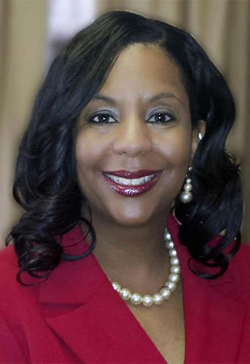
Asm. Verlina Reynolds-Jackson
Sponsored bills
Maddy summaryThis bill establishes the Statewide Skills Academy Network to improve coordination among New Jersey's county colleges, vocational schools, and union training providers. It appropriates $1 million to fund regional skills academies that develop short-term, high-demand training programs, with priority for evening and weekend classes. The network will identify workforce skills gaps, share best practices, and support the creation of accessible training sites for facilities, curriculum, equipment, and staffing. This directly affects community colleges, vocational institutions, and union training programs across the state, aiming to better align training with employer needs and improve job placement outcomes.
Maddy summaryThis bill clarifies rules for exemptions from municipal rent control in New Jersey. It specifies that only the original developer who built new rental units with initial mortgage financing can claim an exemption, and only if filed before construction completion. The exemption period is limited to the initial mortgage term, and subsequent owners cannot restart the exemption if the original filing wasn't made. This directly affects developers, landlords of new multi-dwelling properties, and municipalities enforcing rent control ordinances.
Maddy summaryThis bill creates a new State Board of Midwives within New Jersey's Division of Consumer Affairs to regulate midwifery practice, replacing the current oversight by the State Board of Medical Examiners. It directly affects midwives (including certified midwives, certified nurse midwives, and certified professional midwives) and the patients they serve, particularly in maternal and infant care. Key provisions establish the board's 11-member structure (with midwives, physicians, and public members), define "midwifery services" to include pregnancy, birth, postpartum care, and reproductive health, and update outdated regulations dating to the 19th century. The bill aims to modernize licensing to improve maternal and infant health outcomes, especially in vulnerable communities, by creating an independent regulatory framework.
Maddy summaryThis is a symbolic resolution (ACR 116) passed by the New Jersey legislature to recognize Prince Hall's historical contributions. It formally honors Prince Hall, a free Black man in colonial Boston (1735-1807), as a Revolutionary Era activist and founder of "Prince Hall Freemasonry." The resolution details how he co-founded African Lodge #1 in 1775 after being denied entry to an all-white Masonic lodge, becoming its leader and establishing the oldest continuously active African American-founded organization in the U.S. The resolution has no policy impact; it simply acknowledges his legacy through a ceremonial declaration and directs copies to New Jersey's Prince Hall Grand Lodge.
Maddy summaryThis bill prohibits New Jersey state and local governments (including counties and municipalities) from using public funds or property to support immigrant detention facilities. Specifically, it bans state/local spending on constructing, renovating, or leasing public property for detention, paying private facility costs, or covering detention expenses for privately-owned facilities. The law allows public health and safety resources for detained individuals but does not affect existing detention operations. It directly affects state/local budgets and property decisions related to immigration enforcement. The bill takes effect immediately upon enactment.
Maddy summaryThis bill upgrades penalties for repeat offenses of buying sex (prostitution as a patron) in New Jersey. A first offense remains a disorderly persons offense, but a second or third offense becomes a fourth-degree crime, and a fourth or subsequent offense becomes a third-degree crime. The bill also requires that fines collected from these offenses be directed to the "Human Trafficking Survivor's Assistance Fund" to support survivors of human trafficking. It applies specifically to individuals who repeatedly engage in purchasing sexual services.
Maddy summaryThis bill allocates $3 million annually from cannabis tax revenue (Social Equity Excise Fee) to fund Freedom Schools in New Jersey. The funds are directed to the Department of State for direct support of these schools, subject to budget approval. It specifically affects Freedom Schools - public or community-based educational programs - by providing dedicated state funding through an existing tax revenue stream, without altering eligibility or program requirements. The measure takes immediate effect upon enactment.
Maddy summaryThis bill requires all New Jersey state agencies, counties, municipalities, school districts, and other local government entities to purchase at least 5% of their goods and services from the Central Nonprofit Agency (CNA), which supports rehabilitation facilities. It grants the CNA a "right of first refusal" for any goods/services typically bought through cooperative purchasing catalogs, provided they can match prices within 15% of fair market value. The bill also mandates that the Division of Purchase and Property create training protocols for all purchasing agents to ensure awareness of the CNA program, with annual reporting on compliance by all affected entities. These requirements apply to all state and local government bodies authorized to make purchases.
Maddy summaryThis bill requires drivers to stop at least 25 feet from school buses loading/unloading children or individuals with developmental disabilities on undivided highways, and to slow to 10 mph on divided highways. It establishes that violations captured by school bus monitoring systems (like cameras) will result in a $300 civil penalty instead of criminal charges or license points. The law directly affects drivers near school buses, school bus operators, and enforcement agencies. Key provisions include standardized stopping distances, speed limits for divided highways, and shifting penalties for monitored violations to a civil fine system. This changes enforcement by prioritizing evidence from monitoring systems to reduce penalties for documented violations.