

Maddy summaryThis bill requires all paid and part-paid New Jersey fire departments to create, review annually, and update a written policy addressing pregnancy-related workplace issues within 180 days of the bill's effective date. The policy must cover disclosure of pregnancy, medical restrictions from a physician, availability of modified duties or non-hazardous assignments, information on unsafe tasks during pregnancy, leave usage, and continued benefits. Departments must follow guidelines from the National Fire Protection Association or similar professional standards when developing this policy. The bill directly affects pregnant firefighters in these departments by mandating clear, written workplace protections and support.
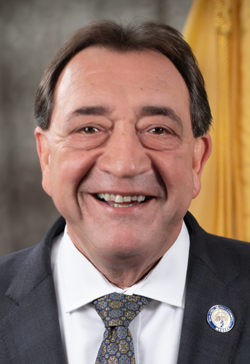
Asm. Anthony Verrelli
Sponsored bills
Maddy summaryThis bill requires New Jersey's Department of Human Services (DHS) to establish an Alzheimer's disease public awareness and education program. The program must develop public campaigns about symptoms, early detection, and safety; create accessible educational materials for health providers; and train emergency responders, judicial staff, and social services personnel. DHS must consult with the Alzheimer's Association and make materials available online in English and Spanish. The initiative is subject to available funding and aims to improve community understanding and response to Alzheimer's disease.
Maddy summaryThis New Jersey bill (S 1067) requires the state's Department of Human Services to conduct a landscape analysis of mental health services accessible to deaf and hard of hearing residents. It mandates that mental health services be provided in a client's primary communication method (like sign language or speech), delivered by professionals certified in that method and trained in culturally appropriate care for the deaf community. The bill also requires the creation of a resource guide listing providers meeting these standards and defines key terms like "culturally affirmative mental health services." It directly affects deaf and hard of hearing individuals seeking mental health care across New Jersey.
Maddy summaryThis bill changes how New Jersey workers' compensation benefits calculate the value of employer-provided board and lodging. Instead of automatically counting it at $25 per week, it requires using current market value unless the employee agreed to a different amount at hiring. However, if a worker continues to receive board or lodging during total temporary disability, its value will not be included in compensation calculations. The change affects workers' compensation claimants whose employers provide housing or meals as part of their wages.
Maddy summaryThis bill establishes new safety requirements for railroad operations in New Jersey. It requires at least two crew members on dangerous hazardous trains (transporting large quantities of hazardous materials) with specific exceptions, prohibits trains longer than 8,500 feet on main and branch lines, and mandates railroad companies to submit federally required bridge inspection reports to state officials. The bill also requires railroad companies to install and maintain wayside detector systems to identify defects, with oversight by the Board of Public Utilities and Department of Transportation. Violations of the train length limit could result in civil penalties of $500-$1,000 per foot exceeding the limit, up to $250,000 for gross negligence or repeated violations.
Maddy summaryThe Protecting Against Forever Chemicals Act prohibits the sale of certain products containing intentionally added PFAS (perfluoroalkyl and polyfluoroalkyl substances), including cosmetics, carpets, fabric treatments, and food packaging, beginning two years after the act's effective date. Manufacturers must notify the Department of Environmental Protection about PFAS in their products within one year of the act's effective date and pay a $1,000 fee per notification. The act requires cookware containing PFAS in contact with food to display a clear label stating "This product contains PFAS" in both English and Spanish. The Department of Environmental Protection must establish a source reduction program and conduct PFAS research, funded by a $5 million appropriation from the General Fund. The bill allows products with trace amounts of PFAS from unavoidable impurities to continue being sold, focusing on prohibiting the intentional addition of PFAS rather than trace amounts.
Maddy summaryThis bill (S 4400) amends New Jersey's child labor law to allow minors aged 14-15 employed as professional athletes by national sports associations, leagues, or teams to work beyond 11:30 p.m. under specific conditions. It permits work after 11:30 p.m. only if it continues a workday that began before 11:30 p.m., such as for return travel or game delays, and requires a written parental or guardian permission specifying the hours. The change directly affects young athletes in professional sports organizations who face scheduling conflicts requiring late work. It does not alter existing work hour limits for other occupations or age groups.
Maddy summaryThis bill requires licensing for owners and operators of boarding houses in New Jersey, including cooperative sober living residences (which serve individuals recovering from addiction). It clarifies definitions - such as "boarding house" (excluding hotels/motels) and "cooperative sober living residence" - and mandates separate licensing categories for owners and operators, with fees ranging from $150-$600. Operators must obtain a license from the Department of Community Affairs (or a participating municipality), and violations carry civil penalties up to $25,000 per building. The law directly affects boarding house operators, sober living residences, and the Department of Community Affairs, which administers the licensing process.
Maddy summaryThis bill clarifies New Jersey's Department of Human Services (DHS) authority to regulate sober living homes and halfway houses as residential substance abuse aftercare facilities. It requires background checks for facility administrators, representative payees (who receive government benefits on behalf of residents), and property owners, disqualifying those with certain criminal convictions. The bill mandates a one-week notice period before removing a resident (except in cases of immediate safety threats), requires biweekly inspections during investigations, and establishes a public registry tracking available openings in these facilities by county. These provisions aim to enhance safety and transparency for residents of substance abuse treatment facilities.
Maddy summaryThis bill directs New Jersey's Attorney General to establish a program enabling anonymous reporting of potential threats to school safety. The program would provide accessible methods - including a telephone tip line staffed during reasonable hours and a mobile app - for students, parents, school staff, and community members to report unsafe or threatening activities without revealing their identity. Reports would be promptly forwarded to law enforcement or school officials, and the program must include training for schools and law enforcement on handling such reports. The Attorney General would also annually report on the program's usage, including the number of reports, times of reporting, and outcomes.