

Maddy summaryThis New Jersey bill prohibits non-compete clauses for most workers (non-senior executives, defined as those earning under $151,164 annually), banning both new clauses and the enforcement of existing ones. Employers must notify affected workers in writing within 30 business days of the bill’s effective date that non-compete clauses cannot be enforced. For senior executives (earning $151,164+ annually), the bill only prohibits new non-compete clauses and enforcement of clauses entered after the effective date, without affecting existing clauses for this group. The bill does not change other employment terms or benefits.
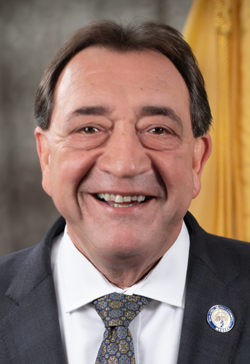
Asm. Anthony Verrelli
Sponsored bills
Maddy summaryThe Safe Communities Act requires New Jersey's Attorney General to develop model policies ensuring safety and accessibility at key community locations like schools, hospitals, places of worship, shelters, and courthouses. These policies must be adopted by relevant state agencies (including education, health, and corrections departments) within 180 days of the law's enactment, with institutions required to post them visibly. The law aims to prevent residents from avoiding essential services or gatherings due to safety concerns, focusing on maintaining open access to public services and religious spaces. It applies directly to all covered facilities and their visitors across New Jersey.
Maddy summaryThis bill codifies New Jersey's existing Attorney General directive to prevent state and local law enforcement from enforcing federal immigration laws. It prohibits police from stopping, questioning, or detaining people solely based on immigration status, asking about immigration status unless relevant to a crime investigation, or sharing personal information (like addresses or social security numbers) with federal immigration authorities. Exceptions apply only for serious crimes (e.g., violent offenses or recent convictions) or when required by law for criminal investigations. The law directly affects all New Jersey state, county, and municipal law enforcement agencies and officers, aiming to build trust between police and immigrant communities by clarifying that immigration enforcement is a federal responsibility.
Maddy summaryBill A6201 removes a requirement from New Jersey's Fiscal Year 2026 state budget that mandated the State Health Benefits Program (SHBP) to achieve $100 million in cost savings during the first six months of 2026. The removed language previously required the State and public employees' representatives on the SHBP Design Committee (SHBPDC) to submit cost-saving proposals by July 31, 2025, for actuarial review, with voting deadlines by September 30, 2025, and fallback steps like mediation if targets weren't met. By eliminating this requirement, the bill removes the $100 million savings target and associated deadlines for the SHBP budget process. This directly affects the SHBP's administration, removing obligations tied to cost-saving negotiations and verifications.
Maddy summaryThis bill requires the New Jersey Department of Transportation to maintain specific roadways surrounding the State Capitol complex in Trenton. It mandates upkeep - including road paving and snow plowing - on four defined segments: West State Street (from Calhoun to South Warren), West Lafayette Street (from Barrack to South Warren), Barrack Street (from West State to Memorial Drive), and Memorial Drive. The department may collaborate with local agencies or municipalities responsible for adjacent road sections to fulfill this requirement. The bill takes effect immediately upon enactment.
Maddy summaryS 1577 requires the New Jersey Department of Transportation (DOT) to maintain specific roadways surrounding the state capitol complex, including West State Street, West Lafayette Street, Barrack Street, and Memorial Drive. The bill mandates routine maintenance such as road paving and snow plowing for these roads, and allows the DOT to collaborate with other agencies or local governments for assistance. This bill directly affects the DOT's responsibilities and ensures upkeep of these public roads for drivers, pedestrians, and visitors to the capitol area.
Maddy summaryThis bill would establish a legal framework for supervised psilocybin therapy in New Jersey for adults 21+ with behavioral health conditions. It creates licensed psilocybin service centers where trained facilitators provide guided sessions, requiring prior medical referrals and mandatory preparation/integration therapy sessions with mental health providers. The bill defines key terms like "administration session" and "adverse event," and mandates a regulatory system including a Psilocybin Advisory Board to oversee safety, prevent diversion, and ensure accessibility. It specifically targets conditions like depression, anxiety, and treatment-resistant depression, with provisions to develop a statewide strategic plan for long-term service delivery. The bill does not legalize recreational use but focuses on regulated medical access under strict supervision.
Maddy summaryThis bill prohibits the sale of cosmetics, carpets, and fabric treatments containing intentionally added PFAS (forever chemicals) starting two years after enactment. It also requires cookware manufacturers to notify consumers if their products contain PFAS. The law directly affects manufacturers of these consumer goods and aims to reduce human exposure to PFAS, which accumulate in the environment and are linked to health issues like cancer. The bill mandates state-funded research and educational programs about PFAS to protect public health.
Maddy summaryThis bill requires New Jersey's Department of Labor and Workforce Development (DOLWD) to create and annually update a public list of industry-valued credentials - such as recognized certificates or certifications employers seek. The list will be based on state labor market data and employer feedback, then made available online as both a webpage and a downloadable file. It directly affects DOLWD, mandating its role in compiling and maintaining this resource. The goal is to help workers identify credentials that lead to better wages, career advancement, and job security by aligning training with employer needs.
Maddy summaryThis bill allows the New Jersey Suicide Hopeline to make follow-up calls to minors aged 16 or older who are identified as being at high risk of suicide without requiring parental consent. It amends state law to make a minor's consent for these follow-up calls valid and binding as if they were an adult, and confidential - meaning operators do not need to report the calls to parents or guardians. Currently, national guidelines for suicide hotlines require parental permission for such follow-ups, but this bill removes that barrier for minors 16+ seeking mental health support. The policy directly affects at-risk youth aged 16 and older who contact the Suicide Hopeline for crisis counseling.