

Maddy summaryThis bill requires newly built clubhouses in age-restricted housing developments (for seniors) to include an emergency power generator, shower facilities, and a kitchen. These must be available to residents during emergencies, such as power outages. The requirement applies only to new clubhouses, not existing ones that already meet the standards, and if multiple clubhouses exist, only one needs to comply. The bill defines "age-restricted development" as housing complying with federal senior housing rules and "clubhouse" as a 1,000+ sq ft space for social activities with plumbing. It takes effect immediately.
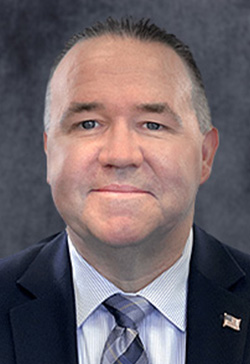
Asm. Alex Sauickie
Sponsored bills
Maddy summaryThis bill would amend New Jersey's homestead property tax reimbursement program to include payments in lieu of property taxes (PILOT) as eligible payments for the program. Currently, only property owners who pay actual property taxes qualify for the program, which helps seniors and disabled residents with property tax burdens. The bill would extend eligibility to large property owners like hospitals, universities, and other tax-exempt entities that pay PILOTs instead of traditional property taxes. This change would directly affect these entities by making them eligible for tax relief they currently cannot access. The policy change would make the program more inclusive for certain property owners seeking tax relief.
Maddy summaryThis bill provides a 25% tax credit against New Jersey's Corporation Business Tax for businesses that construct new warehouses or retrofit existing warehouses to meet specific green building standards. To qualify, warehouses must achieve at least a silver rating under the LEED Green Building Rating System, a two-globe rating under the Green Globes Program, or a comparable national standard. Businesses must obtain an eligibility certificate from the Department of Community Affairs, including certification from a licensed architect or engineer confirming the warehouse meets the green standards. The credit cannot exceed 50% of a business's annual tax liability and can be carried forward for up to seven years if not fully utilized in the current tax year.
Maddy summaryThis bill provides New Jersey businesses with a tax credit for hiring workers who lost jobs due to automation. Companies with headquarters in New Jersey can claim a credit equal to 10% of wages paid to eligible employees (capped at $2,500 per employee per year), provided they retain those workers for at least seven months. To qualify, the employee must have previously lost their job at another company due to automation, defined as technology that replaces human labor without requiring continuous human input. The credit applies to both corporation business tax and gross income tax, and cannot reduce tax liability below zero.
Maddy summaryThis bill amends the lists of environmental infrastructure projects approved for funding under New Jersey's FY 2024 environmental infrastructure program. It modifies the eligibility list to include new projects, remove some, adjust project priorities, and change loan amounts, increasing the total funding authorization to up to $3.08 billion for 137 clean water projects and 70 drinking water projects. The bill explicitly authorizes using the Pinelands Infrastructure Trust Fund for drinking water projects, requiring them to follow wastewater project financing regulations until specific drinking water regulations are established. This affects municipalities, water authorities, and other project sponsors receiving environmental infrastructure funding through the Department of Environmental Protection.
Maddy summaryThis bill (A1772) allows New Jersey municipalities to create a "dredging control reserve fund" using unspent annual dredging budget funds. The fund can later finance dredging projects like maintaining navigation channels, managing dredged material (e.g., sand, silt), or supporting maritime/tourism industries. Unspent funds are automatically added to the reserve, and any money spent from it must be reimbursed back into the fund. The Local Finance Board may establish rules for administering the reserve.
Maddy summaryThis bill permits public utilities, cable television companies, and telecommunications service providers in New Jersey to use drones (unmanned aircraft systems) to inspect damage to their own critical infrastructure. It requires the Office of Homeland Security to create rules allowing these entities to operate drones for assessing, inspecting, or maintaining infrastructure like power lines, cable networks, or cell towers after damage occurs. The entities must follow federal aviation regulations, and may contract third parties to operate the drones under these rules. The goal is to speed up damage assessment and service restoration for infrastructure vital to public safety and the state's economy.
Maddy summaryThis bill would require New Jersey's Department of Labor and Workforce Development (DOLWD) to process unemployment benefit claims within two weeks of filing, shortening the current three-week deadline. It mandates DOLWD to establish a dedicated telephone hotline available weekdays from 8:30 a.m. to 5:30 p.m. with staffing to ensure callers wait no more than 30 minutes on average. The hotline would provide assistance with general unemployment program inquiries, claim filing instructions, and troubleshooting eligibility issues. DOLWD would need to hire additional staff as necessary to meet these new processing requirements, directly affecting unemployed New Jersey residents filing for benefits and employers who may be charged for benefits.
Maddy summaryThis bill would provide additional state funding to New Jersey school districts that serve a growing number of students attending private schools. To qualify, a district must show a more than 100% increase in eligible students over five years, a more than 20% cost jump for private school transportation in one year, and at least 20% of its transportation budget allocated to these students in 2023-2024. Districts meeting all three criteria would receive 100% state reimbursement for the transportation costs of these students, instead of standard aid levels. The policy aims to help districts facing unusual demographic shifts that strain their transportation budgets.
Maddy summaryThis bill requires New Jersey's Department of Military and Veterans Affairs (DMVA) to establish a new veterans' memorial home in either Ocean or Monmouth County, named the Ronald S. Dancer Veterans Memorial Home. The facility must be located within one mile of an acute care hospital (defined as a state-operated hospital providing services like surgery, cardiac care, and rehabilitation) and will provide transportation to hospital services as needed. The DMVA and Department of the Treasury must appropriate annual funds from the General Fund for property purchase and improvements, with the facility required to be fully operational within five years of the bill's effective date. This new facility will join the existing veterans' homes in Menlo Park, Vineland, and Paramus, and will require the Adjutant General and State Treasurer to submit progress reports to the Legislature every six months.