

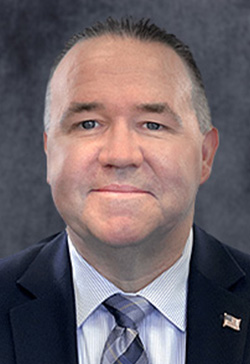
Photo of Alex Sauickie
R New Jersey General Assembly · District 12

Asm. Alex Sauickie

Compare
Total votes
2,171
all sessions
Attendance
93%
132 missed
Among the lowest in the chamber
With party
97%
of cast votes
Near the chamber average
Bipartisan score
2%
crosses aisle rarely
Higher than 75% of chamber peers
Sponsored
927
bills & resolutions
Higher than 91% of chamber peers
Committees
4
assignments
927 bills and resolutions

Sponsored bills

Total
927
Primary
690
Co-sponsor
237
This page
927
matching current filters
Primary A 4165
In committee · New Jersey General Assembly · Lead sponsor
Clarifies sales tax collection responsibilities of horse boarding businesses in New Jersey.

Maddy summaryThis bill exempts horse boarding services from New Jersey's sales tax. It specifically clarifies that charges for boarding horses in barns or stables, as well as maintenance and care services for boarded horses, are not subject to the state's 6.625% sales tax. The bill amends the tax code to exclude these services from the definition of "space for storage" and related taxable services. This change affects horse boarding businesses across New Jersey that previously faced unclear tax requirements. The bill aims to eliminate confusion and provide more equitable treatment for these businesses compared to other livestock care services.

In committee Apr 8, 2024 0 co-sponsors
Primary AJR 163
In committee · New Jersey General Assembly · Lead sponsor
Designates March 15 of each year as Jewish War Veterans Day in NJ.

Maddy summaryAJR 163 designates March 15 of each year as "Jewish War Veterans Day" in New Jersey. The resolution recognizes Jewish American military service, referencing the historical founding of the Jewish War Veterans of the USA organization on March 15, 1896, and the contributions of Jewish veterans throughout U.S. military history. It requires the Governor to issue an annual proclamation encouraging New Jersey residents and organizations to observe the day with appropriate events. This is a commemorative resolution with no new funding or policy requirements.

In committee Mar 18, 2024 0 co-sponsors
Co-sponsor AR 107
Passed · New Jersey General Assembly · Co-sponsor
Urges U.S. Department of Veterans Affairs to utilize and fund existing paratransit transportation networks to transport disabled veterans to and from its New Jersey medical centers.

Maddy summaryAssembly Resolution 107 urges the U.S. Department of Veterans Affairs (VA) to redirect funding away from current transportation providers for disabled veterans and instead support existing county paratransit services and non-profit organizations (like ARC of New Jersey and Easterseals) that already provide transportation for seniors and people with disabilities. It specifically addresses disabled veterans in New Jersey - approximately 53,000 with service-connected disabilities - who use VA medical centers in East Orange and Lyons, where current transportation has been reported as inadequate (leaving veterans stranded for hours or overnight). The resolution proposes that VA funding enable these established networks to expand their services to cover veterans’ medical travel needs, rather than relying on underfunded or inconsistent VA or volunteer-provided transport. This is a non-binding request to the VA, not a legislative mandate.

Passed Mar 18, 2024 1 co-sponsor
Co-sponsor A 3041
died · New Jersey General Assembly · Co-sponsor
Establishes sales and events privileges for certain alcoholic beverage manufacturers.

Maddy summaryThis bill would expand privileges for craft alcoholic beverage manufacturers (including those with limited brewery, cidery, meadery, and craft distillery licenses) by allowing them to hold up to 25 off-premises special events annually, unlimited on-premises special events and private parties, and serve alcohol tableside with certified staff. It removes the current requirement that these manufacturers must offer tours to serve alcohol on-premises, and increases the annual production limit for restricted brewery licenses from 10,000 to 300,000 barrels. The bill also permits these manufacturers to offer limited food items, coordinate with food vendors (with restrictions), and show televised events without special permits. Additionally, it allows for outdoor consumption with approved tap systems and provides flexibility for promotional discounts.

died Mar 18, 2024 1 co-sponsor
Primary A 4052
In committee · New Jersey General Assembly · Lead sponsor
"Electricity Bill Transparency Act"; requires electric utilities to separately list amounts of certain charges.

Maddy summaryThe Electricity Bill Transparency Act requires New Jersey electric utilities to separately list three specific charges on customer bills: the sales tax imposed by the Sales and Use Tax Act, the societal benefits charge, and clean energy charges. Utilities must also itemize how much of the societal benefits charge funds each specific program, such as energy efficiency initiatives or low-income assistance. This bill affects all residential and commercial electricity customers in New Jersey by making non-utility related charges more transparent on their bills. The policy change aims to help customers understand the breakdown of their electricity costs beyond the base service charge. This requirement applies to all electric utilities providing service in New Jersey.

In committee Mar 11, 2024 0 co-sponsors
Primary A 4041
In committee · New Jersey General Assembly · Lead sponsor
Establishes program for acquisition, by local government units and nonprofit organizations, of development easements on privately-owned woodlands.

Maddy summaryThis bill establishes a program allowing local governments and qualified nonprofit organizations to acquire development easements on privately-owned woodlands that support agricultural production. To qualify, woodlands must be at least five acres, managed with approved stewardship plans, supportive of existing farmland, and located in designated agricultural areas. The program would use funds from the Preserve New Jersey Farmland Preservation Fund to provide grants covering up to 80% of acquisition costs for local governments and 50% for nonprofits, with funding prioritized for farmland preservation first, farmland with appurtenant woodlands second, and woodlands supportive of farmland third. The easements would permanently restrict development while allowing landowners to maintain private ownership and property tax obligations.

In committee Mar 7, 2024 0 co-sponsors
Co-sponsor A 4040
In committee · New Jersey General Assembly · Co-sponsor
Requires long-term care facilities to develop person-centered care plans for residents and establishes right to certain forms of visitation for long-term care residents.

Maddy summaryThis bill requires New Jersey long-term care facilities (like nursing homes and assisted living residences) to let residents or their legal representatives designate up to two "essential caregivers" who can visit during emergencies, outbreaks, or pandemics. Facilities must document these designations in residents' care plans, ensure visitation times match normal in-person visitation rights, and post clear policies online and in writing. Essential caregivers - defined as anyone a resident chooses (e.g., family, friends, spiritual advisors) - cannot face stricter infection protocols than facility staff. The Department of Health will enforce compliance, aiming to prevent the isolation seen during the pandemic.

In committee Mar 7, 2024 1 co-sponsor
Primary A 4039
In committee · New Jersey General Assembly · Lead sponsor
Provides gross income tax deduction for senior citizens for certain medical expenses for in-home care or care in assisted living and long-term care facilities and funeral expenses.

Maddy summaryThis New Jersey bill (A4039) creates a tax deduction for seniors (62+), blind individuals, or those with disabilities. It allows eligible taxpayers to deduct up to $50,000 annually for unreimbursed medical expenses related to in-home care, assisted living, or long-term care facilities, as well as funeral costs for spouses or disabled dependents who were also seniors/blind/disabled at death. The deduction covers services like diagnostic, therapeutic, and personal care required by a licensed healthcare provider under a care plan. It excludes expenses already claimed under existing medical deduction rules and requires the expenses to be unreimbursed. The bill would take effect immediately upon enactment.

In committee Mar 7, 2024 0 co-sponsors
Primary A 4013
In committee · New Jersey General Assembly · Lead sponsor
Upgrades assault on victims who are elderly or disabled.

Maddy summaryThis bill amends New Jersey's assault law to specifically address assaults on elderly or disabled individuals. It upgrades the offense to a third-degree crime when bodily injury occurs to a person with a disability (defined as someone with a pre-existing medically determinable impairment that substantially limits physical or mental resistance) or a senior citizen aged 60 or older, and to a second-degree crime for significant or serious bodily injury. The law mandates a minimum three-year prison sentence with no parole eligibility during that term for convictions under this provision. The bill was prompted by specific incidents including the assault of a disabled man in Trenton and attacks on elderly victims in Ewing and Lawrence. This change directly affects perpetrators of assaults against vulnerable populations who meet the defined disability or age criteria.

In committee Mar 7, 2024 0 co-sponsors
Primary A 3925
In committee · New Jersey General Assembly · Lead sponsor
Expands eligibility for pension and retirement income exclusion to taxpayers with incomes exceeding $150,000, and increases amount of exclusion that qualifying taxpayers may claim.

Maddy summaryThis bill expands New Jersey's pension and retirement income tax exclusion to include taxpayers with incomes above $150,000, while increasing the maximum exclusion amount. Qualifying taxpayers aged 62+ or disabled receiving retirement income can now exclude up to $150,000 of that income plus 50% of amounts between $150,000 and $300,000 annually. Currently, those earning over $150,000 received reduced exclusions (e.g., 25% for married couples), but this bill eliminates that income-based reduction. The change applies to all eligible retirees regardless of income level, as long as total retirement income does not exceed $300,000 per year.

In committee Mar 4, 2024 0 co-sponsors
Showing 701 to 710 of 927 bills
Previous 1 … 70 71 72 … 93 Next