

Maddy summaryThis bill (A3532) creates a New Jersey gross income tax credit for active, unpaid members of volunteer fire departments, ambulance squads, or rescue organizations. It allows eligible members to claim a credit based on miles driven using their personal vehicle during emergency duty, calculated at the IRS business mileage rate, capped at $500 per individual or $1,000 for joint filers. To qualify, members must meet specific service requirements (e.g., 60% attendance at calls/meetings for non-duty-hour volunteers, or 400+ duty hours for those with duty-hour responsibilities) and be in good standing with their organization. The credit is refundable, meaning it can be paid even if the member owes no income tax, and organizations must certify qualifying members annually to the tax division.
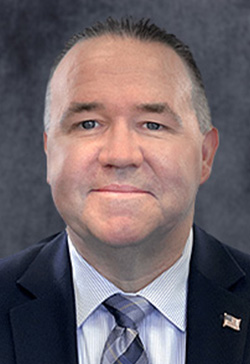
Asm. Alex Sauickie
Sponsored bills
Maddy summaryThis bill creates a certification process for non-physicians (such as licensed estheticians or technicians) to legally perform laser tattoo removal in New Jersey. It requires the State Board of Medical Examiners to establish specific standards, including qualification criteria, testing procedures, and continuing education requirements. Non-certified individuals would be prohibited from offering these services, and certification would need renewal every two years. The bill directly affects non-physician practitioners seeking to provide tattoo removal services and aims to standardize safety and training under state oversight.
Maddy summaryThis bill adds $500,000 in state funding from the General Fund to the Jersey Fresh program for fiscal year 2024. The program promotes locally grown New Jersey produce through marketing and advertising campaigns, directly benefiting state farmers and consumers. The funding increase supplements the existing $100,000 allocated for Jersey Fresh under the FY2024 appropriations act. This change aims to expand the program's reach while potentially freeing up federal grant funds for other agricultural support.
Maddy summaryThis New Jersey bill (A4407) increases daily pay for election workers from $300 to $400 per election (primary, general, or special). It also raises additional compensation for workers managing signature copy registers: from $12.50 to $20 for one worker, or $6.25 to $10 each for two workers sharing the duty. The state will increase its reimbursement to counties from $225 to $325 per election worker, meaning counties still cover $75 of the $400 daily rate. The bill directly affects election workers and county governments across all New Jersey counties.
Maddy summaryThis bill requires new affordable housing developments (called "inclusionary developments") with 10 or more units or four or more stories to meet LEED Silver or equivalent green building standards. Developers must also submit impact studies on traffic, schools, stormwater, and carbon emissions (if clearing over one acre) to local municipalities before construction begins. The law applies to new projects only, exempting those with applications submitted before the law takes effect. It directs the Department of Community Affairs to create implementing rules within eight months of enactment.
Maddy summaryThis bill requires the State Capitol Joint Management Commission to create gallery space on State House grounds for displaying art created by New Jersey residents. Each of New Jersey's 21 counties will have their artwork displayed for a minimum of 60 days, with no overlapping displays between counties. The Commission sets standards for size and quantity, while the Director of Public Information selects specific artworks based on those standards. The display rotation must be fair and equitable across all counties.
Maddy summaryThis bill establishes a $44.7 million Stabilized School Budget Aid Grant Program to help eligible New Jersey school districts affected by state aid cuts in the 2024-2025 school year. It provides grants covering two-thirds of each district's state aid reduction (capped at 9.9% of their prior year's tax levy) and allows eligible districts to temporarily exceed normal tax increase limits to offset these cuts. Districts receiving aid must maintain staff levels from the previous year unless enrollment declines, requiring commissioner approval for reductions. The program specifically excludes SDA districts (special needs districts) from the tax levy exception but does not affect their existing tax authority.
Maddy summaryThis bill creates a $1.5 million grant program for New Jersey's four-year public colleges to develop or expand wine and grape science programs (covering grape growing, winemaking, and business operations). Three public colleges - selected to represent each of the state's regions - will receive up to $500,000 each to establish these programs, requiring applications detailing student support plans and industry partnerships. Under the bill, colleges may enroll students under 21 in these programs but cannot allow them to participate in alcohol-related coursework or events. The program requires a final report to the governor and legislature on implementation and outcomes before concluding.
Maddy summaryThis bill (A 4356, "Zero-Based Budget Act") requires New Jersey's State Treasurer to develop a zero-based budgeting process for the Governor's annual budget. It mandates that all state spending agencies (including departments, boards, and commissions) justify every funding request from scratch each year - detailing goals, cost breakdowns at current and minimum service levels, stakeholder impacts, and program prioritization - rather than basing requests on prior year spending. The process, to be implemented for fiscal years starting July 2020, aims to ensure every dollar allocated is evaluated for efficiency and necessity. This directly affects all state agencies submitting budget requests under existing law (P.L.1944, c.112).
Maddy summaryThis bill creates a sexual assault prevention and response program and coordinator within New Jersey's Department of Military and Veterans Affairs (DMVA). It directly affects service members (including National Guard members) and veterans who experience sexual assault or harassment, allowing victims to file confidential complaints regardless of whether the assault occurred on or off duty. Key provisions include appointing a coordinator to provide victim advocacy, refer cases to the Attorney General for investigation, assist with protective orders (state and military), and enable participation in the federal "Catch a Serial Offender Program." The program requires annual reports to the Governor and Legislature detailing prevention efforts, investigation statistics, and improvements needed in training and response.