

Maddy summaryThis bill (A5342) requires New Jersey's Office of Homelessness Prevention to partner with county agencies or nonprofits in every county to issue state-recognized identification and assist with obtaining birth certificates for people experiencing homelessness. It directly affects homeless individuals across New Jersey who lack essential identification needed for housing, employment, and services. The key mechanism is a $2 million state appropriation, distributed based on each county's homeless population, to fund these partnerships and enable direct access to birth certificates through the State Office of Vital Statistics. This creates a concrete pathway for homeless residents to secure critical documents they often cannot access otherwise.
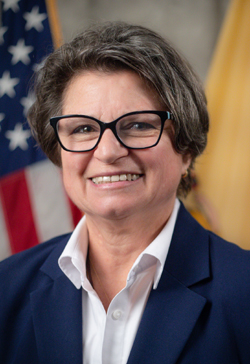
Asm. Luanne Peterpaul
Sponsored bills
Maddy summaryThis bill requires all health insurance plans in New Jersey - covering hospital services, medical care, health maintenance organizations, and state/school employee health programs - to cover diagnosis and treatment for PANDAS (Pediatric Autoimmune Neuropsychiatric Disorders Associated with Streptococcal Infections) and PANS (Pediatric Acute-onset Neuropsychiatric Syndrome). It mandates coverage for specific treatments including antibiotics, behavioral therapies, immunomodulating medicines, plasma exchange, and intravenous immunoglobulin therapy, as prescribed by a physician. The coverage must be provided at the same level as for other medical conditions, without additional cost barriers. This directly affects children diagnosed with PANDAS or PANS and their insurance providers across all covered plans.
Maddy summaryThis bill establishes a 17-member Task Force on Aging within New Jersey's Department of Health. The task force will study state resources and services for older residents, review policies affecting seniors, examine support for family caregivers, and evaluate long-term care quality. It must issue an initial report with recommendations to the Governor and Legislature within 18 months, followed by biennial updates. The task force includes government officials, aging advocacy representatives, senior citizens (including those in care facilities), and healthcare professionals specializing in geriatrics. Its work aims to improve services supporting aging residents' dignity and independence, without creating new laws or funding.
Maddy summaryThis New Jersey bill increases income and resource thresholds for Medicaid eligibility, primarily affecting older adults, disabled individuals, and those needing long-term care services. It raises the income limit for the Aged, Blind, and Disabled (ABD) program from 100% to 138% of the federal poverty level (from $15,060 to $20,783 annually for an individual). The bill also increases resource limits from current levels ($4,000 for ABD and Medically Needy, $2,000 for MLTSS, $9,090 for Medicare Savings Programs) to $40,000 for individuals and $60,000 for couples. These changes will expand Medicaid access for more New Jersey residents who qualify under these eligibility groups.
Maddy summaryThis bill requires NJ FamilyCare (New Jersey's Medicaid program) to reimburse licensed clinical pharmacists for comprehensive medication management (CMM) services provided to medically complex pediatric patients (children with complex medical conditions). CMM services include reviewing all medications (prescription, over-the-counter, vitamins, and supplements), developing personalized medication plans, monitoring adherence, and providing follow-up consultations to ensure safety and effectiveness. The bill establishes that pharmacists must have completed a clinical residency to qualify, removes the requirement for pharmacists to have a written agreement with a physician, and mandates the state to create value-based reimbursement contracts and a quality assurance program to monitor service outcomes.
Maddy summaryThis bill establishes a voluntary registry for New Jersey residents aged 65 and older to improve outreach and emergency support. Seniors can register by providing basic contact details (name, address, phone, email, income level), which will be used for wellness checks during emergencies, sharing information about services like NJ SAVE and Area Agencies on Aging, and compiling statewide demographic data. The registry is confidential - personal information cannot be publicly disclosed - and seniors may request removal after a 21-day waiting period, after which all records are destroyed. The state will also launch a multilingual (English/Spanish) public awareness campaign targeting seniors aged 64+ to promote the registry.
Maddy summaryThis bill requires most health insurance plans in New Jersey to cover scalp cooling systems used during cancer chemotherapy treatment to prevent or reduce hair loss. It applies to hospital service corporations, medical service corporations, health maintenance organizations, individual and group health insurance policies, and state-sponsored health benefit programs. The law also mandates that physicians inform patients about scalp cooling therapy options before starting chemotherapy and document this discussion in their medical records. These changes directly affect cancer patients seeking hair loss prevention, insurers offering chemotherapy coverage, and healthcare providers administering chemo.
Maddy summaryThis bill (A-5086) changes penalties for underage gambling in New Jersey from criminal offenses to civil fines. It applies directly to: (1) minors who gamble at casinos/simulcasting facilities (under age 21), (2) casino employees/licensees who allow underage gambling, and (3) adults who permit minors under their care to gamble. The key provisions set fines at up to $500 for a first offense, $1,000 for a second, and $2,000 for third or subsequent offenses. All collected fines will fund gambling addiction prevention, education, and treatment programs through the Department of Human Services, specifically supporting initiatives like those run by the Council on Compulsive Gambling of New Jersey.
Maddy summaryThis bill (A3879) requires all emergency departments in New Jersey general hospitals and licensed satellite emergency departments to post visible signs and distribute pamphlets about the Victims of Crime Compensation Office (VCCO). The Commissioner of Health, working with the Attorney General, must create clear, easy-to-understand materials listing VCCO services, contact details, and how to file a claim. These materials must be provided to individuals treated in emergency rooms following a crime. The law directly affects crime victims seeking compensation assistance after an emergency room visit. It takes effect four months after enactment.
Maddy summary# Summary This bill renames the Juvenile Justice Commission as the Youth Justice Commission and updates all statutory references from the "New Jersey Code of Juvenile Justice" to the "New Jersey Code of Youth Justice." The sponsor's intent is to better reflect the commission's mission to assist and rehabilitate court-involved youth and provide programs, support, and opportunities designed to help youth grow, thrive, and become independent, productive, and law-abiding citizens. The bill also includes numerous amendments to the laws governing the commission, including provisions related to mental health screening in juvenile detention facilities, room restriction policies, data collection requirements, education programs, and staffing standards.