Issue · Healthcare

Healthcare

Every healthcare bill, vote, and legislator stance in New Jersey, automatically classified by Maddy, our AI policy reader.

Total bills
1,685
2026-2027 Regular Session
Top supporter
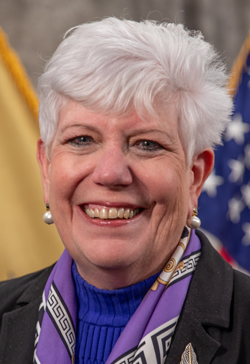
Maureen Rowan
100% support rate
Top opponent
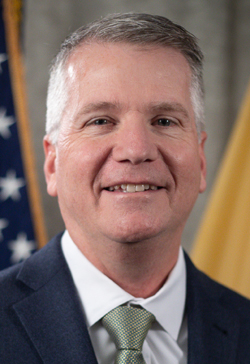
Bob Auth
6% support rate
Ranked legislators
10
5 support · 5 oppose
Key legislators

Who's moving healthcare in New Jersey

Legislators moving healthcare in New Jersey
Legislator Party Stance Support rate Decisive votes
Maureen Rowan
Maureen Rowan House · District 2
D
Strong +
100% 15
Jim Beach
Jim Beach Senate · District 6
D
Strong +
100% 14
Marisa Sweeney
Marisa Sweeney House · District 25
D
Strong +
100% 14
Anthony Angelozzi
Anthony Angelozzi House · District 8
D
Strong +
100% 13
Dave Bailey
Dave Bailey House · District 3
D
Strong +
100% 13
Bob Auth
Bob Auth House · District 39
R
Strong −
6% 18
John DiMaio
John DiMaio House · District 23
R
Strong −
10% 10
Paul Kanitra
Paul Kanitra House · District 10
R
Strong −
10% 10
Erik Peterson
Erik Peterson House · District 23
R
Strong −
12% 17
Joe Pennacchio
Joe Pennacchio Senate · District 26
R
Strong −
13% 15
Showing 761–770 of 1,685 bills

All healthcare bills

in committee · New Jersey · General Assembly Jan 13, 2026

A 2771: Permits import of prescription drugs from certain countries.

This bill allows New Jersey to import prescription drugs from specific foreign countries (like Canada and other nations with equivalent drug safety standards) to lower costs for residents. It requires the Health Commissioner to establish a program within 120 days that designates entities to handle imports, ensures drugs meet FDA safety standards, and focuses on generating significant savings. The program must create price transparency for consumers, develop registration systems for pharmacies and health plans, and set up support resources like a hotline. Directly affected parties include New Jersey consumers, pharmacies, health benefits plans, and healthcare providers participating in the importation program. The bill does not change drug safety requirements but aims to leverage federal approval for cost-saving imports.
Sub-Topics Prescription Drugs
in committee · New Jersey · General Assembly Jan 13, 2026

A 1023: Requires workers' compensation, PIP, and health insurance coverage for the medical use of cannabis under certain circumstances.

This bill requires workers' compensation, personal injury protection (PIP) auto insurance, and health insurance plans in New Jersey to cover medical cannabis costs for qualifying patients under existing law (P.L.2009, c.307). It directly affects workers with job-related injuries, auto accident victims, and health plan enrollees diagnosed with qualifying conditions like chronic pain or cancer. Key provisions mandate insurers to pay dispensaries directly or reimburse patients upon proof of payment, while allowing federal intervention under the Controlled Substances Act to override coverage. The bill does not require coverage for recreational use or affect federal drug laws beyond the specified exception.
Sub-Topics Insurance
in committee · New Jersey · General Assembly Jan 13, 2026

A 2208: Increases cap on personal care assistant services from 40 hours to 91 hours per week for Medicaid beneficiary determined clinically eligible for nursing facility level of care.

This bill increases the weekly cap for Medicaid-covered personal care assistant (PCA) services from 40 to 91 hours for beneficiaries clinically eligible for nursing facility-level care. It directly affects vulnerable Medicaid recipients who rely on PCA services - such as help with daily living tasks (e.g., bathing, dressing) under a nurse’s supervision - to remain safely in their homes or communities. The key provision removes the previous hour limit, requiring the Department of Human Services to update its assessment tool and secure federal approval for rate adjustments to cover the expanded hours. This change ensures medically necessary PCA services align with individual care plans without case-by-case exceptions.
in committee · New Jersey · General Assembly Jan 13, 2026

A 476: Establishes EMT Workforce Development Partnership in DOH, appropriates $1.5 million.

This bill creates the EMT Workforce Development Partnership within New Jersey's Department of Health, providing free training to high school students (16+), college students, and community residents to become certified emergency medical technicians (EMTs). It requires participants to work as paid or volunteer EMTs for at least two years in their local community after certification to avoid repaying training costs. The partnership involves collaboration between the Department of Health, schools, hospitals, and certified training agencies, with $1.5 million appropriated from the state general fund to cover implementation. Participants who complete the training and pass the certification exam receive temporary EMT certification, while those who don't fulfill the service requirement must reimburse the training agency. The bill aims to expand local EMT workforce access through accessible, no-cost training pathways.
in committee · New Jersey · General Assembly Jan 13, 2026

A 3470: Establishes program in DOH for health care provider evaluation and response for patients who are victims of domestic violence.

This bill establishes a domestic violence prevention program within New Jersey's Department of Health to help healthcare providers identify and assist patients who may be victims of domestic violence. It requires the Commissioner of Health to develop mandatory training for all licensed healthcare professionals on screening patients during medical visits, recognizing warning signs, documenting concerns, and connecting patients with community resources. The program also mandates creating educational materials for both providers and patients about domestic violence risks, prevention, and available support services. The Department must collect data on the program's effectiveness and submit annual reports to the Governor and Legislature.
in committee · New Jersey · General Assembly Jan 13, 2026

A 1016: Requires automatic registration with New Jersey Immunization Information System upon administration of vaccine for certain persons who consent to registration.

This bill requires that when a vaccine is administered in New Jersey, the recipient is automatically enrolled in the state's Immunization Information System (NJIIS) unless they or their parent/guardian (for minors) provide a written opt-out request. It applies to all individuals not already enrolled, including adults and children, with newborns (born on or after January 1, 1998) automatically enrolled at birth under existing rules. The system stores vaccination records to help healthcare providers and schools ensure timely immunizations, improve vaccination rates, and respond to disease outbreaks. Individuals can request to view, correct, or remove their records from the system at any time.
Sub-Topics Public Health
in committee · New Jersey · General Assembly Jan 13, 2026

A 1788: Requires DHS to establish two-year Regional Community Behavioral Health Pilot Program.

This bill establishes a two-year pilot program to improve coordination of behavioral health services in New Jersey. It requires the Department of Human Services to identify eligible patients with severe behavioral health disorders using Medicaid data, then contract with community providers to deliver coordinated care. Key mechanisms include mandatory needs assessments, "rapid referrals" for timely access to services, "warm hand-offs" between providers, and hiring service navigators to help patients access treatment. The program directly affects patients with severe mental health or substance use disorders who are identified through Medicaid claims. The pilot will operate across three regions of the state, with managed care organizations administering the program.
Sub-Topics Medicaid Mental Health
in committee · New Jersey · General Assembly Jan 13, 2026

A 2544: Requires Medicaid coverage for motorized wheelchairs for nursing facility residents under certain circumstances.

This bill (A 2544) requires New Jersey's Medicaid and NJ FamilyCare programs to cover motorized wheelchairs for residents in nursing facilities under specific conditions. It directly affects Medicaid enrollees living in nursing facilities who need a motorized wheelchair, as long as their doctor prescribes it and their managed care organization approves it beforehand. The bill mandates that residents keep the wheelchair for as long as they need it, returning it to the state when no longer required. Nursing facilities must notify managed care organizations in writing when equipment is no longer in use. This policy change ensures consistent access to mobility equipment for eligible nursing home residents without adding new administrative burdens beyond existing prescription and authorization processes.
in committee · New Jersey · General Assembly Jan 13, 2026

A 816: Increases fines for failing to report suspected abuse or exploitation of institutionalized elderly person.

This bill increases penalties for failing to report suspected abuse or exploitation of elderly people in care facilities. It raises fines for required reporters (like healthcare workers, social workers, and facility staff) from $500 to $1,500 per violation, and for the employing facility from $2,500 to $5,000 per violation. The law requires immediate reporting (within 2 hours) for serious injury cases or within 24 hours for other suspected abuse, with immunity provided for good-faith reports. The policy directly affects professionals working in nursing homes and similar facilities who have a duty to report. The changes take effect immediately upon enactment.
in committee · New Jersey · General Assembly Jan 13, 2026

A 1442: Requires public schools to develop policy for emergency administration of nasal seizure rescue medication and use of manual vagus nerve stimulator on student with seizure disorder.

This bill requires New Jersey public schools to create policies for emergency treatment of students with seizure disorders, specifically for administering nasal seizure rescue medication and using manual vagus nerve stimulators. It directly affects students with diagnosed seizure disorders, school nurses, and designated school staff trained to provide these emergency interventions. Key provisions include mandating written parental consent, requiring school nurses to train at least two volunteer staff members, ensuring medication access, and requiring hospital transport after emergency treatment. The policy also includes liability protections for school employees acting in good faith under the guidelines.
Showing 761 to 770 of 1,685 bills
Previous 1 … 76 77 78 … 169 Next