Issue · Healthcare

Healthcare

Every healthcare bill, vote, and legislator stance in New Jersey, automatically classified by Maddy, our AI policy reader.

Total bills
1,685
2026-2027 Regular Session
Top supporter
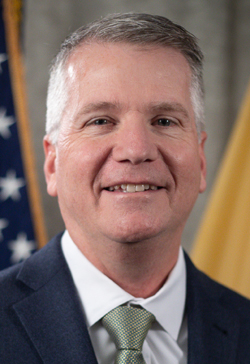
Maureen Rowan
100% support rate
Top opponent
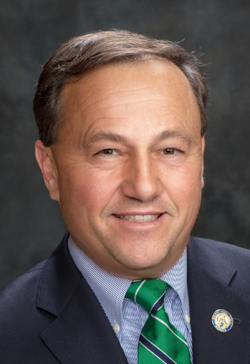
Bob Auth
6% support rate
Ranked legislators
10
5 support · 5 oppose
Key legislators

Who's moving healthcare in New Jersey

Legislators moving healthcare in New Jersey
Legislator Party Stance Support rate Decisive votes
Maureen Rowan
Maureen Rowan House · District 2
D
Strong +
100% 15
Jim Beach
Jim Beach Senate · District 6
D
Strong +
100% 14
Marisa Sweeney
Marisa Sweeney House · District 25
D
Strong +
100% 14
Anthony Angelozzi
Anthony Angelozzi House · District 8
D
Strong +
100% 13
Dave Bailey
Dave Bailey House · District 3
D
Strong +
100% 13
Bob Auth
Bob Auth House · District 39
R
Strong −
6% 18
John DiMaio
John DiMaio House · District 23
R
Strong −
10% 10
Paul Kanitra
Paul Kanitra House · District 10
R
Strong −
10% 10
Erik Peterson
Erik Peterson House · District 23
R
Strong −
12% 17
Joe Pennacchio
Joe Pennacchio Senate · District 26
R
Strong −
13% 15
Showing 721–730 of 1,685 bills

All healthcare bills

passed · New Jersey · General Assembly Jun 30, 2026

A 3434: Creates "New Jersey Dialysis Patient Support Person Accommodation Act."

This bill (A 3434) requires New Jersey dialysis centers to allow patients receiving treatment to be accompanied by a designated support person who can assist with communication, mobility, and care decisions. It directly affects dialysis patients and the centers providing their treatment. Centers must create and display clear written policies for support person access, implement reasonable health/safety rules (without unnecessary restrictions), and train staff on these policies. The New Jersey Department of Health will enforce the law, investigate complaints about denied access, and impose penalties for non-compliance. The law takes effect immediately upon passage.
in committee · New Jersey · General Assembly Jan 13, 2026

A 2625: Requires employers other than State who participate in SHBP and employers who participate in SEHBP to remain enrolled in program for minimum of five years.

New Jersey's A2625 requires non-state employers participating in the State Health Benefits Program (SHBP) or School Employees' Health Benefits Program (SEHBP) to stay enrolled for a minimum of five consecutive years after initial enrollment. If an employer voluntarily leaves and later rejoins, each re-entry adds another five-year requirement, cumulatively extending the total enrollment period (e.g., 10 years after first re-entry). The bill also mandates annual public reporting of employer terminations, transparency about premium changes, and annual program performance reviews to maintain cost stability. These provisions directly affect private-sector employers participating in either health benefits program.
Sub-Topics Insurance
in committee · New Jersey · General Assembly Feb 19, 2026

A 4381: Establishes "Farm Mental Health and Financial Services Task Force."

This bill establishes a "Farm Mental Health and Financial Services Task Force" to address mental health and financial stress among New Jersey farm workers. The task force, made up of the Agriculture and Health Secretaries plus three public members (a farmer advocate, banking representative, and mental health advocate), must create and maintain a public online list of existing mental health and financial services for farm owners, operators, supervisors, and laborers within 180 days. The list will detail available services, how to access them, and include recommendations based on other states' approaches. The list must be updated online at least every six months by the Agriculture and Health Departments.
Sub-Topics Mental Health
in committee · New Jersey · General Assembly Jan 13, 2026

A 3345: Requires DOH to encourage health care facilities and licensed health care professionals to develop a "Reach Out and Read Program."

New Jersey's Bill A 3345 requires the Department of Health (DOH) to encourage healthcare facilities and licensed professionals (like pediatricians and family doctors) to adopt the national "Reach Out and Read" program. This program integrates early literacy promotion into routine well-child visits for children aged six months to five years, with providers advising parents on shared reading activities. The DOH must support implementation by providing printed materials and a website link for facilities to apply as program sites. The goal is to improve children's language development, strengthen parent-child bonds, and give healthcare providers tools to monitor early childhood well-being. This affects healthcare providers directly and benefits parents and young children through evidence-based literacy support during medical visits.
in committee · New Jersey · General Assembly Jan 13, 2026

A 2664: Requires biennial inspection of nursing homes and assisted living facilities.

This bill requires New Jersey's Department of Health to conduct biennial (every two years) on-site inspections of all licensed nursing homes and assisted living facilities to ensure compliance with uniform safety and care standards. Within 180 days of the bill's effective date, the Department must establish these standards for facility operations. Inspection reports will be posted online for public access, and the Department may conduct additional reviews as needed. The bill directly affects all licensed nursing homes and assisted living facilities operating in New Jersey.
Sub-Topics Long-Term Care
in committee · New Jersey · Senate Feb 19, 2026

S 3556: Establishes initiatives related to behavioral health care, including increasing reimbursement rates, providing cost-of-living adjustments, establishing grant programs for facility upkeep and provider training, and relaxing clinical supervision requirements.

This bill increases Medicaid reimbursement rates for residential behavioral health services to at least 100% of the Medicare rate, starting July 1, 2024. It also requires annual cost-of-living adjustments for residential behavioral health providers based on the Consumer Price Index and creates a new fund to provide grants for facility repairs, maintenance, and provider training. These changes directly affect residential behavioral health service providers who receive Medicaid payments and the Department of Human Services, which administers the program. The bill aims to improve access to and quality of behavioral health care by strengthening financial support for providers.
in committee · New Jersey · General Assembly Feb 19, 2026

A 2202: Establishes pilot program to provide Medicaid coverage of remote maternal health services for eligible beneficiaries.

This bill (A 2202) establishes a three-year pilot program in New Jersey to provide Medicaid coverage for remote maternal health services to eligible pregnant Medicaid beneficiaries. It would cover specific remote services including remote monitoring of health data (like blood pressure or glucose levels), remote non-stress tests, and tele-ultrasound, all delivered securely via digital technology. Eligibility includes beneficiaries with high-risk pregnancy factors (such as pre-existing conditions, age, or lifestyle factors) or those facing access barriers like lack of local providers, transportation, or childcare, but participation requires a provider referral and remains voluntary. The program depends on federal reimbursement and must comply with HIPAA and FDA regulations for data security and device approval.
in committee · New Jersey · General Assembly Jan 13, 2026

A 552: Streamlines certification standards for emergency medical technicians.

This bill sets new maximum hour limits for emergency medical technician (EMT) certification in New Jersey. It requires that all combined training for EMT-Basic certification (including coursework, clinical training, and field experience) must not exceed 90 hours, and additional certifications for EMT-Basics must not exceed 30 hours. Training agencies offering EMT-Basic programs must comply with the 90-hour limit to maintain certification. The bill directly affects EMT trainees, training programs, and the State Board of Medical Examiners by standardizing and reducing the required training duration.
in committee · New Jersey · General Assembly Jan 13, 2026

A 970: Appropriates $2.5 million to DOBI to reimburse joint insurance funds for COVID-19 surveillance testing.

This bill appropriates $2.5 million from the state General Fund to the Department of Banking and Insurance (DOBI) to reimburse joint insurance funds for covering COVID-19 surveillance testing costs. It directly affects insurance plans providing group health coverage to "covered workers" (defined in Governor Murphy's executive orders), specifically for weekly testing of unvaccinated, asymptomatic employees in healthcare and high-risk settings from August 2021 to August 2022. The reimbursement covers costs incurred by insurance funds that voluntarily provided this testing despite federal guidance not requiring it. The bill establishes a process for funds to request reimbursement through DOBI and clarifies that "surveillance testing" refers to routine screening to identify asymptomatic cases, distinct from required medical testing.
Sub-Topics State Budget
in committee · New Jersey · General Assembly Jan 13, 2026

A 2479: Permits clinical laboratories to provide certain patients discounts without affecting NJ FamilyCare reimbursement rates or violating NJ FamilyCare rebate prohibitions.

This bill allows clinical laboratories to offer discounted rates to patients facing financial hardship without reducing their NJ FamilyCare reimbursement rates or violating anti-rebate rules. It directly affects vulnerable patients (including those in poverty, homeless individuals, substance use disorder treatment patients, and those in drug court programs) and the laboratories providing their testing services. The key provision permits labs to charge lower prices to qualifying patients based on documented financial hardship (e.g., income below 200% of federal poverty level), while still receiving full NJ FamilyCare reimbursement for the same service. Labs must verify hardship through income documentation or exceptional circumstance evidence, ensuring discounts comply with federal anti-kickback laws.
Sub-Topics Substance Abuse
Showing 721 to 730 of 1,685 bills
Previous 1 … 72 73 74 … 169 Next