Issue · Healthcare

Healthcare

Every healthcare bill, vote, and legislator stance in New Jersey, automatically classified by Maddy, our AI policy reader.

Total bills
1,685
2026-2027 Regular Session
Top supporter
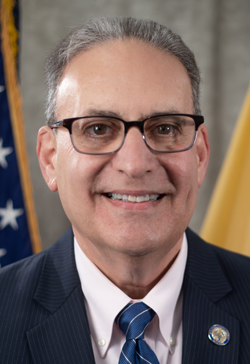
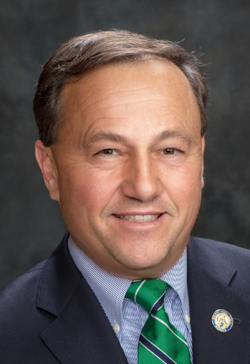
Jim Beach
100% support rate
Top opponent
Bob Auth
8% support rate
Ranked legislators
10
5 support · 5 oppose
Key legislators

Who's moving healthcare in New Jersey

Legislators moving healthcare in New Jersey
Legislator Party Stance Support rate Decisive votes
Jim Beach
Jim Beach Senate · District 6
D
Strong +
100% 14
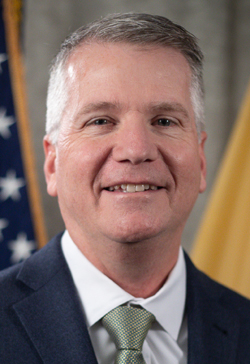
Roy Freiman
Roy Freiman House · District 16
D
Strong +
100% 11
Dave Bailey
Dave Bailey House · District 3
D
Strong +
100% 10
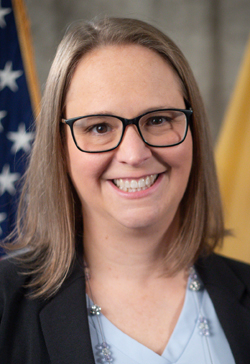
Andrea Katz
Andrea Katz House · District 8
D
Strong +
100% 9
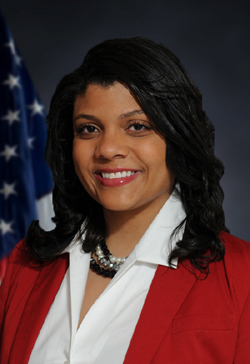
Britnee Timberlake
Britnee Timberlake Senate · District 34
D
Strong +
100% 9
Bob Auth
Bob Auth House · District 39
R
Strong −
8% 12
Erik Peterson
Erik Peterson House · District 23
R
Strong −
8% 12
John Azzariti
John Azzariti House · District 39
R
Strong −
10% 10
John DiMaio
John DiMaio House · District 23
R
Strong −
10% 10
Paul Kanitra
Paul Kanitra House · District 10
R
Strong −
11% 9
Showing 591–600 of 1,685 bills

All healthcare bills

in committee · New Jersey · General Assembly Feb 19, 2026

A 4138: Requires patient to receive notification of abnormality in chest x-ray; designated as Claudia's Law.

This bill, designated as Claudia's Law, requires healthcare providers to include specific information in patient chest x-ray reports when an abnormality is detected. It mandates that patients receive a standardized notification stating: "Your chest x-ray shows an abnormality that may be associated with a risk factor for various illnesses. Use this information to talk to your health care provider..." This directly affects patients receiving chest x-ray results with abnormalities. The law aims to prompt patients to discuss findings with their healthcare providers about potential risks and additional screening, without altering medical protocols.
in committee · New Jersey · General Assembly Feb 19, 2026

A 4349: Requires health insurance and Medicaid coverage for family planning and reproductive health care services; prohibits adverse actions by medical malpractice insurers in relation to performance of legally protected health care services.

This bill requires health insurance plans and Medicaid in New Jersey to cover all reproductive health care services, including family planning and abortion. It also prohibits medical malpractice insurers from raising premiums or canceling coverage for providers who offer these legally protected services. The law applies to all health insurance companies, Medicaid, and malpractice insurers operating in the state. By mandating coverage and preventing insurance penalties, the bill aims to remove financial barriers to reproductive health care access for all residents.
in committee · New Jersey · General Assembly Jan 13, 2026

A 1160: Requires DOH to evaluate technology uses in long-term care settings, implements certain technological requirements within long-term care settings, and clarifies existing telehealth reimbursement parity includes long-term care settings.

This bill requires New Jersey long-term care facilities (like nursing homes) and home/community-based care providers to implement certified electronic health record systems within 270 days, with state grants available to support this transition. It also clarifies that telehealth services provided in long-term care settings must receive reimbursement rates equal to in-person services (with limited exceptions for audio-only visits), ensuring parity for these settings. Additionally, facilities must provide internet, TV, and phone access in every resident room within six months, with funding available to help cover costs. These requirements apply directly to licensed long-term care facilities and home-based providers, aiming to improve care coordination and resident connectivity.
in committee · New Jersey · General Assembly Jan 13, 2026

A 1961: Requires institutions of higher education to test for lead in drinking water annually, report test results, and install lead filters or treatment devices.

This New Jersey bill requires colleges and universities to test all drinking water sources (like fountains and faucets) for lead annually, starting within 90 days of the law taking effect. Institutions must report results to state education and environmental agencies, post findings online, and notify students and staff. If lead levels exceed EPA or state standards, schools must immediately close affected water sources, provide alternatives, and install certified lead-removing filters in all buildings with lead pipes or fixtures. The law applies directly to all higher education institutions in New Jersey and mandates ongoing testing, transparency, and remediation.
Sub-Topics Drinking Water
in committee · New Jersey · General Assembly Jan 13, 2026

A 2250: Establishes commission to examine impact of federal funding cuts on State's Medicaid program.

This bill establishes a nine-member commission within New Jersey’s Department of Human Services to analyze how projected federal Medicaid funding cuts affect the state’s Medicaid services. The commission will monitor federal and statewide Medicaid trends, assess the impact of federal policy changes, and recommend legislative or other actions to address these changes. It consists of the Medicaid program director (ex-officio), four legislative members appointed by chamber leaders, and four public members appointed by the governor. Within 12 months of its first meeting and annually thereafter, the commission must submit written reports to the governor and legislature detailing its analysis and recommendations, which will be posted publicly online. The bill does not change Medicaid funding or eligibility but creates a process to evaluate federal policy impacts.
Sub-Topics Medicaid
in committee · New Jersey · General Assembly Mar 16, 2026

A 4317: Stipulates that qualifying applicant for personal assistance services who is primary caregiver of minor child is automatically eligible for services.

This bill automatically qualifies primary caregivers of minor children for New Jersey's Personal Assistance Services Program (PASP), provided they meet all other eligibility criteria. It requires county agencies to approve up to 40 hours per week of services - based on a needs assessment - without additional review for these applicants. The change expands the existing program, which previously required case-by-case evaluations for caregivers, to ensure immediate access to support for parents needing help with daily tasks like bathing, meal preparation, and mobility. This policy directly affects parents with permanent physical disabilities who are primary caregivers of children.
in committee · New Jersey · General Assembly Jan 13, 2026

A 3868: Establishes fringe benefit rate for State public higher education institutions; requires employer pay for health care benefits for certain part-time faculty.

This bill establishes a new calculation method for retirement costs at New Jersey's public colleges and universities (like Rutgers and NJIT), requiring the state to set a separate "fringe benefit rate" reflecting actual retirement expenses. It also requires public institutions to pay for health insurance coverage for part-time faculty (including adjuncts and lecturers) who taught at least 24 credits in the prior fiscal year and 12 credits in the current year, making them eligible for benefits as if they were full-time. Employers must cover the full cost of health plans, shifting this responsibility from part-time faculty who meet the teaching credit thresholds. The bill aims to standardize retirement cost accounting and expand health coverage access for qualifying part-time educators.
Sub-Topics Insurance
in committee · New Jersey · General Assembly Jan 13, 2026

A 967: Prohibits sale of tobacco products and electronic smoking devices at pharmacies and certain businesses with on-site pharmacies.

This bill prohibits pharmacies and businesses with on-site pharmacies in New Jersey from selling tobacco products (including cigarettes and smokeless tobacco) or electronic smoking devices (like vapes and e-cigarettes) and their components. It directly affects pharmacy owners and retail businesses operating with pharmacies, such as grocery stores with in-house pharmacies. Exceptions include FDA-approved smoking cessation products and medical cannabis dispensaries serving registered patients. Violations carry escalating civil penalties starting at $250 for the first offense, with potential disciplinary action from the Board of Pharmacy.
Sub-Topics Prescription Drugs
in committee · New Jersey · General Assembly Feb 19, 2026

A 4324: Requires DOH to maintain emergency stockpile of insulin and authorizes dispensing of emergency supply of insulin to certain patients.

This bill requires New Jersey's Department of Health (DOH) to maintain an emergency stockpile of insulin containing the 10 most common brands and types used by residents. It authorizes the DOH to provide a one-time 30-day emergency insulin supply at cost to residents whose supply runs out before their next prescription can be filled, with exceptions for demonstrated need. Pharmacists may also dispense one 30-day emergency supply annually under specific conditions, such as when a prescriber cannot authorize more insulin. The DOH must reevaluate the stockpile quarterly, collaborate on insulin selection, and report dispensing to the state's prescription monitoring database. This directly affects New Jersey residents facing insulin shortages, creating a state-managed safety net for emergency access.
Sub-Topics Prescription Drugs
in committee · New Jersey · General Assembly Jan 13, 2026

A 2392: Establishes annual fee for sports wagering licensees; directs funds from such fees to Council on Compulsive Gambling and gambling addiction treatment programs.

This bill requires sports wagering businesses in New Jersey to pay an additional $250,000 annual fee on top of existing license costs. The funds are split, with $140,000 directed to the Council on Compulsive Gambling and $110,000 allocated to evidence-based gambling addiction treatment programs. It directly affects all licensed sports wagering operators in the state. The fee aims to support prevention, education, and treatment services for problem gambling, as specified in the bill's funding allocation.
Sub-Topics Substance Abuse
Showing 591 to 600 of 1,685 bills
Previous 1 … 59 60 61 … 169 Next