Issue · Healthcare

Healthcare

Every healthcare bill, vote, and legislator stance in New Jersey, automatically classified by Maddy, our AI policy reader.

Total bills
1,685
2026-2027 Regular Session
Top supporter
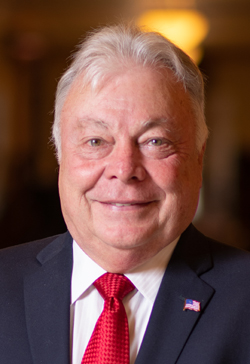
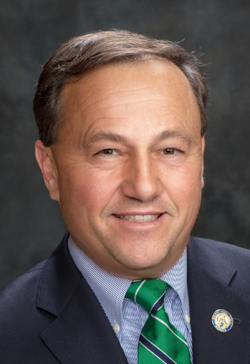
Jim Beach
100% support rate
Top opponent
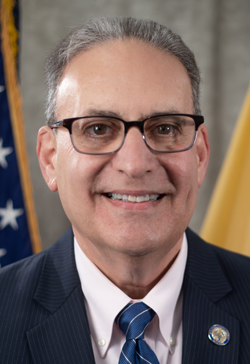
Bob Auth
8% support rate
Ranked legislators
10
5 support · 5 oppose
Key legislators

Who's moving healthcare in New Jersey

Legislators moving healthcare in New Jersey
Legislator Party Stance Support rate Decisive votes
Jim Beach
Jim Beach Senate · District 6
D
Strong +
100% 14
Roy Freiman
Roy Freiman House · District 16
D
Strong +
100% 11
Dave Bailey
Dave Bailey House · District 3
D
Strong +
100% 10
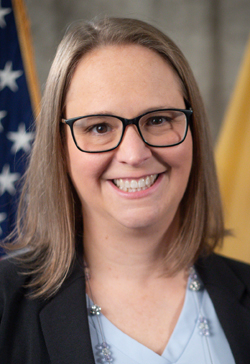
Andrea Katz
Andrea Katz House · District 8
D
Strong +
100% 9
Britnee Timberlake
Britnee Timberlake Senate · District 34
D
Strong +
100% 9
Bob Auth
Bob Auth House · District 39
R
Strong −
8% 12
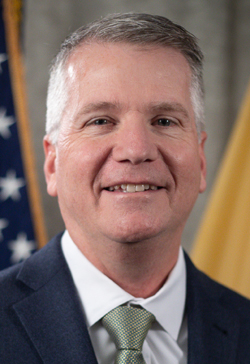
Erik Peterson
Erik Peterson House · District 23
R
Strong −
8% 12
John Azzariti
John Azzariti House · District 39
R
Strong −
10% 10
John DiMaio
John DiMaio House · District 23
R
Strong −
10% 10
Paul Kanitra
Paul Kanitra House · District 10
R
Strong −
11% 9
Showing 421–430 of 1,685 bills

All healthcare bills

in committee · New Jersey · General Assembly Feb 19, 2026

A 4251: Establishes "Automobile Accident Injury Fund."

This bill establishes a permanent "Automobile Accident Injury Fund" within New Jersey's Department of Banking and Insurance. It provides coverage for medical costs incurred by individuals injured in accidents involving a stolen vehicle, specifically when the injured person has no health insurance or automobile insurance that covers the medical expenses. The fund covers these costs regardless of whether the stolen vehicle was properly insured under state law. The Department of Banking and Insurance will manage the fund, create application procedures, and determine payment amounts for eligible applicants. This directly affects uninsured residents injured by stolen vehicles, addressing gaps when personal insurance fails to cover treatment.
Sub-Topics Insurance
in committee · New Jersey · General Assembly Feb 19, 2026

A 4084: Provides earned time credits to reduce parole eligibility date for inmates who participate in substance abuse treatment program.

This bill allows New Jersey inmates participating in full-time substance abuse treatment programs to earn enhanced time credits toward parole eligibility. Specifically, it requires the corrections commissioner to award inmates 1.5 times the standard commutation (good time) credits they would normally receive during their participation in such programs. These additional credits directly reduce the inmate's parole eligibility date, meaning they become eligible for parole sooner than under standard credit calculations. The provision applies to all eligible inmates in substance abuse treatment programs, supplementing existing credit systems without altering mandatory minimum sentencing rules.
in committee · New Jersey · General Assembly Jan 13, 2026

A 2015: Requires manufacturer of recalled medical devices to provide replacement device or pay for replacement device under certain circumstances.

This New Jersey bill requires medical device manufacturers to provide consumers with a free replacement device or pay for one from another manufacturer when a recall forces users to stop using or return a device. It applies directly to consumers who need to discontinue using recalled medical devices and defines "manufacturer" as companies making or assembling such devices. Manufacturers must comply within 30 days of a recall, either by supplying a replacement or covering the cost of a comparable device from another source. Violations are treated as consumer fraud under state law, carrying fines up to $20,000 per offense and potential additional penalties like cease-and-desist orders.
in committee · New Jersey · General Assembly Jan 13, 2026

A 2253: Codifies and requires Legislative authorization for reductions in minimum NJ FamilyCare eligibility levels and benefits.

This bill (A-2253) requires New Jersey's legislature to formally approve any future reductions to NJ FamilyCare eligibility levels or benefit levels. It directly affects the program's administrators (the commissioner) and the 1.3 million low-income residents currently enrolled in NJ FamilyCare, including children, parents/caretakers, and adults without dependent children. The key mechanism establishes that the commissioner cannot implement such changes without prior legislative authorization, codifying a new procedural requirement for policy adjustments. The bill does not alter current benefit levels or eligibility rules but mandates that any future reductions must undergo legislative review.
in committee · New Jersey · General Assembly Jan 13, 2026

A 3118: Establishes Training Clinicians to Support Adults with Autism Workforce Development Program in Rutgers Center for Adult Autism Services; appropriates $500,000.

This bill establishes the "Training Clinicians to Support Adults with Autism Workforce Development Program" at Rutgers Center for Adult Autism Services. It requires recruiting 8-10 students annually from diverse disciplines (e.g., psychology, social work, education) to complete 20-40 hours weekly of intensive training, including hands-on clinical work, academic coursework, research collaboration, and a capstone project focused on improving outcomes for adults with autism. The program is funded by a $500,000 appropriation from the General Fund. It directly supports adults with autism in New Jersey by building a trained workforce to address current gaps in services and quality of life.
in committee · New Jersey · Senate Feb 12, 2026

S 3493: Upgrades penalties for assaulting certain health care support staff and security guards at health care facilities and human services and veterans' facilities.

S 3493 (Sponsored by Senators Beach & Corrado) upgrades penalties for assaulting healthcare workers at New Jersey facilities. The bill amends the assault statute to classify attacks on "health care workers employed by a licensed health care facility to provide direct patient care" and "health care professionals licensed to practice" as aggravated assault - rather than simple assault - when committed at healthcare, human services, or veterans' facilities. This change increases potential penalties for such assaults by elevating the offense level under New Jersey law. The bill directly affects healthcare staff (including direct patient care workers and licensed professionals) working in covered facilities. It does not address security guards specifically, as the text only expands protections to defined healthcare workers.
in committee · New Jersey · General Assembly Jan 13, 2026

A 644: Establishes Veterans Suicide Prevention Commission.

This bill establishes the Veterans Suicide Prevention Commission under New Jersey's "Veterans Suicide Prevention Commission Act" to coordinate state efforts in preventing veteran suicides. The commission, composed of 12 members including veterans, mental health experts, military representatives, and family members, will review state agency programs, improve coordination between departments, and track progress on suicide prevention initiatives. It directly affects New Jersey veterans, service members, and their families by aiming to strengthen existing support systems through better collaboration. The commission will focus on aligning services for veterans' transition to civilian life, mental health care, and community resources without creating new programs. The bill requires the commission to hold at least six meetings annually and report on its activities to improve suicide prevention outcomes.
in committee · New Jersey · General Assembly May 7, 2026

A 4485: Establishes minimum Medicaid reimbursement rate for structured day program services provided to beneficiary eligible for brain injury services.

This bill establishes a minimum Medicaid reimbursement rate for structured day program services provided to New Jersey Medicaid beneficiaries with brain injuries. It requires that these rates match the average reimbursement for Day Habilitation Services Tiers D and E (currently $9.89 per 15 minutes) as used for developmental disability services. The policy directly affects approved brain injury service providers who deliver these programs to Medicaid beneficiaries. This amendment expands existing law, which previously only set minimum rates for community residential services, to now include structured day program services.
Sub-Topics Medicaid
in committee · New Jersey · General Assembly Feb 12, 2026

A 2735: Requires DHS and DOH to study disordered eating; establishes "Disordered Eating Prevention Research Grant Pilot Program."

This bill (A2735) requires New Jersey's Department of Human Services (DHS) and Department of Health (DOH) to study disordered eating causes, prevention, and treatment gaps in the state, with specific focus on communities disproportionately affected - such as people of color, LGBTQ+ individuals, youth, and older residents. It establishes a three-year "Disordered Eating Prevention Research Grant Pilot Program" within DHS to fund research on barriers to treatment, root causes, and risk factors for disordered eating among these groups. Eligible applicants (nonprofits, researchers, or organizations) can apply for grants to conduct this research, with DHS administering the program and requiring annual reports on grant usage and findings. The study must be completed within 18 months, and DHS must submit annual reports on the grant program's progress to the Governor and Legislature. The bill directly affects state agencies, research organizations, and vulnerable communities facing higher disordered eating risks.
in committee · New Jersey · General Assembly Feb 19, 2026

A 4140: Excludes veterans' benefits from calculation of financial obligation for care at psychiatric facility.

This bill (A4140) modifies how New Jersey calculates financial obligations for psychiatric facility care. It specifically excludes veterans' benefits (such as VA pensions or disability payments) from the income calculation used to determine a veteran's payment responsibility. Under current law, veterans' benefits were counted toward income when applying the sliding-scale fee for care; this bill removes that requirement. The change directly affects veterans receiving treatment in state psychiatric facilities who would otherwise have their benefits considered in determining their out-of-pocket costs.
Showing 421 to 430 of 1,685 bills
Previous 1 … 42 43 44 … 169 Next