Issue · Healthcare

Healthcare

Every healthcare bill, vote, and legislator stance in New Jersey, automatically classified by Maddy, our AI policy reader.

Total bills
1,646
2026-2027 Regular Session
Top supporter
Maureen Rowan
100% support rate
Top opponent
Bob Auth
6% support rate
Ranked legislators
10
5 support · 5 oppose
Key legislators

Who's moving healthcare in New Jersey

Legislators moving healthcare in New Jersey
Legislator Party Stance Support rate Decisive votes
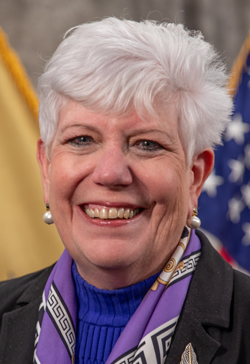
Maureen Rowan
Maureen Rowan House · District 2
D
Strong +
100% 15
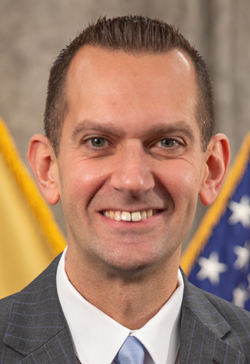
Jim Beach
Jim Beach Senate · District 6
D
Strong +
100% 14
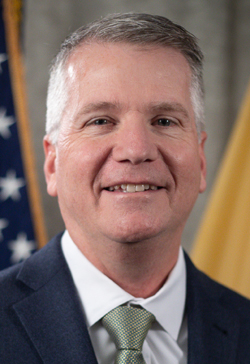
Marisa Sweeney
Marisa Sweeney House · District 25
D
Strong +
100% 14
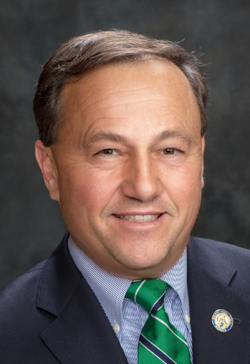
Anthony Angelozzi
Anthony Angelozzi House · District 8
D
Strong +
100% 13
Dave Bailey
Dave Bailey House · District 3
D
Strong +
100% 13
Bob Auth
Bob Auth House · District 39
R
Strong −
6% 18
John DiMaio
John DiMaio House · District 23
R
Strong −
10% 10
Paul Kanitra
Paul Kanitra House · District 10
R
Strong −
10% 10
Erik Peterson
Erik Peterson House · District 23
R
Strong −
12% 17
Joe Pennacchio
Joe Pennacchio Senate · District 26
R
Strong −
13% 15
Showing 1,311–1,320 of 1,646 bills

All healthcare bills

in committee · New Jersey · Senate Jan 13, 2026

S 1935: Revises emergency care services referral standards for providers of telemedicine and telehealth.

S 1935 updates New Jersey's telehealth laws to clarify emergency care referral standards for telemedicine providers. It requires telehealth providers to make a "good faith effort" to directly contact emergency services during telehealth visits when a patient needs urgent care, including sharing the patient's location, provider contact details, and documenting emergencies. This applies to all telehealth providers licensed in New Jersey who use telemedicine for patient care. The bill ensures telehealth services meet the same emergency coordination standards as in-person care, requiring providers to refer patients to appropriate in-person or emergency services when needed. The bill is currently pending in the Senate Health Committee.
Sub-Topics Telehealth
in committee · New Jersey · Senate Jan 13, 2026

S 1399: Permits clinical laboratories to provide certain patients discounts without affecting NJ FamilyCare reimbursement rates or violating NJ Familycare rebate prohibitions.

This bill (S 1399, "Clinical Laboratory Services Reimbursement and Vulnerable Patient Discount Act") permits clinical laboratories to offer discounts to patients facing financial hardship without reducing NJ FamilyCare reimbursement rates or violating anti-rebate rules. It directly affects labs serving vulnerable populations - including uninsured, homeless, or low-income patients seeking services like drug testing for substance use disorder treatment - by allowing them to discount charges based on documented financial hardship (e.g., income below 200% of federal poverty level). Key provisions require labs to maintain NJ FamilyCare reimbursement rates at the lower of the fee schedule or their standard public charge, while discounts to vulnerable patients must align with federal anti-rebate rules. The bill aims to prevent labs from ceasing discounted services due to prior enforcement risks under NJ FamilyCare regulations.
Sub-Topics Substance Abuse
in committee · New Jersey · Senate Jan 13, 2026

S 1121: Creates "Disability Life-Sustaining Measures Advisory Council."

S 1121 creates the "Disability Life-Sustaining Measures Advisory Council" within New Jersey's Department of Health to protect people with disabilities during public health emergencies. The council, consisting of 14 members including state officials and public representatives with disability experience, will recommend policies for emergency care (like ventilators and resuscitation), ensure compliance with federal disability anti-discrimination laws, and gather public input on treatment during crises. It must submit annual reports to the Governor and Legislature detailing its findings. This bill directly affects people with disabilities in medical emergencies and establishes a permanent advisory body to address gaps in emergency response planning.
Sub-Topics Public Health Tags People with Disabilities
in committee · New Jersey · Senate Feb 9, 2026

S 3007: Provides for licensure of emergency medical responders and emergency medical technicians and certification of mobility assistance vehicle operators; revises requirements for delivery of emergency medical and patient transportation services.

This bill establishes new licensing requirements for emergency medical responders (EMRs) and emergency medical technicians (EMTs), and creates certification standards for mobility assistance vehicle operators. It directly affects EMS professionals, ambulance services, and providers of non-emergency medical transportation for individuals with disabilities. Key provisions include setting minimum staffing rules for different transport units (like mobile intensive care units and basic life support vehicles), requiring all crew members to hold valid licenses or certifications, and defining specific roles like "mobility assistance vehicle operator." The bill also clarifies that non-emergency transport providers must be licensed to serve patients who need medical transportation but do not require ambulance-level care.
Sub-Topics Medical Licensing Tags Public Safety
in committee · New Jersey · Senate May 18, 2026

S 374: Requires health benefits coverage for treatment of lipedema.

This bill requires health insurance plans in New Jersey to cover specific treatments for lipedema, a chronic fat disorder. It mandates coverage for compression garments, manual lymphatic drainage, medical nutrition therapy, mental health care, and medically necessary lipectomies (including pre- and post-surgery appointments). Insurers must base coverage decisions on physician diagnoses and surgeon documentation (including photos for lipectomies), cannot deny coverage solely based on photos, and must honor prior authorizations for lipectomies for one year. The coverage must match the same deductibles, coinsurance, and standards of care as other similar medical treatments. This directly affects insured residents diagnosed with lipedema and their health insurance providers.
in committee · New Jersey · Senate Jan 13, 2026

S 2621: Establishes "Equitable Drug Pricing and Patient Access Act."

This bill, S 2621, establishes the "Equitable Drug Pricing and Patient Access Act" to set minimum reimbursement rates for pharmacies providing prescription drugs to Medicaid beneficiaries in New Jersey. It mandates that pharmacies receive at least the national average drug acquisition cost plus a $10.92 dispensing fee, regardless of whether services are delivered through Medicaid’s fee-for-service or managed care systems. The bill requires Medicaid managed care organizations to include pharmacy choice as a mandatory benefit, ensuring enrollees can select any qualified pharmacy and preventing exclusion of pharmacies based on cost or other criteria. Additionally, it directs the State Auditor to audit pharmacy pricing practices and fund flows within Medicaid to identify potential state savings.
in committee · New Jersey · Senate Jan 13, 2026

S 2363: Requires employees of gambling and addiction related State entities to participate in problem gambler training program.

S 2363 requires public-facing employees at specific New Jersey state entities - including the Casino Control Commission, State Lottery, Racing Commission, Gaming Enforcement Division, and Mental Health Services - to complete a state-developed training program on supporting problem gamblers. The training, created by the Division of Mental Health and Addiction Services with input from gaming and gambling advocacy groups, teaches staff to respond empathetically, provide accurate resource information, and guide patrons through self-exclusion processes. It applies to all employees who interact with the public at these gambling- or addiction-related agencies. The program may be updated periodically as best practices for addressing gambling addiction evolve.
in committee · New Jersey · Senate Jan 13, 2026

S 1173: Expands NJT Access Link paratransit service area to include certain veterans health care facilities; appropriates $1 million.

This bill requires NJ Transit to expand its Access Link paratransit service to cover all U.S. Veterans Health Administration facilities in New Jersey. It mandates that Access Link service be available within a 1.5-mile radius around each facility and along a 1.5-mile-wide corridor connecting each facility to the nearest NJ Transit bus route or light rail station, regardless of whether these locations fall within the current service area. The bill appropriates $1 million from the state General Fund to cover implementation costs and prohibits NJ Transit from entering new contracts for Access Link service unless they comply with these expanded requirements. This change directly affects veterans using these health facilities who rely on paratransit for medical appointments.
in committee · New Jersey · Senate Mar 16, 2026

S 2980: Revises reporting requirements for nursing homes concerning financial disclosures and ownership structure.

This bill (S 2980) requires nursing home owners to submit detailed financial and ownership information before transferring ownership or delegating management to third parties. It mandates disclosure of 100% ownership structures, organizational charts, and third-party service providers paying over $200,000 annually, along with resolution of outstanding Medicaid debts. The Department of Health must publicly post applications (with privacy redactions) and allow a 30-day public comment period. These changes aim to increase transparency for prospective buyers and the public while ensuring new owners meet financial and operational standards.
in committee · New Jersey · Senate Jan 28, 2026

S 3199: Requires DVA establish Veterans Outdoor Recovery Task Force.

New Jersey's S 3199 requires the Department of Veterans Affairs (DVA) to create a Veterans Outdoor Recovery Task Force. The task force, led by DVA and Environmental Protection commissioners, will identify barriers and coordinate with agencies to expand veterans' access to outdoor therapy on public lands. It must hold public hearings, develop recommendations for improving outdoor healing programs, and report findings to the legislature within 18 months. The bill directly affects veterans seeking mental health and rehabilitation support through outdoor activities, aiming to facilitate their use of public spaces for healing.
Showing 1,311 to 1,320 of 1,646 bills