Issue · Education

Education

Every education bill, vote, and legislator stance in New Jersey, automatically classified by Maddy, our AI policy reader.

Total bills
1,263
2026-2027 Regular Session
Top supporter
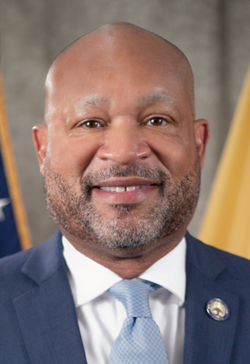
Andrew Zwicker
100% support rate
Top opponent
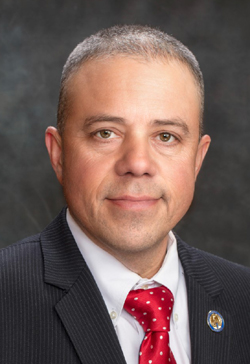
Kristin Corrado
0% support rate
Ranked legislators
10
5 support · 5 oppose
Key legislators

Who's moving education in New Jersey

Legislators moving education in New Jersey
Legislator Party Stance Support rate Decisive votes
Andrew Zwicker
Andrew Zwicker Senate · District 16
D
Strong +
100% 6
Angela McKnight
Angela McKnight Senate · District 31
D
Strong +
100% 6
Benjie Wimberly
Benjie Wimberly Senate · District 35
D
Strong +
100% 6
Bob Smith
Bob Smith Senate · District 17
D
Strong +
100% 6
Brian Stack
Brian Stack Senate · District 33
D
Strong +
100% 6
Kristin Corrado
Kristin Corrado Senate · District 40
R
Strong −
0% 6
Joe Pennacchio
Joe Pennacchio Senate · District 26
R
Strong −
17% 6
Parker Space
Parker Space Senate · District 24
R
Strong −
17% 6
Doug Steinhardt
Doug Steinhardt Senate · District 23
R
Oppose
33% 6
Jim Holzapfel
Jim Holzapfel Senate · District 10
R
Oppose
33% 6
Showing 711–720 of 1,263 bills

All education bills

in committee · New Jersey · General Assembly Jan 13, 2026

A 2359: Requires undergraduate students to file degree plan and requires institutions of higher education and certain propriety institutions to develop pathway systems to graduation.

This bill requires undergraduate students at New Jersey colleges and universities to file a formal degree plan with their institution by specific credit milestones: 60 credits for four-year schools, 30 credits for county colleges or private colleges. Institutions must also create structured "pathway systems" that set graduation benchmarks, mandate early math and English courses (within first 24 credits), and ensure remedial course students immediately enroll in credit-bearing equivalents. Students changing majors or facing academic challenges must update their degree plan, and institutions must review progress regularly, requiring academic counseling for those falling behind. The policy directly affects all degree-seeking undergraduates and institutions offering academic degrees.
Sub-Topics Higher Education
in committee · New Jersey · General Assembly Jan 13, 2026

A 1082: Provides emergency State school aid to certain school districts located in historic communities.

Bill A 1082 provides emergency state school aid to specific New Jersey school districts facing closure due to state aid cuts. It directly affects districts located in municipalities listed on historic registers, with only one federally built school building (which would revert to federal control if closed), high student achievement, and financial risk from reduced state funding. The bill requires districts to apply annually, and the Commissioner of Education must provide aid equal to the exact amount of state aid reduction threatening the school's operation. This aid aims to prevent closure, protecting both students and the community's historic legacy. The program covers the 2019-2020 through 2024-2025 school years.
in committee · New Jersey · General Assembly Jan 13, 2026

A 374: Revises requirements for school safety teams; requires creation of district school climate improvement plans.

This bill requires New Jersey public schools to create annual "school climate improvement plans" and establish safety teams to address harassment, intimidation, and bullying. It mandates that school employees report incidents to principals, with superintendents submitting biannual public reports to school boards detailing incidents broken down by protected categories (like race or religion), investigations, and disciplinary actions. Schools will receive public grades based on their climate efforts, posted on school and district websites, and must provide staff training on anti-bullying policies. The law also requires districts to prioritize free prevention programs before seeking grants and document all efforts to foster a positive school environment.
Sub-Topics School Safety
in committee · New Jersey · General Assembly Jan 13, 2026

A 855: Requires public high school students to receive financial literacy instruction on higher education costs, student financial assistance, and cryptocurrencies.

This New Jersey bill (A 855) requires all public high school students to receive mandatory financial literacy instruction covering four key areas: applying for financial aid, understanding higher education costs and funding options (loans, grants), student loan rights and payment choices, and cryptocurrency risks including "get rich quick" scams. It directly affects every public high school student in New Jersey by adding these topics to existing financial literacy curriculum requirements. The bill mandates school boards to integrate these specific lessons into secondary education programs, effective immediately for the next full school year after enactment. The policy aims to provide practical, real-world financial education without endorsing any specific financial products or services.
in committee · New Jersey · General Assembly Jan 13, 2026

A 3688: Expands eligibility for school transportation services for nonpublic school pupils; repeals law concerning transportation of certain nonpublic school students.

This bill (A 3688) expands school transportation eligibility for nonpublic school students in New Jersey. It requires school districts to provide transportation or a $675 annual reimbursement (adjusted for inflation) to students attending nonpublic schools located **within the same county** as their residence, regardless of distance. This replaces the previous rule that limited coverage to schools within 20 miles. The bill repeals outdated language (P.L.1999, c.350) that mandated the 20-mile restriction. It directly affects parents/guardians of nonpublic school students in districts providing transportation for public school students living more than 2 miles (elementary) or 2.5 miles (secondary) from school.
in committee · New Jersey · General Assembly Jan 13, 2026

A 106: Establishes school district grant program in DOE to reimburse public school teachers for classroom material expenditures.

This bill creates a state-funded program to reimburse full-time public school teachers in New Jersey for classroom supply expenses up to $250 per school year. Teachers submit receipts for approved supplies (like books or computer equipment), and districts distribute funds based on actual spending, with leftover money reserved for teachers who spent over $250. Any remaining funds at year-end are held in reserve for future reimbursements. The program is funded exclusively through federal pandemic relief funds (like the American Rescue Plan Act), not state taxes.
in committee · New Jersey · General Assembly Feb 19, 2026

A 4128: Establishes certain exclusions and credits under gross income and corporation business taxes for contributions to lifelong learning accounts.

This bill creates tax exclusions for New Jersey taxpayers using "lifelong learning accounts" to cover education expenses. Eligible taxpayers (aged 18-70) can exclude up to $2,500 in employer contributions and account earnings from their gross income each year. Distributions used for qualified education expenses (e.g., tuition, books) are also excluded from taxable income, but nonqualified withdrawals incur a 5% penalty tax. The accounts must be administered by banks or approved entities, cannot invest in life insurance, and require strict reporting to avoid penalties. This directly affects New Jersey residents saving for education through these designated accounts.
Sub-Topics Higher Education
in committee · New Jersey · General Assembly Jan 13, 2026

A 521: Modifies conditions for regional school district use of property assessments as basis for apportionment of costs to participating municipalities.

This bill changes how regional school districts in New Jersey apportion costs (like school funding) among participating municipalities. It allows districts to base these costs partly or entirely on property assessments, rather than solely on student enrollment, but only if three conditions are met: all municipalities have recent property revaluations within five years of each other, or all have property valuation ratios above 90%, or all are within 5% of each other's ratios. This ensures property-based cost sharing is fair and accurate across municipalities. The bill directly affects local governments that participate in regional school districts.
Sub-Topics School Funding
in committee · New Jersey · General Assembly Jan 13, 2026

A 375: Directs Commissioner of Education to review handling of bullying reports; requires DOE to include additional content in guidance document on bullying; requires communications on bullying be available to parents in additional languages.

This bill requires New Jersey's Commissioner of Education to review how school districts handle bullying reports and update the state's official guidance documents to include new content about bullying prevention and response. It mandates that school communications about bullying incidents must be provided to parents in languages they understand, including translated materials for non-English speakers. The bill affects all public school districts, students, and parents by standardizing reporting procedures (like requiring written reports within two days) and ensuring language accessibility for families. Key mechanisms include adding specific guidance on investigations, parent notification timelines, and requiring the Department of Education to develop multilingual resources for families.
Sub-Topics School Safety
in committee · New Jersey · General Assembly Jan 13, 2026

A 1054: Establishes "Energy Infrastructure Public-Private Partnerships Program"; amends law concerning NJ Infrastructure Bank; and authorizes certain energy contracts under "Public School Contracts Law" and "Local Public Contracts Law" up to 25 years.

This bill (A 1054) creates a new "Energy Infrastructure Public-Private Partnerships Program" to help public entities like schools, hospitals, and emergency facilities upgrade energy infrastructure through long-term partnerships with private companies. It directly affects these critical facilities by allowing them to enter 25-year energy contracts under existing public procurement laws, instead of shorter terms. Key mechanisms include extending contract durations for renewable energy projects (like solar and battery storage), requiring partnerships to improve grid resilience and reduce emissions, and leveraging private capital to avoid taxpayer costs. The program aims to modernize aging systems, support New Jersey’s decarbonization goals, and enhance reliability for essential services.
Showing 711 to 720 of 1,263 bills
Previous 1 … 71 72 73 … 127 Next