Issue · Criminal Justice

Criminal Justice

Every criminal justice bill, vote, and legislator stance in New Jersey, automatically classified by Maddy, our AI policy reader.

Total bills
1,156
2026-2027 Regular Session
Top supporter
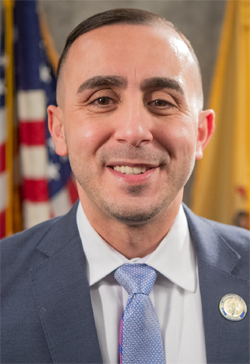
Al Abdelaziz
100% support rate
Top opponent
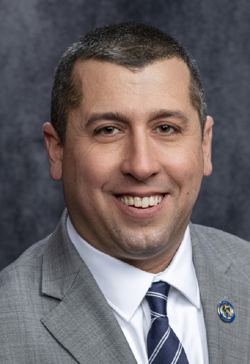
Al Barlas
0% support rate
Ranked legislators
10
5 support · 5 oppose
Key legislators

Who's moving criminal justice in New Jersey

Legislators moving criminal justice in New Jersey
Legislator Party Stance Support rate Decisive votes
Al Abdelaziz
Al Abdelaziz House · District 35
D
Strong +
100% 8
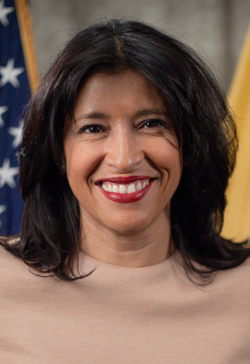
Alixon Collazos-Gill
Alixon Collazos-Gill House · District 27
D
Strong +
100% 8
Angela McKnight
Angela McKnight Senate · District 31
D
Strong +
100% 8
Annette Quijano
Annette Quijano House · District 20
D
Strong +
100% 8
Avi Schnall
Avi Schnall House · District 30
D
Strong +
100% 8
Al Barlas
Al Barlas House · District 40
R
Strong −
0% 8
Bob Auth
Bob Auth House · District 39
R
Strong −
0% 8
Brian Bergen
Brian Bergen House · District 26
R
Strong −
0% 8
Carmen Amato
Carmen Amato Senate · District 9
R
Strong −
0% 8
Dawn Fantasia
Dawn Fantasia House · District 24
R
Strong −
0% 8
Showing 451–460 of 1,156 bills

All criminal justice bills

in committee · New Jersey · General Assembly Jan 13, 2026

A 1004: Imposes additional curriculum for Intoxicated Driving Program; requires participation by offenders convicted of, or initially charged with DWI.

This bill requires individuals convicted of or initially charged with DWI (Driving While Intoxicated) in New Jersey to complete a program at Intoxicated Driver Resource Centers, involving 12 to 48 hours of participation over two consecutive days. It mandates that offenders install an ignition interlock device in their vehicle to regain driving privileges, with the requirement to be met within a specified period after conviction. The bill sets penalties for first offenses based on blood alcohol concentration, including fines ranging from $250 to $500 and program participation, depending on the level of intoxication.
in committee · New Jersey · Senate Feb 2, 2026

S 3274: Establishes "Task Force on Scams and Fraud."

This bill establishes a 15-member "Task Force on Scams and Fraud" within New Jersey's Department of Law and Public Safety. The task force will study scams targeting residents - particularly seniors and vulnerable populations - review current fraud prevention efforts, and develop recommendations to improve coordination between government, law enforcement, and businesses. It must submit a final report with findings and suggestions to the Governor and Legislature within one year of formation, after which the task force will expire. The bill directly affects New Jersey residents by creating a structured process to address scam-related harms through a cross-sector working group.
Sub-Topics Law Enforcement
in committee · New Jersey · General Assembly Jan 13, 2026

A 3510: Requires DOC to report incidents of suicide and self-harm among inmates housed in prison Restorative Housing Units.

This bill requires New Jersey's Department of Corrections (DOC) to publicly report incidents of suicide and self-harm among inmates housed in Restorative Housing Units (RHUs). RHUs are disciplinary housing units where inmates are separated from general population, and the bill mandates quarterly public reports (without personal identifiers) detailing these incidents alongside data on inmate demographics and confinement types. The reports must include non-duplicative annual counts of self-harm, suicide, and emergency confinement in RHUs across all facilities. This is a transparency measure focused on data collection, not policy changes to RHU operations. The bill aligns with a 2024 recommendation from the Corrections Ombudsperson.
Sub-Topics Corrections
in committee · New Jersey · General Assembly Jan 13, 2026

A 957: Authorizes counties to establish diversionary program for juveniles to attend New Jersey Youth Challenge Academy.

This bill allows New Jersey counties to create diversion programs for certain first-time juvenile offenders. Eligible juveniles charged with petty disorderly persons offenses, disorderly persons offenses, fourth-degree crimes, or third-degree crimes (excluding drug offenses) may be referred to the New Jersey Youth Challenge Academy instead of facing criminal charges. If they successfully complete the academy program, the charges against them are dismissed. The program requires juveniles to meet specific academy eligibility criteria, such as being a high school dropout and unemployed.
Sub-Topics Juvenile Justice
in committee · New Jersey · General Assembly Jan 13, 2026

A 1756: Requires DOC to ensure inmates have opportunity to participate in Medicaid pre-enrollment and enrollment sessions at least 60 days prior to release; requires applicable inmates to receive Medicaid card at release.

This bill requires New Jersey state and county correctional facilities to help inmates prepare for Medicaid coverage before release. Specifically, it mandates a peer-led session at least 60 days prior to release explaining Medicaid benefits and application options, followed by a dedicated enrollment session within five days to assist with completing applications. Facilities must also ensure inmates receive Medicaid eligibility notifications and physical Medicaid cards at the time of release if approved. The policy does not change Medicaid eligibility standards but aims to streamline access to healthcare for returning individuals by addressing enrollment barriers.
Sub-Topics Medicaid
in committee · New Jersey · General Assembly Jan 13, 2026

A 766: Removes municipal authority to charge application fee for representation by municipal public defender.

This bill repeals a law allowing New Jersey municipalities to charge up to $200 for applying to a public defender. It would eliminate the fee entirely, directly affecting individuals seeking public defense services who might otherwise face this financial barrier. Currently, courts could waive such fees, but this bill removes that authority by deleting the fee provision. The legislation aims to remove financial obstacles to accessing public defenders, aligning with the Sixth Amendment right to counsel.
in committee · New Jersey · General Assembly Jan 13, 2026

A 529: Repeals "Medical Aid in Dying for the Terminally Ill Act."

This bill repeals New Jersey's 2019 "Medical Aid in Dying for the Terminally Ill Act" (P.L.2019, c.59), which allowed terminally ill patients to access physician-assisted medication under strict safeguards. By repealing sections 1-26 of that law, the bill removes the legal exception that previously protected healthcare providers and patients from criminal prosecution under N.J.S.2C:11-6 (aiding suicide) when following the act's procedures. The repeal means aiding suicide would again be punishable as a crime under state law, directly affecting terminally ill patients who could previously seek this option and healthcare providers who followed the repealed act's requirements. The change takes immediate effect upon enactment.
in committee · New Jersey · General Assembly Jan 13, 2026

A 3742: Limits use of restrictions on telephone calls as discipline measure during incarceration.

This New Jersey bill (A 3742) limits how correctional facilities can suspend phone calls as punishment for incarcerated people. It requires facilities to allow at least one phone call every two weeks during a suspension, caps suspensions at 90 days consecutively or 180 days yearly, and prohibits suspensions in the final 60 days before release. The bill also bans suspensions for those in "Restorative Housing Units" and mandates that facilities notify emergency contacts when calls are restricted. It directly affects incarcerated individuals and their families by ensuring more consistent communication access while incarcerated.
Sub-Topics Corrections
in committee · New Jersey · General Assembly Jan 13, 2026

A 2823: Establishes "Internet Predator Investigation and Prosecution Fund" with $200 assessment on persons convicted of certain offenses.

This bill creates a permanent "Internet Predator Investigation and Prosecution Fund" in New Jersey's Department of Treasury. It requires a $200 fee from individuals convicted of specific sex offenses (including certain computer-related crimes under C.2C:20-25) to fund the program. The money will be used to provide grants to county prosecutors for training and equipment to investigate and prosecute online sex crimes. The fund replaces previous collection methods for these fees, directing all payments to the new account.
in committee · New Jersey · General Assembly Jan 13, 2026

A 3712: Requires Attorney General to establish model duty-to-intervene policy for law enforcement officers; requires entities that employ law enforcement officers to adopt duty-to-intervene policy.

This New Jersey bill (A3712) requires all law enforcement agencies to adopt a mandatory "duty-to-intervene" policy. The policy compels officers to stop colleagues from committing unjustified force, civil rights violations, or other criminal acts during duty. Agencies must either use the Attorney General’s model policy or get approval for a comparable one, and report all intervention incidents quarterly to the Attorney General. Failure to intervene could result in disciplinary action under the policy. The law aims to create standardized accountability for officer conduct.
Showing 451 to 460 of 1,156 bills
Previous 1 … 45 46 47 … 116 Next