

Failed Nov 3, 2025
1 co-sponsor
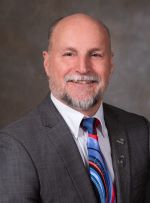
Sen. Tim Lang
Total votes
1,631
all sessions
Attendance
79%
394 missed
Near the chamber average
With party
91%
of cast votes
Near the chamber average
Bipartisan score
5%
crosses aisle rarely
Near the chamber average
Sponsored
506
bills & resolutions
Near the chamber average
Committees
5
assignments
506 bills and resolutions
Sponsored bills
Total
506
Primary
117
Co-sponsor
389
This page
506
matching current filters
raising the funding cap for the New Hampshire community development finance authority.
Maddy summarySB 158 would have raised the annual funding cap for New Hampshire's Community Development Finance Authority (CDF), allowing it to allocate more public funds to local community development projects. This change would directly affect community development organizations and local governments seeking financing for affordable housing, small business support, and economic revitalization initiatives. The key mechanism would have increased the maximum annual funding limit from its current level, expanding the Authority's capacity to support projects across the state. However, the bill was deemed "Inexpedient to Legislate" under Senate Rule 3-23 on October 31, 2025, and did not advance further.
Failed Nov 3, 2025
1 co-sponsor
providing maternal depression screening for new mothers; increasing access to health care services for new mothers; enabling new parents to attend infant pediatric medical appointments; and developing a plan for perinatal peer support certification.
Maddy summarySB 246 requires New Hampshire Medicaid and private health insurers to cover maternal depression screenings at well-child visits and during prenatal/postpartum care for new mothers. It mandates coverage for screenings at specific intervals (1, 2, 4, and 6 months postpartum) and includes referrals to mental health resources. The bill allocates $275,000 to establish a perinatal psychiatric provider consult line and $75,000 for rural maternal health EMS services. These changes directly affect new mothers and infants in New Hampshire by expanding access to mental health support during the perinatal period.
Failed Nov 3, 2025
1 co-sponsor
establishing voting procedures for electing town officers in unorganized towns or places.
Maddy summaryThis bill establishes voting procedures for unorganized towns or unincorporated places that lack a formal town government. When such an area reaches 100+ registered voters, the Secretary of State must hold an initial election using meeting-based voting (nominations from the floor and voting at a meeting), then ask residents whether future elections should use official ballots like towns do. The Secretary can also step in to oversee elections or designate a nearby town as a polling place if local elections cannot be organized without state assistance. These rules apply to all local, county, state, and federal elections in unorganized areas.
Signed into law Nov 3, 2025
1 co-sponsor
regulating online gambling and directing net proceeds to the education trust fund, the general fund, and to reimburse municipalities for elderly, disabled, blind, and deaf tax exemptions.
Maddy summarySB 168 regulates online gambling by requiring licensees to pay 45% of their gross gaming revenue. This revenue is split as follows: 35% to charitable organizations, and 65% distributed to three funds - 25% to an education special fund, 25% to reimburse municipalities for tax exemptions (for elderly, disabled, blind, and deaf residents), and 50% to the general fund. The bill directly affects online gambling operators, charities, municipalities, and state education and general funds. It establishes a clear revenue-sharing mechanism without altering gambling rules or creating new taxes.
Failed Nov 3, 2025
0 co-sponsors
relative to highway toll credits.
Maddy summarySB 155, titled "relative to highway toll credits," proposes changes to toll credit programs for highway users. The bill's specific provisions and who it directly affects (e.g., drivers, toll-paying commuters) are not detailed in the provided context. As a procedural bill focused on toll credits, it has been referred to multiple committees and is currently under interim study. No concrete policy changes or mechanisms are described in the available information.
In committee Oct 29, 2025
1 co-sponsor
relative to establishing an alternative driver education program.
Maddy summarySB 39 would create an alternative program for driver education, offering a new pathway for new drivers to meet licensing requirements beyond traditional classroom instruction. It directly affects teenagers and young adults seeking their first driver's license, who typically complete mandatory driver education courses. The bill establishes specific criteria for this alternative program, including curriculum standards and instructor qualifications, to ensure it meets safety and training goals. This policy change would provide an additional option for schools or organizations to deliver driver education, potentially increasing accessibility for students. The bill is currently in committee review with a scheduled hearing.
In committee Oct 29, 2025
0 co-sponsors
relative to dwellings over water.
Maddy summarySB 27 allows state officials to waive certain construction standards for repairs or expansions of structures over water (like docks or piers) under specific conditions. It applies only if the work improves public water or environmental protection and doesn’t convert recreational water activities into land-based uses. The waiver requires no increase in the structure’s physical size, a net reduction in bathroom/kitchen space, and no new water penetrations. This directly affects owners of water-based structures seeking renovations while prioritizing environmental safeguards.
Passed Oct 23, 2025
0 co-sponsors
adopting the dentist and dental hygienist compact.
Maddy summarySB 187, titled "adopting the dentist and dental hygienist compact," would allow licensed dentists and dental hygienists to practice across state lines without obtaining separate licenses in each state where the compact is adopted. If passed, it would directly affect dental professionals seeking to work in multiple states, particularly those moving for employment or serving patients in border regions. The key provision establishes a standardized licensing framework through the interstate compact, replacing individual state licensing requirements for participating states. The bill is currently pending committee review and has not yet been enacted into law.
In committee Oct 13, 2025
1 co-sponsor
relative to the number of polling stations that are available for certain towns.
Maddy summarySB 103 requires New Hampshire towns and cities to provide at least one polling place for every 15,000 registered voters in presidential elections, unless they submit and get approval for a detailed plan addressing potential voter delays. The plan must cover traffic flow, parking, staffing levels, equipment availability (like electronic poll books), and other operational factors specified by the Secretary of State and Attorney General. Approval of such plans is conditional on meeting specific measures to prevent delays, and the officials may request additional information before granting approval. This bill directly affects local election planning for all towns and cities holding presidential elections.
Passed Aug 25, 2025
1 co-sponsor
Ask Maddy
·
AI policy assistant
Ask Maddy about Tim Lang
Scope: new-hampshire
Hi! I can help you understand Tim Lang's legislative record. What would you like to know?
Try one of these
i
Maddy answers using official bill text and legislative records. Always verify before sharing.
Sources cited inline